
NEW YORK — Both CVS and Walgreens are now requiring a prescription or are not offering COVID-19 vaccines in some states as the companies attempt to follow state guidelines that require approvals from the Centers for Disease Control and Prevention.
The Food and Drug Administration has approved vaccines from Pfizer, Moderna and Novavax for all seniors, but only for younger adults and children with health conditions.
In a statement, CVS said they cannot vaccinate those even with a prescription in Massachusetts, Nevada and New Mexico due to state laws and regulations.
"State pharmacy laws govern where we can currently vaccinate. Based on FDA approval, we currently can offer FDA-approved COVID-19 vaccines in the following states: AK, AL, AR, CA, CT, DE, HI, IA, ID, IL, IN, KS, MD, MI, MN, MO, MS, MT, NE, ND, NH, NJ, OH, OK, OR, RI, SC, SD, TN, TX, VT, WA, WI, and WY. Once ACIP acts on the updated COVID-19 vaccines or states take additional action to authorize pharmacy dispensing prior to ACIP recommendations, we’ll be able to offer the FDA-approved COVID-19 vaccines in the remaining states," the company said in a statement.
"Right now, dependent on state law, we can offer the updated COVID-19 vaccines to patients, depending on their age, prior to ACIP action, if they present an authorized prescriber’s prescription. Those states are – AZ, CO, DC, FL, GA, KY, LA, ME, NC, NY, PA, UT, VA, WV. Pharmacies are unable to administer COVID-19 vaccines in Massachusetts, Nevada, and New Mexico currently. Appointments can be scheduled online via CVS.com, through the CVS Health app, or patients can walk into our pharmacies and clinics," the company added.
In a statement, Walgreens said, "With the recent FDA approval of the 2025–2026 COVID-19 vaccine, Walgreens is prepared to offer the vaccine in states where we are able to do so."
Last Wednesday, the FDA authorized three updated COVID-19 vaccines for people 65 and over as well as those with underlying health conditions such as high blood pressure, asthma and obesity.
The Centers for Disease Control and Prevention’s Advisory Committee on Immunization Practices (ACIP) is scheduled to meet Sept. 18-19. That panel usually makes recommendations on vaccines for the general public and can be pivotal in whether health insurance companies pay for the vaccine.
 Thorvardur de Shong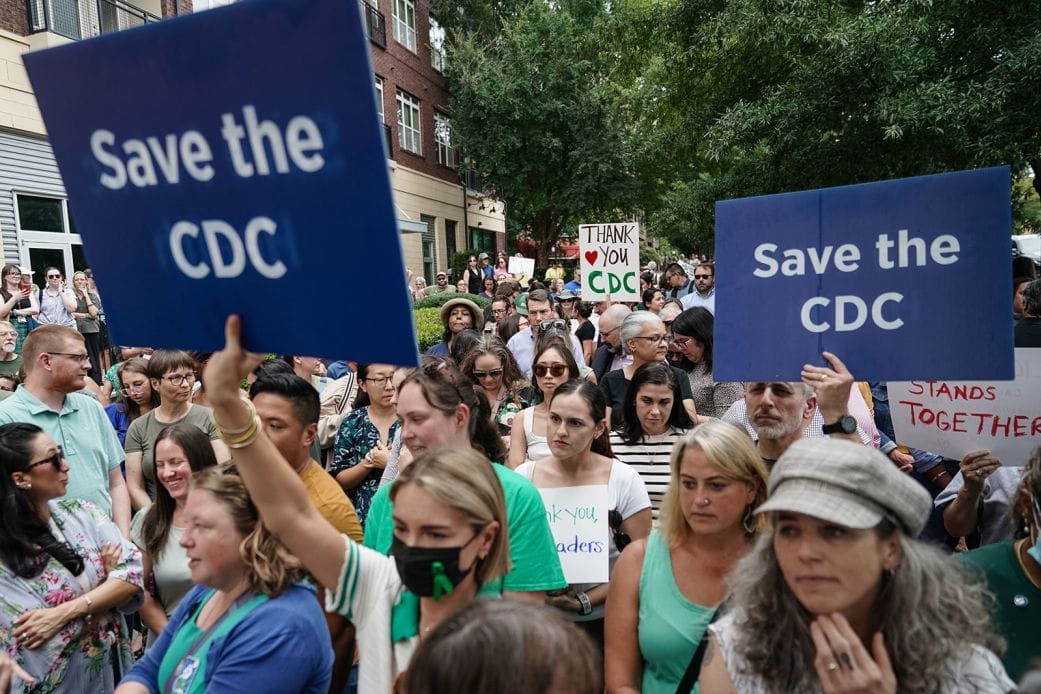
Its unclear if the chaos following the firing of its latest director could also have an impact. Health professionals expressed concerns in June when Kennedy, a longtime vaccine critic, fired all members of the ACIP and replaced them with appointees who have also publicly expressed skeptical views of vaccines.