ORLANDO — Choosing where to live may be one of the most consequential health decisions in retirement. Location can shape lifestyle, retirement income, access to care, daily routines, and overall well-being.
It also affects how easily individuals can work with a health insurance agency to secure coverage tailored to their needs. Even modest differences in cost of living, healthcare access, and environment can materially influence long-term health outcomes. Planning ahead—including considering life insurance with living benefits—can help strengthen financial security as health needs evolve.
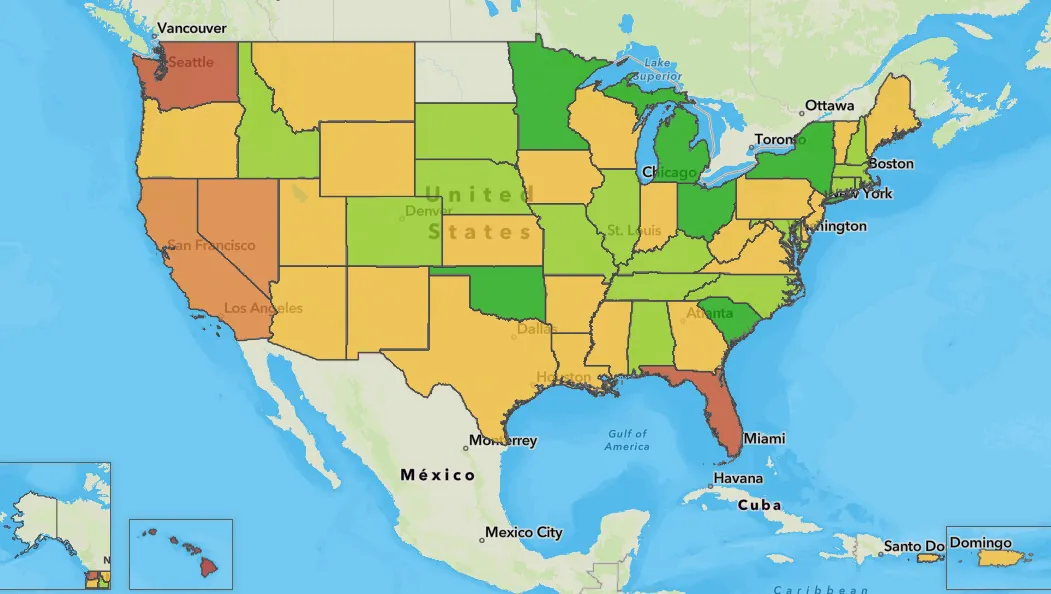
This study from America First Healthcare, evaluated 13 factors across health, affordability, social well-being, and environmental conditions to better understand what supports healthy aging. The findings reveal significant variations in how well different states support older adults.
While some states benefit from stronger health care access and lower financial pressure, others face higher risks tied to isolation and poorer health outcomes. The results also challenge common assumptions about what truly defines a supportive place to age.
“At America First Healthcare, we work with families navigating these tradeoffs every day. Where someone chooses to age is more than a lifestyle decision—it plays a critical role in shaping a protection strategy for the next phase of life,” the company said.
Key Takeaways
- Where you live in retirement can significantly impact your health, financial stability, and overall quality of life.
- With an overall score of 80.9/100, Utah is the best state for healthy aging. Conversely, the worst state for aging gracefully is Mississippi, which has a score of 23.7/100.
- States that rank highest for healthy aging combine strong healthcare access, affordability, and active community engagement.
- Lower costs alone do not guarantee better outcomes, as states with high affordability can still struggle with poor health and social support.
- The best places to age well are those that balance healthcare, financial security, and social connection rather than excelling in just one area.
Best States for Healthy Aging
Some U.S. states make it easier for older adults to age well than others. The highest-ranking locations rank high across our established metrics.
| Best States for Healthy Aging | ||
| Rank | State | Overall score (out of 100) |
| 1 | Utah | 80.9 |
| 2 | Colorado | 67.8 |
| 3 | Vermont | 67.1 |
| 4 | Idaho | 66.9 |
| 5 | Delaware | 66.2 |
| 6 | Minnesota | 64.8 |
| 7 | Wisconsin | 64.0 |
| 8 | New Hampshire | 63.2 |
| 9 | Arizona | 61.7 |
| 10 | Washington | 60.4 |
1. Utah
The Beehive State claims the number one spot for the healthiest state for seniors in the U.S by combining strong health behaviors with a highly engaged community. It has the lowest smoking rate at 5.1% and the best isolation score in the study, coming in at number one (the lowest).
Utah also has a low poverty rate (8.2%) and low food insecurity (7.6%). In addition, the state has a strong sense of community volunteerism at 44.6%, reflecting strong civic involvement, ranking second in our study.
Utah’s strength lies in its positive sense of community. The combination of near-zero smoking, tight-knit social networks, and high civic participation creates a compounding health advantage for older adults that few states can match.
Utah’s community-driven environment helps older adults stay active, connected, and supported, contributing to its top position. It is also the happiest state for seniors, garnering a happiness score of 7.69/10 in Caring.com’s senior happiness index.
2. Colorado
The Centennial State stands out for supporting active and healthy lifestyles among older adults. It ranks fifth nationally for weather, creating favorable conditions for staying active, which is why physical inactivity is low at 23%, the third lowest nationwide.
Colorado has a smoking rate of just 6.4% and has the second-lowest early death rate at 1,537, suggesting strong overall health outcomes. For many, these rankings are not surprising, as the state was recognized as the best state for aging in 2017.
However, affordability remains a challenge for the state, ranking 41st, with a housing cost burden of 36.3%. Despite higher costs, Colorado’s health-focused environment contributes to longer and more active lives for seniors.
3. Vermont
The Green Mountain State ranks third on the list due to its strong healthcare system and overall health support. It has a near-universal healthcare coverage of 97.4% and strong nursing home quality at 41.9%. Vermont also has the lowest food insecurity rate in the top 10 at 6.3% and the lowest smoking rate at 6.1%. These factors contribute to stable health outcomes for its aging population.
Vermont’s biggest draw for seniors and retirees is its health infrastructure. The state recently announced its 10-year visionary plan, Age Strong VT, with the aim of making the state a great place for all ages and stages of life.
However, the state’s biggest vulnerabilities are its housing cost burden (35%) and a high social isolation index (34), cracks that keep it from ranking first. Age Strong VT will likely turn these things around in the future.
4. Idaho
The Gem State takes fourth place for the best places for healthy aging in the United States, thanks to its strong financial conditions for older adults. It has the lowest housing cost burden in the top 10 at 26.3%, which is the second-best nationally, and boasts a strong affordability rank of 9. It also has a low poverty rate at 9.5%.
Idaho is the sleeper pick on this list as its financial security metrics are exceptional. Seniors here are less squeezed than in nearly all the other states. Because of this, it ranked fifth on the 2025 list of the best states for retirement.
However, Idaho’s weakness for seniors and retirees is its nursing home quality, which is only 51.3%, the worst among the top 10 states.
5. Delaware
The First State ranks high on the list as it delivers steady results across several areas that matter for aging.
It places third nationwide for affordability, helping reduce financial pressure for older adults. Healthcare coverage is strong at 96.9%, and the early death rate remains low at 1,607. The state also reports a low poverty rate of 7.9%, the country’s fourth lowest.
6. Minnesota
The North Star State earns its place with strong results across health and community measures. It has one of the lowest food insecurity rates in the country at 3.4%, tied with North Dakota. Its healthcare coverage stands out at 94.8%.
Minnesota’s early death rate is low at 1,538, ranking third lowest nationwide. Volunteerism is also solid at 37.1%, reflecting active community engagement among older adults. These factors that support both physical health and social connection helped the state gain a retirement score of 6.48.
Weather remains Minnesota’s main drawback, ranking 49th, yet the data shows that colder conditions do not prevent seniors here from maintaining a high quality of life.
7. Wisconsin
The Badger State earned the 2024 award for the best state for well-being. Wisconsin still stands out for its financial accessibility, making it easier for seniors to manage their daily expenses. It ranks sixth for affordability and has a low poverty rate of 10.0%.
Wisconsin also achieves the highest composite score among this group at 59.66, reflecting balanced performance across metrics.
However, some health behaviors lag. Physical inactivity is relatively high at 33.8%, and the smoking rate is 8.5%, higher than many of its peers. Despite these challenges, Wisconsin’s affordability helps support stability and access to essential needs for seniors.
8. New Hampshire
The Granite State performs strongly in financial stability and access to essential resources. It has the lowest food insecurity rate in the dataset at 3.5%, along with high healthcare coverage at 97.1%.
The poverty rate is also low at 7.6%, ranking third-lowest nationwide. The early death rate stands at 1,603. These factors support a stable and secure environment for older adults and helped the state gain recognition as the best state for retirees in 2025.
Unfortunately, volunteerism is relatively low at 28.1%, and weather ranks 40th, which may affect social engagement and comfort. New Hampshire’s strong financial and health indicators help secure its position.
9. Arizona
The Grand Canyon State ranks highly as a retirement destination due to strong interest from older adults and favorable health-related factors.
Arizona ranks fifth nationwide in search demand, showing that many people consider the state for retirement. Physical inactivity among adults aged 65 and over ranks 11th, suggesting that many seniors maintain active lifestyles. Nursing home quality also performs well, ranking 11th with a score of 36.8%.
These figures point to a combination of lifestyle appeal and healthcare support for aging residents, thanks to Arizona’s warm climate and established retirement communities. The Arizona Department of Economic Security also has several programs geared towards protecting seniors and helping them access the support and services they need and maintain their quality of life.
10. Washington
The Evergreen State was the best state for retirement in 2023, and still ranks high on this list due to strong health behaviors and outcomes among older adults. It has the lowest physical inactivity rate in the country at 22.3%, along with a low smoking rate of 6.1%.
The early death rate in Washington is relatively low at 1,641. Weather ranks 30th, placing it among the more favorable climates in this group.
However, the state faces challenges with social isolation, ranking 41st, and a housing cost burden of 36.1%. These figures suggest that higher living costs may contribute to reduced social connections despite strong overall health.
Worst States for Healthy Aging
Using the same metrics, we uncovered the states struggling to provide the conditions needed for long-term health and well-being in later life.
| Worst States for Healthy Aging | ||
| Rank | State | Overall score (out of 100) |
| 50 | Mississippi | 23.7 |
| 49 | Louisiana | 26.2 |
| 48 | West Virginia | 34.5 |
| 47 | Arkansas | 36.4 |
| 46 | Oklahoma | 36.4 |
| 45 | New Mexico | 36.5 |
| 44 | Alabama | 39.0 |
| 43 | Kentucky | 42.1 |
| 42 | Texas | 42.6 |
| 41 | Nevada | 42.8 |
1. Mississippi
The Magnolia State ranks low due to widespread challenges across nearly every metric. It is the nation’s hardest place to age well by almost every measure, holding the worst or near-worst ranking in five of 13 categories.
Physical inactivity is the highest in the nation at 42.2%, and the senior poverty rate is 15.8%. The state also has the worst social isolation score at 100 and high food insecurity at 13%. Its early death rate is the highest in the country at 2,578.
These figures reflect a combination of limited resources, poor health outcomes, and weak social support. The overlap of poverty, isolation, and inactivity creates significant barriers for older adults trying to maintain their health and independence.
2. Louisiana
The Pelican State is dealing with serious challenges in both care quality and basic needs. It has one of the worst social isolation scores at 97 and the highest food insecurity rate in the dataset at 14%.
Nursing home quality is also the lowest at 16.4%, raising concerns about long-term care, and the senior poverty rate is high at 14.2%.
Although healthcare coverage is relatively strong at 96.7%, this does not reflect the quality of care available in Louisiana.
3. West Virginia
West Virginia is the dataset’s greatest paradox, presenting a mix of affordability and poor health outcomes. It ranks first for affordability, offering lower costs for seniors.
However, the early death rate is 2,516, the second worst nationally. Physical inactivity is 41.7%, also among the highest. Nursing home quality is low at 18.5%, and social isolation ranks 79th.
Moreover, West Virginia ranks 50th in search demand ranking, the lowest in this study.
These figures show that lower costs alone do not lead to better aging outcomes, especially when health risks and limited support systems remain significant concerns.
4. Oklahoma
The Sooner State struggles with health behaviors and community support. Physical inactivity is high at 39%, and the early death rate is 2,432, the fourth worst in the country.
Volunteerism is also low at 22.6%, suggesting weaker community engagement. In addition, food insecurity stands at 9.9%, and the social isolation score is 75. Affordability ranks 45th, offering limited relief for seniors.
These combined factors point to ongoing challenges in both health outcomes and social support, making it harder for retirees and seniors to stay active, connected, and well.
5. Arkansas
Arkansas ranks poorly due to low social engagement and health outcomes. It is America’s most socially disengaged state for seniors, with the lowest volunteerism rate in the dataset at 16.2%, reflecting limited community involvement.
The early death rate is high at 2,450, the third worst nationally. Social isolation ranks 77th, and food insecurity is 11%. Affordability also lags at 33rd.
These figures suggest that many seniors lack both strong support networks and access to resources, contributing to poorer overall well-being. The shorter life expectancy confirms the human cost.
6. New Mexico
The Land of Enchantment may not be a delightful place for older adults, as it deals with several challenges related to safety, poverty, and social connections. It has a high social isolation score of 87 and a senior poverty rate of 13.7%, the highest among non-Gulf states.
Nursing home quality is low at 24.1%, and affordability ranks 20th. The state also ranks second-worst for safety.
Despite strong weather conditions ranked second, these combined issues create a difficult environment for older adults, affecting both their security and overall quality of life.
7. Alabama
Alabama faces challenges similar to those of other lower-ranked states, such as Mississippi. Physical inactivity is very high at 41%, the second highest nationwide, and the early death rate is 2,378, ranking sixth worst.
Volunteerism is low at 20.1%, and food insecurity reaches 9.2%. The social isolation score is 78, indicating limited social connections.
These conditions reflect a pattern of health risks combined with low civic engagement, which can make it harder for seniors here to maintain physical, emotional, and social well-being.
8. Kentucky
The Bluegrass State struggles with both health outcomes and social support. The early death rate is 2,444, the fifth worst nationally, and the social isolation score is 83.
The poverty rate stands at 12.9%, and volunteerism is relatively low at 23.1%. Affordability ranks 40th, offering only modest relief.
Like West Virginia, modest affordability provides little protection when health and community infrastructure are this weak. These figures suggest that many seniors here face limited support networks and poorer health outcomes.
9. Texas
Texas ranks in the bottom group due to uneven outcomes across several areas. Physical inactivity is high at 37.1%, and the early death rate is 1,907.
Food insecurity stands at 9.8%, and the social isolation score is 56. Affordability ranks 42nd, and nursing home quality is relatively low at 25.9%. The weather also ranks 47th.
Despite its reputation as a retirement destination, these figures highlight challenges in both cost and care, which can affect the quality of life of older residents.
10. Nevada
The Silver State ranks low due to weak community engagement and healthcare support. Volunteerism is just 12.9%, the second lowest rate in the dataset. The social isolation score is 55, while physical inactivity is 30.7%, and nursing home quality is 27.6%.
Affordability ranks seventh, which is a relative strength. This means that seniors here can afford housing.
Unfortunately, the lack of strong social networks and limited care quality can make it harder for older adults to stay connected and supported as they age, even if they have a comfortable home.
A Note on Medicare: For most readers approaching 65, the state ranking matters less than the Medicare decision that comes with relocating. Coverage networks, supplemental gap plans, and Part D formularies all change at the state line. Anyone considering an aging-in-place move should map the Medicare picture before the moving truck arrives, not after.
The “Hidden Trade-off” States
Some states perform well in one area but fall behind in others, creating trade-offs that affect overall aging outcomes.
For instance, California ranks first for weather and has a low early death rate, yet it faces higher poverty at 12, a social isolation score of 60, and a housing cost burden of 42.5%. These pressures bring it down to 34th overall.
West Virginia tells a different story. It ranks first for affordability, but that advantage is offset by the worst early death rate at 2,516, physical inactivity at 41.7%, and poor nursing home quality. It places 44th overall in our study.
Florida remains a popular retirement destination, but it ranks 35th. Food insecurity is high at 48, social isolation is at 47, and affordability ranks 48th, limiting its appeal for long-term well-being.
New Jersey shows strong health care access and a low early death rate, but volunteerism is low at 20%, housing burden is high at 41.3%, and affordability ranks 48th.
These examples show how strengths in one area do not always translate into better outcomes for aging.
Conclusion
Healthy aging is influenced by more than one factor. Access to care, affordability, and social connection all play a role in how well people live later in life. This study shows that strong outcomes come from a balance of these elements.
For readers thinking through how location affects long-term coverage and care decisions, working with an independent advisor who looks at health, finances, and Medicare timing together is a useful next step.
In addition, understanding marketplace health plans may offer more flexibility when planning for retirement coverage.
For those planning retirement, looking beyond reputation and focusing on real conditions can make a meaningful difference.
The study was commissioned by America First Healthcare, an independent advisory practice focused on education-first guidance for American families navigating health coverage decisions. The company calls its approach America First because the American family belongs at the center of healthcare decisions — the lens they bring to studies like this one.
Submit Your Press Release
Have news to share? Send us your press releases and announcements.
Send Press Release