NEW YORK — As pharmacy chains continue to grapple with shrink, organized retail crime and employee safety concerns, artificial intelligence is emerging as a new tool to help retailers move beyond traditional surveillance methods.

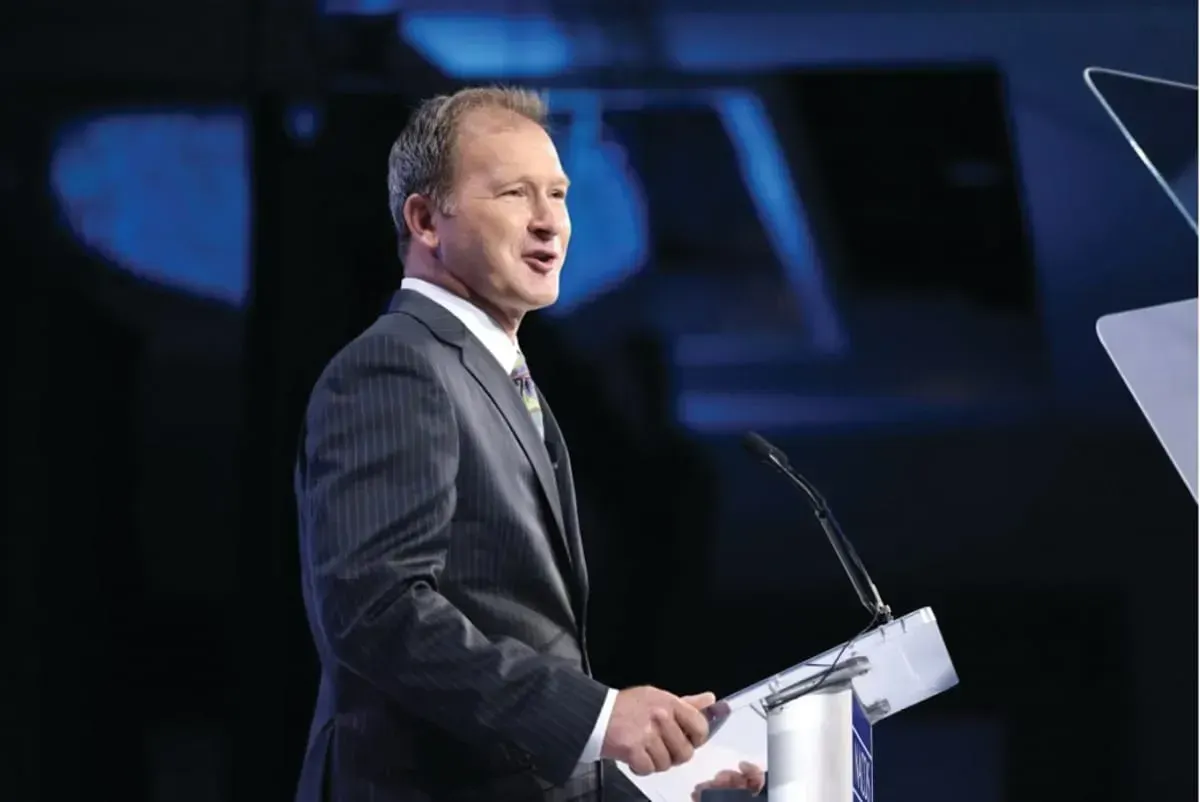
David Solomon, co-founder and chief executive officer of Robox AI, a leading configurable AI video intelligence company, and president and CEO of SecurSolution, a leading security technology company, believes advances in AI-powered video intelligence can transform existing camera networks into proactive systems that help retailers identify risks, respond to incidents and improve operations across the store.
“Retail crime, liability exposures and operational challenges do not come in a standard package, so retailers should not be forced into a standard solution,” Solomon said. “Detection and alerts are the beginning, not the end.”
Moving Beyond Traditional Surveillance
For decades, drug stores have relied on video cameras and security personnel to monitor stores and investigate incidents. According to Solomon, AI changes that dynamic by enabling retailers to analyze multiple camera feeds simultaneously and identify behavioral patterns in real time.
Rather than relying solely on object recognition or fixed surveillance points, modern AI systems can evaluate actions within their broader context, helping retailers identify suspicious activity as it unfolds.
The technology also makes video intelligence more accessible to store and loss prevention teams. Through conversational search and reporting capabilities, authorized users can locate incidents, ask questions in plain language and generate reports without extensive training on specialized software.
“More people can access and use the intelligence captured by their cameras,” Solomon noted.
Another key advancement is the ability for AI models to continuously improve. By incorporating operational feedback and reviewing false positives or missed detections, systems can be refined over time to improve accuracy and reduce unnecessary alerts.
Addressing Shrink and Organized Retail Crime
Shrink and organized retail crime remain among the most pressing challenges facing pharmacy retailers, particularly as criminals employ increasingly sophisticated tactics.
Robox AI’s platform is designed to help retailers address these challenges through real-time detection and alerts that support customer-service-oriented intervention.
When suspicious activity is detected, staff can be notified and encouraged to provide customer assistance or increase their presence in a specific area, consistent with company policies. Solomon emphasized that the company does not advocate apprehending suspects or taking actions that could jeopardize employee safety.
“The priority is a safe and appropriate response,” he said.
Even when retailers choose not to intervene in real time, video intelligence can provide valuable data for investigations and loss prevention efforts. Analytics and reporting tools can help identify recurring vulnerabilities, policy violations and high-risk areas within stores.
Those insights can inform staffing decisions, merchandising strategies and product placement changes designed to reduce opportunities for theft.
While retailers often seek measurable shrink reductions, Solomon said outcomes should be evaluated based on individual company objectives, such as improving coverage of vulnerable areas, reducing repeat incidents and accelerating investigations.
Leveraging Existing Camera Investments
One challenge for large pharmacy chains is implementing new technology across hundreds or even thousands of locations.
According to Solomon, Robox AI is designed to integrate with compatible existing camera networks through a local edge AI device that performs real-time analysis close to the video source.
The local hardware connects to a cloud-based platform that provides centralized monitoring and management capabilities across multiple stores. Retailers can access alerts, video evidence, analytics and reporting from a single platform while maintaining visibility across their enterprise.
Deployment begins with a store-by-store assessment to evaluate existing technology, camera coverage and retailer-specific concerns. Different implementation strategies can be used when stores have unique layouts or older camera systems.
Expanding Beyond Theft Prevention
Although loss prevention remains a primary use case, Solomon sees significant opportunities for AI video intelligence across store operations, safety and compliance.
Applications include monitoring personal protective equipment compliance, identifying blocked emergency exits, tracking customer queues and documenting slip-and-fall incidents. Traffic heat maps can offer insights into shopper movement patterns, helping retailers optimize staffing levels and merchandise placement.
The technology can also support inventory-related functions by tracking merchandise movement throughout the store and helping identify replenishment opportunities. Solomon noted that video-based observations should be validated against inventory records when precise counts are required.
In pharmacy environments, AI video intelligence can play a role in monitoring controlled-substance storage areas and other restricted-access locations. The technology can flag access events for review while working alongside existing physical security controls and inventory management procedures.
Temperature monitoring may also be possible when specialized thermal cameras or integrated sensors are used. However, Solomon stressed that standard video cameras cannot accurately determine whether an individual is ill and that any temperature-related applications should be evaluated separately under appropriate privacy and clinical guidelines.
A Customized Approach
Robox AI recently introduced a configurable AI video intelligence platform that the company says can support loss prevention, shrink management, safety, compliance and store operations using retailers’ existing camera infrastructure.
Drawing on more than 25 years of security experience, the platform is designed to be tailored to individual retailers based on store layouts, risk profiles, operating policies and business priorities.
The system can be configured to address a wide range of retail scenarios, including shoplifting, cart push-outs, sweethearting, self-checkout anomalies, loitering, fights, visible weapons, propped doors, slip-and-fall incidents, queue management, out-of-stocks and PPE compliance.
Robox AI describes its approach as a continuous cycle of “Detect, Alert, Respond, Resolve, Report, Analyze and Improve,” providing retailers with both real-time intelligence and long-term operational insights.
“After more than 25 years in security operations, I know detection without a defined response is only information,” Solomon said. “Robox AI is designed to turn that information into action, document the response and give leadership intelligence to improve future decisions.”