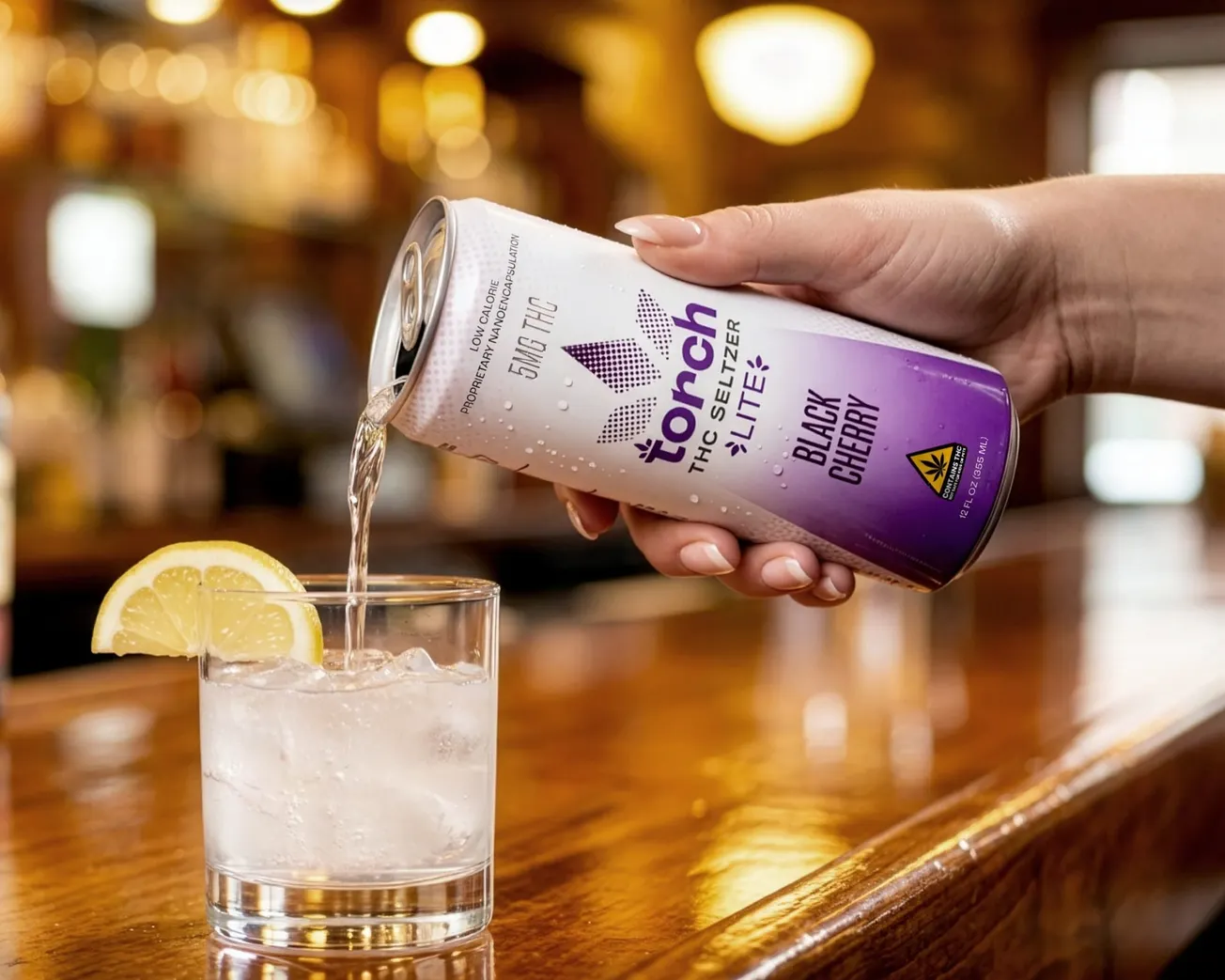
MIAMI – Torch Beverages has doubled revenue year over year, expanded into more than 4,000 retail locations, grown distribution across 20+ states, and sold more than five million cans — making it one of the fastest-growing hemp-derived THC beverage brands in America.
To build on that momentum, Torch Beverages has recruited two leaders from the brands that helped reshape modern consumer beverages: Ryan Bouton, who helped build Halo Top Creamery into a household name, joins as Chief Marketing Officer, while Ryan Heuser, formerly of Liquid Death and White Claw, joins as Head of Experiential Marketing.
Why THC beverages are replacing alcohol occasions
Increasingly, consumers aren't reaching for THC as a novelty — they're incorporating it into occasions that once belonged to beer, wine, and cocktails. Hemp-derived THC beverages are among the fastest-growing segments in adult beverages, attracting consumers looking for the social ritual of drinking without alcohol while drawing increased attention from retailers, distributors, and national beverage companies.
That momentum now meets a defining regulatory moment. A federal rule redefining legal hemp around "total THC" is scheduled to take effect on November 12, 2026, while bipartisan efforts in Congress seek to delay or revise the rule. Much of the industry has responded cautiously.
Torch Beverages believes that a more mature, more regulated market will reward the brands that behave like enduring consumer packaged goods companies — not the ones making the loudest THC claims.
Why these leaders
Halo Top redefined ice cream. White Claw brought hard seltzer into the mainstream. Liquid Death proved branding could reinvent an entire beverage category.
"With Halo Top, people called it a niche product when consumer behavior said differently," said Bouton. "I think we're at that same moment with THC beverages. People still talk about them like they're a cannabis category. I think they're becoming a mainstream beverage category."
"Liquid Death and White Claw proved that people don't just buy drinks — they buy identity, ritual, and occasions," said Heuser. "THC beverages haven't had that kind of brand-building yet. That's what excites me."