NEW YORK — U.S. consumer confidence slipped in August, as worries about jobs and income overshadowed improving views of current and future business conditions, according to the latest survey from The Conference Board.
The Consumer Confidence Index fell to 97.4 (1985=100) from a revised 98.7 in July, marking the second consecutive monthly decline. The Present Situation Index, which reflects consumers’ assessment of current business and labor market conditions, dropped to 131.2 from 132.8. Meanwhile, the Expectations Index, which gauges sentiment about income, business, and job prospects over the next six months, slid to 74.8 from 76.0—remaining below the 80-point threshold that often signals a potential recession.
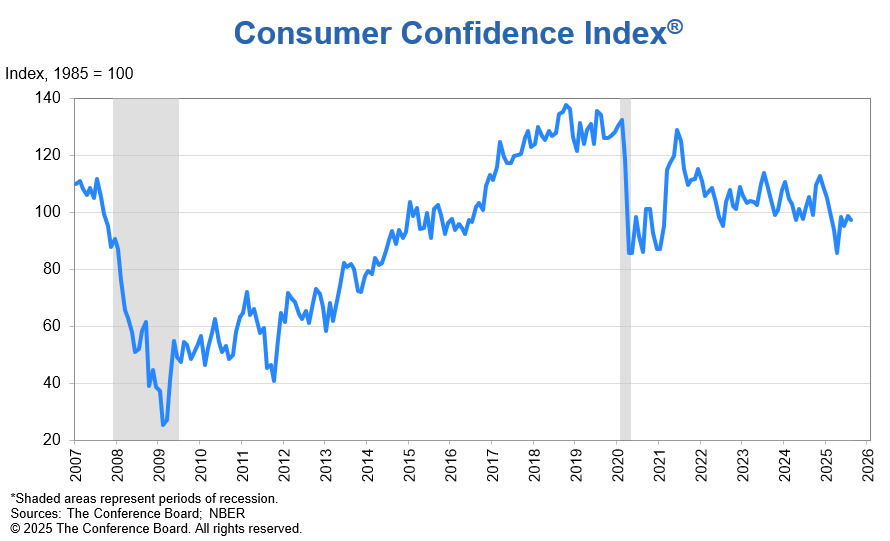
“Consumer confidence dipped slightly in August but remained at a level similar to those of the past three months,” said Stephanie Guichard, senior economist at The Conference Board. “Notably, consumers’ appraisal of current job availability declined for the eighth consecutive month, while optimism about future income faded slightly. However, stronger views of business conditions partly offset these concerns.”
Inflation, Tariffs, and Financial Strain
The survey showed a rise in consumer references to inflation and tariffs, underscoring persistent anxiety over household budgets. Mentions of high prices—particularly for food and groceries—rose again in August. Inflation expectations for the next 12 months ticked up to 6.2%, up from 5.7% in July but still below April’s 7.0% peak.
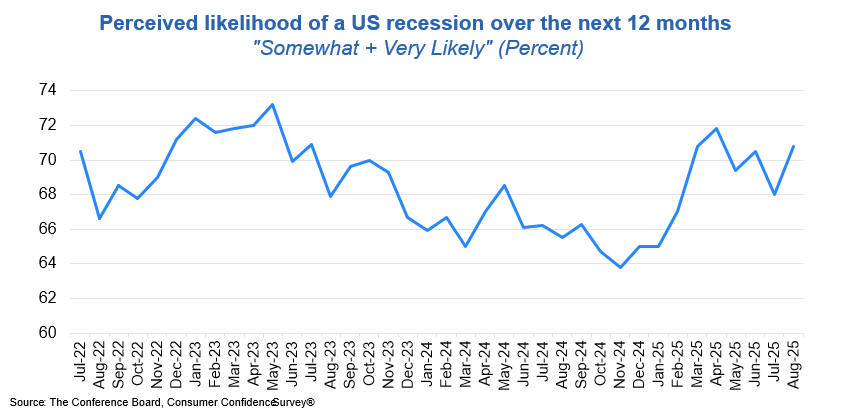
Despite job market concerns, consumers’ assessments of their family finances improved modestly, with slightly more respondents reporting stronger current and future financial situations. Still, the share of consumers expecting a recession within the next 12 months increased, reaching the highest level since April.
Labor Market Views Deteriorate
Consumers’ view of the labor market cooled further:
- 29.7% of respondents said jobs were “plentiful,” down from 29.9% in July.
- 20.0% said jobs were “hard to get,” up from 18.9%.
Looking ahead, 17.9% expected more jobs to be available (down from 18.0%), while 26.8% anticipated fewer jobs (up from 25.1%).
Mixed Trends in Spending and Investments
The survey found mixed signals on consumer spending plans:
- Auto purchases rose, with intentions to buy both new and used cars on the rise.
- Housing plans remained stable after a July drop.
- Big-ticket items saw uneven demand, with buying intentions for washers and dryers strengthening, while interest in TVs and tablets declined.
- Service spending rose slightly but was concentrated in non-discretionary categories such as financial services and car and home maintenance.
- Discretionary spending intentions, including dining out and entertainment, weakened.
- Vacation plans declined for the second consecutive month, both for domestic and international travel.
Consumers’ investment expectations also softened: 47.4% expected stock prices to rise in the next year, down from 48.9% in July, while 30.3% expected declines, up from 28.1%. More consumers also expected interest rates to rise (54.0% vs. 53.1% in July).
Generational and Political Divides
By age, confidence declined among those under 35, held steady for the 35–55 age group, and rose among consumers over 55. Confidence weakened among Republicans and Democrats but held nearly unchanged among Independents. By income bracket, trends were mixed with no clear pattern.
The Consumer Confidence Survey®, conducted monthly by Toluna for The Conference Board, is based on an online sample of U.S. households. The cutoff date for the August survey was August 20, 2025.