By William M. Simpson, President & CEO, DisposeRx, Inc.
Introduction: The Blind Spot in the Fight Against Opioids
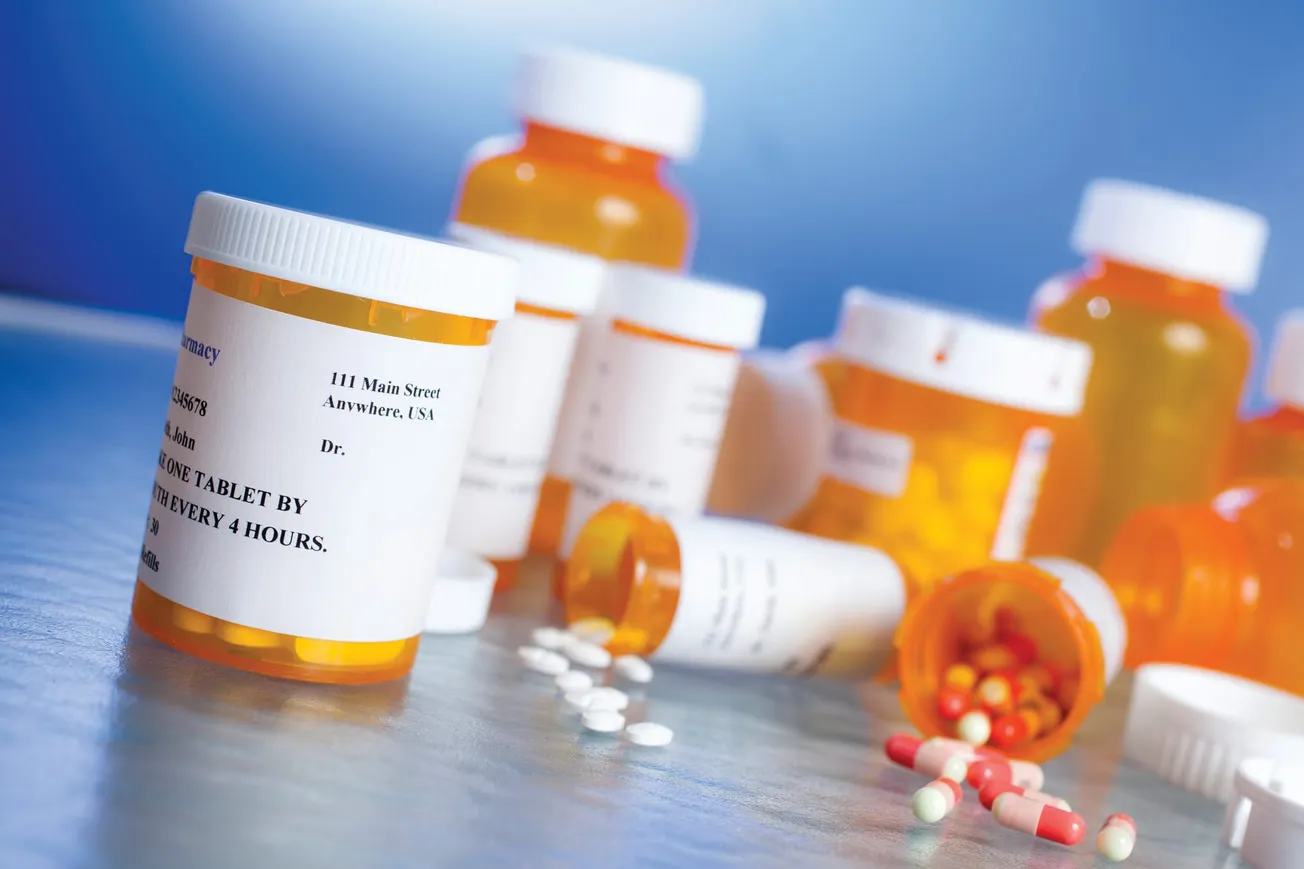
Every epidemic has a blind spot — a place were common sense lags policy. In America’s opioid crisis, that blind spot is the family medicine cabinet.
We talk about prescription monitoring programs, overdose-reversing drugs, and addiction treatment infrastructure. All are critical. Yet too often we overlook the simplest, most dangerous fact: leftover prescriptions sitting in households are the fuel that sustains misuse, diversion, and tragedy.
And the cost is staggering to families, public health, and the environment.

The Household Problem We Ignore
The data is as clear as it is painful:
1. 70% of people who misuse opioids get them from friends or family — not from dealers, but from medicine cabinets (NSDUH, 2021).
2. 12% of patients prescribed opioids still have leftover pills; 60–70% never dispose of them properly or safely (JAMA Intern Med, 2017).
3. Each leftover prescription represents at least one opportunity for misuse, diversion, or accidental ingestion.
4. 50,000 children under age five are rushed to emergency rooms every year due to accidental medication poisonings (Pediatrics, 2018).
5. In 2023, an average of 217 Americans died every day from opioid overdoses, including prescription and illicit drugs (CDC, 2025).
These are not abstract numbers. They represent families blindsided by tragedy. A child who mistook pills for candy. A teenager who experimented with a leftover painkiller after wisdom tooth surgery. A veteran who struggled silently until unused medication at home tipped the balance toward dependency.
And yet, our national strategy has largely ignored this frontline danger.
Why In-Home Disposal Matters
Prevention must start where the risk begins: at home.
For decades, poison prevention has been the foundation of pediatric safety. Child-resistant packaging was introduced in the 1970s to protect children from accidental ingestion, and it reduced deaths from accidental poisonings by 10% in less than 2 years. Similarly, automobile seat belts were once controversial, framed as unnecessary intrusion. Today, they are a universal standard, saving tens of thousands of lives every year.
In-home drug disposal belongs in this lineage of commonsense public health protections.
As I have said before: In-home drug disposal is not just a convenience — it’s a proven, patient-preferred public health solution that aligns with decades of poison prevention policy and protects families where the risk begins: at home.
What Works — And What Doesn’t
Not all disposal methods are created equal. For years, FDA advised families to mix medications with coffee grounds or kitty litter and throw them in the trash. This advice may have seemed practical, but it fails to negate the drugs active ingredient(s), does nothing to prevent misuse, and allows pharmaceuticals to leach into the environment, a negative externality that we cannot continue to push onto the next generation.
More recently, the FDA has leaned heavily on mail-back envelopes. But independent studies show compliance rates between just 4% and 19%. Most people will not save pills, seal them in an envelope, and make a trip to the post office. The result: millions of prescriptions remain in circulation, vulnerable to diversion and misuse.
By contrast, in-home disposal packets are simple, immediate, and preferred:
1. At Shriners Hospitals for Children (JPOSNA, 2021), 92% of families disposed of leftover opioids when provided with in-home packets and education. Cost: less than $2 per patient.
2. At Penn Medicine (JAMA Network Open, 2022), patients given packets at discharge reported significantly higher disposal rates than those without.
3. A 2021 Journal of Nursing Administration study confirmed that in-home disposal outperformed both takeback events and mail-back envelopes in patient compliance.
The conclusion is clear: families use what is simple, safe, and convenient. In-home disposal is both patient-preferred and scientifically validated.
But we don’t need to look further than our seatbelts — and the child safety seats that followed — to see how simple tools paired with education and policy can change the trajectory of public health. We already know how to scale prevention; we’ve done it with seatbelts and child safety seats. Seatbelts don’t stop car crashes; they prevent severe harm when crashes happen. Child safety seats go even further, turning what was once a near-certain tragedy into a survivable event. Together, these low-cost, universally adopted tools changed the arc of public health.
Consider the data: every state now has child passenger safety laws, beginning with Tennessee in 1977. Properly used car seats reduce injury risk for children by up to 82%, and booster seats cut risk nearly in half for kids ages 4–8 and since 1975, child restraints have saved more than 12,000 young lives in America along. The formula for success was simple: pair a proven tool with clear rules, caregiver education, and routine enforcement. Compliance became the norm, and lives were saved, and saved at scale.
DisposeRx is the same kind of prevention. It doesn’t stop the over prescribing of opioids or other medications of concern; it prevents harm by eliminating the at-home reservoir of leftover medications, the leading source of diversion, accidental poisonings, and misuse. Pairing a DisposeRx packet at the point of dispense with medications of concern, backed by a 60- second pharmacist script and a QR micro-lesson, converts good intentions into predictable, repeatable behavior: disposing of leftover medications when risk is highest. For pennies per household, we can avoid six-figure downstream costs in treatment, ER visits, and lost productivity.
Policy should follow the same logic that made seatbelts and child seats universal:
• Make disposal the default standard of care — reimburse pharmacists to dispense a packet with medications of concern and deliver a short counseling script.
• Recognize pharmacist time — through provider-status or standing-order pathways that make counseling billable preventive services.
The objections are familiar — and the answers come straight from the seatbelt playbook:
• “We already do take-back.” Ambulances didn’t replace seatbelts; they complemented them. Take-back and mailback are episodic. In-home disposal is immediate and universal.
• “Will people actually use it?” Seatbelt use surged when it became frictionless and expected. Handing the packet at dispense, with a one-minute script, creates the same default behavior.
• “What about cost?” Seatbelts cost pennies per trip and saved billions. DisposeRx is coffee-money (for those of us that remember buying coffee before Starbucks) per fill against the high societal six-figure downstream costs. That’s prevention math.
• “What about the environment?” effective safe disposal prevents leaching, flushing, and diversion — protecting both families and ecosystems. It is the safer alternative for generations to come. Our children deserve to inherit the same clean water and natural beauty we enjoy today, and removing discarded active pharmaceutical ingredients from waterways and landfills is essential to that future.
The lesson is clear: prevention works when it is universal, low-cost, and reinforced by education and policy. Seatbelts and child seats prove it. The safest prescription is the one that doesn’t linger at home.
FDA’s Seven Years of Inaction
The SUPPORT Act (2018) gave the FDA explicit authority to integrate disposal into Opioid Analgesic Risk Evaluation and Mitigation Strategies (OAREMS). This mandate was straightforward: require risk-mitigation tools that are “sufficiently available”, affordable and reduce patient exposure to harm.
Yet seven years later, the FDA still has not accepted the market preferred definition of “in-home drug disposal.” Instead, in 2023 the agency mandated mail-back envelopes as the default disposal option — despite their proven failure and despite overwhelming opposition in public comments (79% opposed the change).
By restricting disposal guidance to a single method with consistently low compliance, the FDA disregarded a growing body of evidence and sidelined other proven, accessible alternatives. In doing so, the agency failed to protect the very place where risk begins—the home. This isn’t just a lapse in regulatory oversight; it’s a breach of public trust.
And in the vacuum left by FDA inaction, some states have made matters worse. Oregon is perhaps the most telling example. Rather than enabling families with simple, at-home solutions, Oregon requires a $75,000 review fee just for a disposal program operator to submit an initial plan to the Department of Environmental Quality. In practice, this is a payto-play barrier that shuts out innovation and keeps prevention tools from reaching the households that need them most. Meanwhile, Oregon lost more than 1,100 residents to drug overdoses in 2023 alone, a record high, and the state bears billions in annual societal costs tied to addiction, healthcare utilization, lost productivity, and criminal justice. The arrogance of erecting bureaucratic tollbooths while lives are being lost is staggering, a tragic reminder of what happens when prevention is treated as a revenue stream rather than a public health imperative.
The Environmental Dimension
The medicine cabinet gap has a second-order effect that we rarely acknowledge: environmental harm. When unused medications are flushed, tossed in the trash untreated, or left to degrade, they contribute to pharmaceutical contamination in water supplies and landfills, posing risks to aquatic life, public health, and our already strained ecosystem. Studies confirm that pharmaceuticals are present in 100% of tested U.S. wastewater samples, meaning that, medications leach from landfills, pass through sewage systems, and accumulate in rivers and groundwater.
The consequences are profound:
1. Hormone disruption in fish and wildlife, leading to reproductive harm.
2. Antimicrobial resistance fueled by constant low-dose antibiotic exposure in water supplies.
3. Human exposure to pharmaceuticals through drinking water, with unknown long-term effects.
The FDA’s outdated disposal advice or worse, inaction doesn’t just endanger families. It endangers ecosystems and future generations.
Prevention Begins at Home, with the Right Tools
Despite efforts to reduce opioid prescribing, the rate of misuse and overdose deaths continues to outpace the decline in dispensed opioids—revealing a deeper, unresolved public health crisis. The disconnect is clear: reducing supply is not enough if risk remains in the home, where leftover medications often go unused, unsecured, and undisposed.
Our communities don’t need more fragmented programs; they need solutions that empower families to protect themselves and their loved ones. Families need their healthcare leaders to all be rowing the boat in the same direction. What’s needed is a single, scalable model that meets families where the risk starts—and stops it there.
The Family Safety Kit is just one example of how DisposeRx is looking into next-generation models. By integrating inhome disposal tools with pharmacist-led education at the counter, it positions pharmacies on the front lines of prevention with multiple, practical solutions for patients, customers, and communities. When combined with free patient packet distribution at the point of dispensing, the Family Safety Kit extends pharmacy’s role from dispensing medications to safeguarding households—helping normalize disposal and making medication safety part of everyday life.
Designed for real use and backed by science, the kit empowers families to prevent diversion, misuse, and accidental ingestion before tragedy strikes. The DisposeRx kit is designed to enhance the pharmacy packet distribution program with additional OTC offerings to enhance the patient’s safety experience and includes:
• English/Spanish Instructions for Use
o Clear, step-by-step guidance for safe medication disposal and storage.
• One Pill Minder (Patent Pending)
o A safer pill organizer with unique locking features for added security—unlike any other on the market today.
• Medication Safety Booklet
o A practical guide covering medication best practices, signs of misuse, and how to protect your household with clear guidance on how to source other drug disposal options.
• One Box of Six DisposeRx Packets
o Each packet contains non-toxic powder blend that renders unused medications unusable and safe for disposal in the home.
This isn’t just a toolkit. It’s the seat belt of the medicine cabinet, a simple, intuitive solution that transforms medication safety into a daily habit rather than a one-time event. In-home disposal normalizes the act, integrates safe disposal into daily life and ensures families have the tool before risk turns into tragedy.
In-home prevention should not depend on mail-back envelopes or take-back days. It should be embedded in every household, every day—just as smoke detectors, outlet covers, and child safety locks are. Pharmacies now have the opportunity to lead that cultural shift, providing families both the tools and the confidence to act before harm occurs.
The Public Health Imperative
Leftover medications are not a minor inconvenience. They are a direct, measurable driver of the opioid epidemic. They contribute to new cases of opioid use disorder, accidental poisonings, overdoses, and environmental damage.
Inaction by the FDA on in-home disposal is not neutral, it is a policy choice with consequences. By failing to close the medicine cabinet gap, we risk:
1. 20,000+ preventable deaths annually.
2. 25,000+ preventable medical incidents annually.
3. Billions in avoidable costs to Medicaid, Medicare, and private insurers.
We cannot keep pouring billions into downstream treatment while ignoring the simple, inexpensive prevention available upstream.
Closing the Gap: Policy Recommendations
Models like the Family Safety Kit show that pairing in-home disposal packet distribution with pharmacist-led education is both practical and scalable. Families overwhelmingly use the tools when they have them, and pharmacists are uniquely positioned to counsel patients at the point of dispensing.
What is missing is not proof of effectiveness, but policy alignment. Federal agencies, Congress, payors, and manufacturers all have clear levers they can pull to make in-home disposal a standard element of opioid risk mitigation. The following recommendations outline how to close this gap and translate proven prevention into national practice.
1. FDA must except the market outlined definition of “in-home drug disposal” and integrate it into REMS programs, consistent with SUPPORT Act authority.
Definition: In-home Drug Disposal System is a system of drug disposal—
a) that changes the physical integrity of the formulation of a drug;
b) that renders the active ingredients of such drug unusable for all practical purposes;
c) that—is nontoxic and nonhazardous; poses no threat to the consumer; and reduces drug exposure to the environment; and
d) that acts as a deterrent for misuse of drugs.
2. Congress should mandate inclusion of in-home disposal in opioid safety programs including OA REMS, ensuring families receive tools at the point of dispensing.
3. Medicare and Medicaid should reimburse disposal as “reasonable and necessary” under Section 1861 of the Social Security Act.
4. Manufacturers should be required to fund disposal, just as they fund other REMS risk mitigation activities.
5. Pharmacists should be empowered and reimbursed to deliver disposal counseling and tools at the counter.
Conclusion: Closing the Blind Spot
The opioid epidemic is one of the greatest public health challenges of our time. Yet we are leaving a glaring blind spot unaddressed: the medicine cabinet, where misuse begins, where children are poisoned, and where environmental contamination takes root.
In-home disposal is not futuristic. It is available today. It is affordable. It is accessible. It is patient-preferred and it is supported by over 60% of our nation’s pharmacies. It is, quite simply, the next child-resistant cap, the next seat belt, the next commonsense reform.
We cannot wait another seven years for FDA action. Prevention belongs in the home. Closing the medicine cabinet gap is not optional — it is imperative.
Stay tuned for the next installment in this series, Op-Ed 3: Prevention We Can Afford, where we will explore how smart investments in prevention save lives and reduce costs across our healthcare system.
For more research and resources, visit https://medicationsafetymadesimple.com/