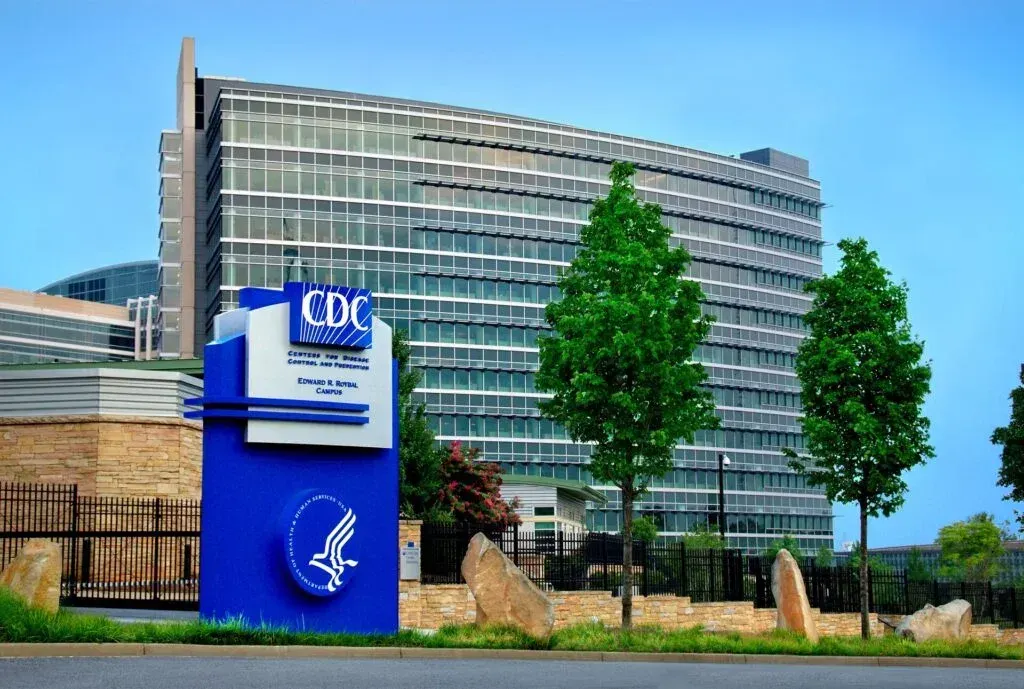
ATLANTA — The federal panel that guides U.S. vaccine policy ended its second day of deliberations Friday with a pair of highly unusual moves: rescinding coverage for a combination measles, mumps, rubella and varicella (MMRV) shot, and indefinitely postponing a vote on whether to delay the hepatitis B vaccine routinely given at birth.
The Advisory Committee on Immunization Practices (ACIP), meeting at CDC headquarters in Atlanta, reversed a Thursday vote that would have allowed the Vaccines for Children (VFC) program to pay for the MMRV shot. On Friday, members aligned coverage with policy, deciding that the combined vaccine should neither be recommended nor reimbursed for children under the age of 4.
The panel also voted 11–1 to table a proposal that would have delayed the hepatitis B birth dose until at least one month of age for infants whose mothers test negative for the virus. “We are more prudent when we are cautious,” said Dr. Joseph Hibbeln, a neuroscientist and panel member, as colleagues agreed they lacked sufficient data to justify changing the policy. Chair Martin Kulldorff cast the lone dissent.
Tensions and inexperience
The meeting, the first extended session since Health Secretary Robert F. Kennedy Jr. dismissed all 17 previous members in June, was marked by confusion and sharp exchanges. Nearly all of the current members are new. “We are rookies,” Kulldorff admitted Friday. At times, debates devolved into raised voices; one liaison, Dr. Jason Goldman of the American College of Physicians, accused the chair of muting him: “You want debate and discussion, but you’re muting people and silencing them.”
Medical organizations criticized the departures from ACIP’s usual methods of weighing evidence. “It is very easy to get distracted by one study that says this or one study that does say that,” said Dr. Amy Middleman, representing the Society for Adolescent Health and Medicine. “The committee’s scientific challenge is to determine whether the benefits outweigh the risks.”
Vaccines’ proven safety and impact
Decades of evidence show the vaccines under review are both safe and highly effective. The hepatitis B vaccine has been given to tens of millions of U.S. newborns since 1991, with severe reactions such as anaphylaxis occurring at a rate of only 1.1 cases per million doses. The universal birth-dose policy has nearly eliminated mother-to-child transmission, cutting annual cases from about 20,000 before 1991 to fewer than 20 today, according to CDC data. The MMR and varicella vaccines have prevented hundreds of thousands of hospitalizations and deaths since their introduction, with no credible evidence of serious long-term harms.
Risks of delay or rollback
Experts warn that weakening recommendations could have severe consequences. Between 10% and 15% of pregnant women in the U.S. are never tested for hepatitis B, and some infections are missed even when testing occurs, meaning many babies would go unprotected if the birth dose were delayed. Before the vaccine was routine, the U.S. saw an estimated 1,000 preventable infant hepatitis B infections each year. Likewise, before the varicella vaccine, chickenpox led to 10,000 hospitalizations and up to 150 deaths annually. “When you apply that to a newborn hepatitis B vaccine, I don’t think there’s any question whatsoever that the benefit far outweighs any adverse side effect,” said Dr. Cody Meissner, the only current ACIP member with prior service on the committee.
States step into the vacuum
The federal uncertainty has spurred states to assert their own vaccine policies. On Thursday, New York Governor Kathy Hochul unveiled new COVID-19 vaccine guidance developed in partnership with the Northeast Public Health Collaborative, which includes nine states and New York City, covering more than 60 million residents. The recommendations call for vaccination of all children ages 6 months through 18 years and all adults, with special emphasis on pregnant and immunocompromised individuals. “Vaccines remain one of the strongest tools we have to safeguard our families and our communities,” Hochul said. “By standing with our partners across the Northeast, we are ensuring that New Yorkers have the protection and the information they need to stay safe and healthy.”
 Thorvardur de Shong
On the West Coast, California Governor Gavin Newsom this week signed legislation authorizing the state to establish its own immunization schedules, departing from decades of reliance on CDC guidance. The new West Coast Health Alliance — comprising California, Oregon, Washington, and Hawaii — has already issued updated recommendations for COVID-19, influenza, and RSV. “Our states are united in putting science, safety, and transparency first,” the governors said in a joint statement. Dr. Erica Pan, California’s state public health officer, added: “The dismantling of public health and dismissal of respected health leaders are placing lives at risk. California stands together with our colleagues to uphold integrity and protect the health of our communities.”
 Thorvardur de Shong
National alarm
The upheaval at CDC has also triggered a wave of resignations, protests by staff, and bipartisan pushback in Congress. Senator Bill Cassidy (R-La.), a liver doctor, underscored the stakes, noting that the hepatitis B vaccine has reduced new infections in children from 20,000 a year to 20. Senator Susan Collins (R-Maine) called the removal of Senate-confirmed CDC Director Susan Monarez “baseless,” while Senate Democratic Leader Chuck Schumer described Secretary Kennedy’s actions as a “war on science.”
What’s next
The panel’s recommendations must still be approved by acting CDC Director Jim O’Neill, a Kennedy appointee. Later Friday, ACIP was scheduled to take up another contentious issue: narrowing recommendations for the latest COVID-19 vaccines. Meanwhile, with states increasingly stepping in to provide their own guidance, the divide between federal and regional vaccine policy is widening — leaving providers and families navigating a fractured immunization landscape.
State guidance at a glance
Northeast Public Health Collaborative
(New York, New Jersey, Pennsylvania, Massachusetts, Connecticut, Rhode Island, Delaware, Maryland, Maine + NYC; ~60M residents)
- COVID-19 vaccination recommended for all children (6 months–18 years) and all adults.
- Extra emphasis on pregnant and lactating people, and those who are immunocompromised.
- Aligns with guidance from AAP, ACOG, and AAFP.
- Pharmacists authorized to prescribe/administer COVID vaccines in New York.
- States pledge insurers will continue to cover immunizations despite federal rollbacks.
West Coast Health Alliance
(California, Oregon, Washington, Hawaii)
- States empowered to set their own vaccine schedules, independent of CDC.
- COVID-19 vaccine recommended for:
• Children 6 months–23 months
• Adults with risk factors
• All pregnant and postpartum individuals - Influenza vaccine recommended for everyone 6 months and older.
- RSV vaccine recommended for:
• Infants under 8 months
• Adults 75+
• Younger adults with risk factors - Coverage required by state-regulated insurers for vaccines on the alliance schedule.
Why it matters: With ACIP deliberations marked by confusion and reversals, states are stepping in to provide clear, science-driven guidance — ensuring residents retain access and confidence in vaccines even as federal policy fragments.