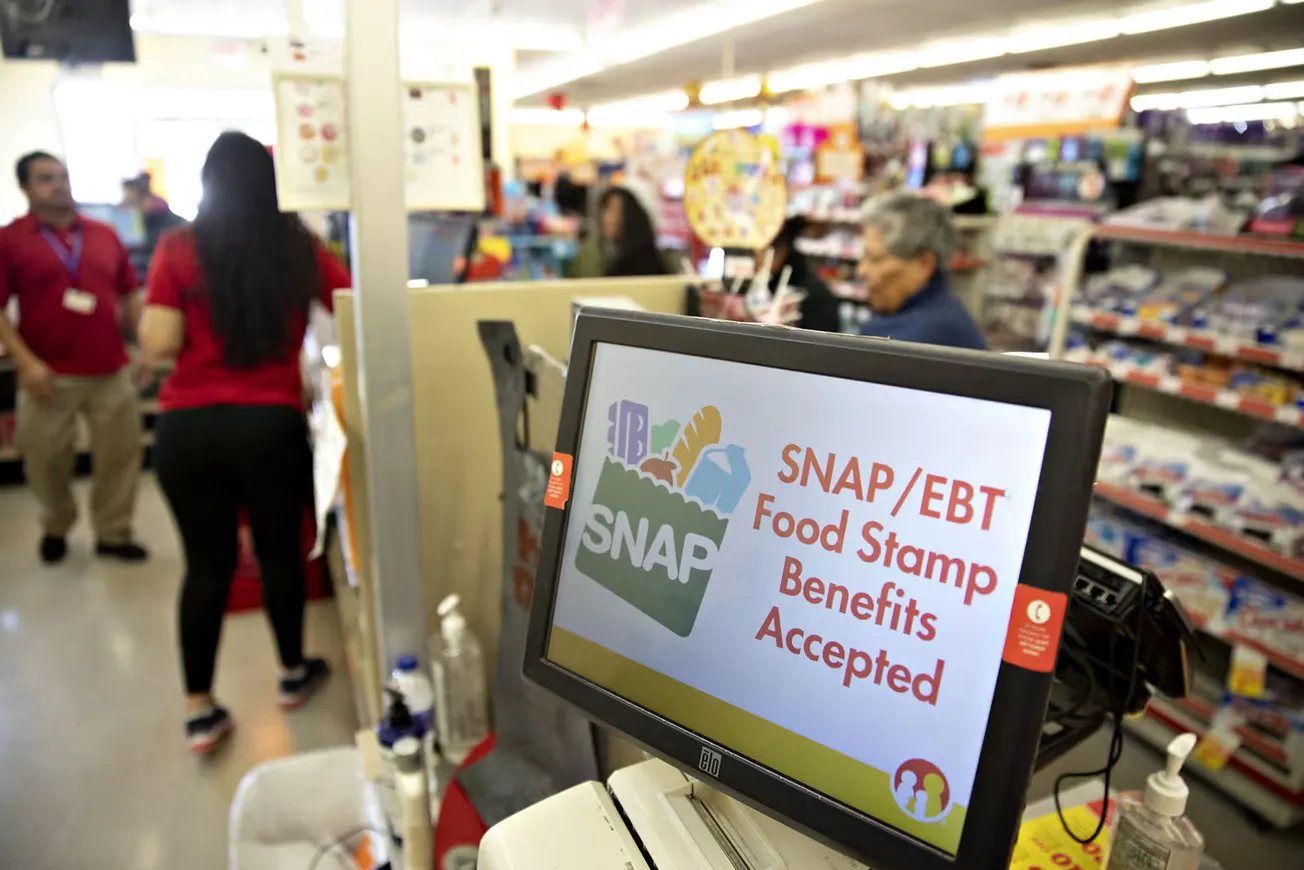
PROVIDENCE, R.I. — A federal judge in Rhode Island has ordered the Trump administration to continue funding the Supplemental Nutrition Assistance Program during the ongoing government shutdown, preventing the lapse of benefits that feed more than 42 million low-income Americans.
U.S. District Judge John J. McConnell Jr. ruled from the bench that the U.S. Department of Agriculture must distribute the contingency funds “as soon as possible” for November payments, directing the agency to tap emergency reserves to maintain benefits.
“There is no doubt that the six billion dollars in contingency funds are appropriated funds that are without a doubt necessary to carry out the program’s operation. The shutdown of the government through funding doesn’t do away with SNAP. It just does away with the funding of it. There could be no greater necessity than the prohibition across the board of funds for the program’s operations,” the judge said in his oral ruling.
McConnell also rejected the administration’s argument that the contingency funds should be reserved for other emergencies, like natural disasters. “When compared to the millions of people that will go without funds for food versus the agency’s desire not to use contingency funds in case there’s a hurricane need, the balance of those equities clearly goes on the side of ensuring that people are fed.”
The ruling came after a lawsuit filed by a coalition of cities, nonprofits, unions, and community groups seeking to force the federal government to release funds appropriated for SNAP. Democracy Forward, which represented the plaintiffs, said the decision confirmed that the administration must use its power to support people rather than harm them, and that the ruling protects millions of families, seniors, and veterans from being used as leverage in a political fight.
The case in Rhode Island occurred just minutes after another federal court in Massachusetts issued a similar early victory to 22 states and the District of Columbia, which sued the USDA for not using available funds. U.S. District Judge Indira Talwani found that the plaintiffs were likely to succeed on their claim that the suspension of SNAP benefits is unlawful and gave the administration until Monday to decide whether to authorize reduced or full benefits.
“Congress has put money in an emergency fund. It’s hard for me to understand how this isn’t an emergency, when there’s no money and a lot of people are needing their SNAP benefits.”
The rulings delivered a strong rebuke to the Trump administration, which had argued that it lacked the legal authority to use the $5 to $6 billion in contingency funds without a new appropriation from Congress. Justice Department attorney Tyler Becker argued that “there is no SNAP program and, as a result, the government cannot just provide SNAP benefits,” because the program “did not exist anymore” under the shutdown.
Judge McConnell rejected that position, ordering the USDA not only to use contingency funds but also to explore other available federal resources if the reserves prove inadequate. He instructed the administration to report back by Monday on its plan to deliver November payments.
SNAP benefits average about $187 a month per recipient and cost the federal government around $8 billion each month. Without court intervention, payments were scheduled to stop on November 1, which could leave millions of households without food assistance.
Lawmakers and advocacy groups have criticized the administration for using hunger as a political tool during the shutdown. “What a sick joke. The fact is: funding exists to keep SNAP benefits flowing, and President Trump has instead chosen to force millions of Americans to go hungry,” said Senator Patty Murray of Washington, the top Democrat on the Senate Appropriations Committee.
“The American people are already suffering, and the suffering is going to get a lot worse,” Vice President JD Vance said on Thursday, adding that the president had tried to make the shutdown as “unpainless as possible.”
The USDA had previously said it could not legally release contingency funds except in response to natural disasters. “The emergency fund is only allowed to flow if the underlying program is funded,” Agriculture Secretary Brooke Rollins said at a Capitol Hill news conference.
The Justice Department has not indicated whether it will appeal McConnell’s order, and the White House declined to comment. States and food banks across the country are bracing for possible disruptions even as the rulings provide temporary relief.
“Today’s ruling is a lifeline for millions of families, seniors, and veterans who depend on SNAP to put food on the table,” the coalition of plaintiffs said in a joint statement after the ruling. “It reaffirms a fundamental principle: no administration can use hunger as a political weapon.”