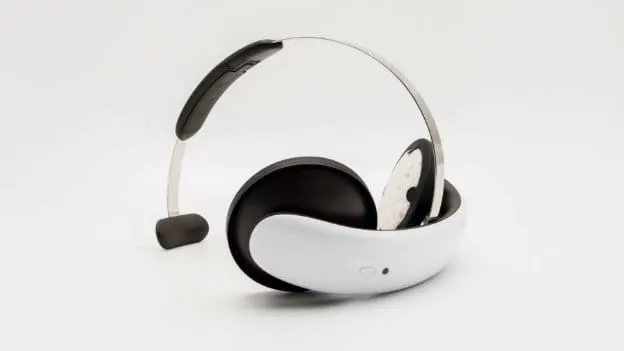
WASHINGTON — The U.S. Food and Drug Administration (FDA) has approved the breakthrough Flow brain-stimulation device FL-100 for the treatment of major depressive disorder (MDD). It marks the first time American clinicians will be able to prescribe a novel non-drug therapy called transcranial direct current stimulation (tDCS) for at-home use.
Currently, depression affects more than 20 million U.S. adults, 60% more than in the past decade. More importantly, around a third of these patients are not responsive to antidepressants, and many stop treatment because of side effects such as sexual dysfunction, weight gain, a sense of personality loss, and many others.
“We’re proud to finally offer an effective, non-drug treatment to millions of Americans living with depression,” said Erin Lee, CEO of Flow Neuroscience. “Flow’s FDA approval marks a revolutionary shift within the U.S. mental health care system: from high-risk medicalized treatments to tech-based therapies with minimal to no side effects.”
To prove device effectiveness, Flow has published a landmark randomized control clinical study in Nature Medicine, showing that patients using Flow’s device experienced symptom reductions as early as within 3-6 weeks. These results revealed a much better response to treatment than antidepressants, and side effects were also limited to mild tingling or itching at the electrode site.
The trial demonstrated, for the first time at scale, that a fully remote, home-based neuromodulation treatment can deliver clinic-grade results in major depression. Active tDCS not only outperformed sham stimulation but achieved two to three times higher remission and response rates, with 58% of patients in remission by the end of the 10 weeks. Results were also observed even among patients already on medication or psychotherapy, making it far closer to real-world conditions than most previous trials.
Just as significantly, the study proved that real-time remote supervision and adherence monitoring are feasible and safe at scale, with no serious device-related adverse events and only mild skin effects reported.
“Among our real world users, 77% see improvements in as little as three weeks. Such treatment, previously confined to clinics, can now be delivered at home, pointing to a scalable way of expanding access to effective depression care,” added Erin Lee.
By comparison, antidepressants often take months to work, require lengthy trial-and-error and can cause long-term dependency, often failing to deliver full remission.
“Without hesitation, Flow’s evidence base is one of the most robust and rigorous in the field of tDCS devices,” says Daniel Månsson, co-founder and Chief Clinical Officer of Flow Neuroscience. “For more than 6 years since the device’s launch, we’ve been building it globally with clinical trials, peer-reviewed research, and real-world case reports. Its approval in the U.S. is going to make treatment not only accessible, but finally also effective."
Prior to FDA approval, Flow has been used by more than 50,000 people in the EU, UK, Switzerland, and Hong Kong. In the UK, it was also NHS-approved and has been prescribed by doctors in their public health system.
tDCS, the technology behind Flow, is backed by more than 9000 publications and over 25 years of clinical research in depression treatment, stroke recovery, pain management, and other use-cases.
It applies a gentle electrical current to the prefrontal cortex, the part of the brain involved in mood regulation and stress response, which is often underactive in people with depression.
“We are committed to ensuring that Flow becomes a part of a standard toolkit for depression care,” says Erin Lee. “Now able to help so many more patients to achieve remission faster and almost without side effects, the device promises to reduce the strain of rapidly rising depression rates on the American healthcare system.”