
WASHINGTON – Three of the nation’s largest banks reported huge profits again today as merchants continue to press Congress to address rapidly rising “swipe” fees banks charge them to process transactions, the Merchants Payments Coalition said.
“Banks are bragging about higher profits and the easy treatment they expect from regulators while Main Street struggles,” MPC Executive Committee member and National Association of Convenience Stores General Counsel Doug Kantor said. “Credit card swipe fees are the result of price-fixing and the credit card industry is looking for ways to make sure they block any new technology that might help. It’s time for Congress to bring relief to Main Street merchants and their customers.”
JPMorgan Chase reported this morning that net profits for the second quarter totaled $15 billion, or 33.4%, on revenue of $44.9 billion. The profit margin is up from 31.2% in 2024, when JPMorgan had record profits of $54 billion for the year. The nation’s largest bank is also the largest U.S. issuer of Visa and Mastercard credit cards, with twice the dollar volume as No. 2 Citigroup. Merchant profit margins are typically around 3%.
Meanwhile, Citigroup reported net profits of $4 billion, or 18.4%, on $21.7 billion in revenue while Wells Fargo, also a large card issuer, reported net profits of $5.5 billion, or 26.4%, on $20.8 billion in revenue.
In announcing the results, JPMorgan Chairman and CEO Jamie Dimon welcomed “potential deregulation” and said “we look forward to future proposals” from the Federal Reserve to reduce protections against the next financial crisis. The announcement came as the bank reportedly plans to start charging fintechs hundreds of millions of dollars in fees to access customer bank account data they need to give consumers new, innovative services. A Consumer Financial Protection Bureau regulation adopted last year requiring banks to allow fintechs to do business was challenged in court by banks, and the agency is currently seeking to vacate the measure. Now, banks want to bankrupt those services before they get off the ground.
High swipe fees, which have jumped 70% since the pandemic and hit a record $187.2 billion in 2024, contribute to enormous profits for the card industry. Profits are even higher at Visa, which had quarterly profits of 56% as of April, and Mastercard, which had 45% as of May. By contrast, net profits for merchants average about 3%.
The earnings reports come as Congress is considering the Credit Card Competition Act to address swipe fees, which are too much for small merchants to absorb and drive up prices by nearly $1,200 a year for the average family. The fees are rising largely because Visa and Mastercard each centrally set the swipe fee rates charged by all banks that issue cards under their brands and restrict processing to their own networks.
Under the bill, banks with at least $100 billion in assets would enable credit cards to be processed over at least one unaffiliated network like Star, NYCE or Shazam in addition to Visa or Mastercard. The measure is expected to result in competition over fees, security and service that would save merchants and their customers $17 billion a year.
High profits at large banks show need to address rising ‘swipe’ fees
“Banks are bragging about higher profits and the easy treatment they expect from regulators while Main Street struggles,” MPC Executive Committee member and National Association of Convenience Stores General Counsel Doug Kantor said.

Related

GIANT expands nutrition and pharmacy support for GLP-1 users
Free store tours and virtual classes pair dietary guidance with medication expertise as use of weight-loss drugs grows.

Target pairs exclusive toys with expanded digital holiday catalog
Retailer’s 50-item gift list starts at $4.99, while its broader assortment includes more than 1,000 toys under $10.
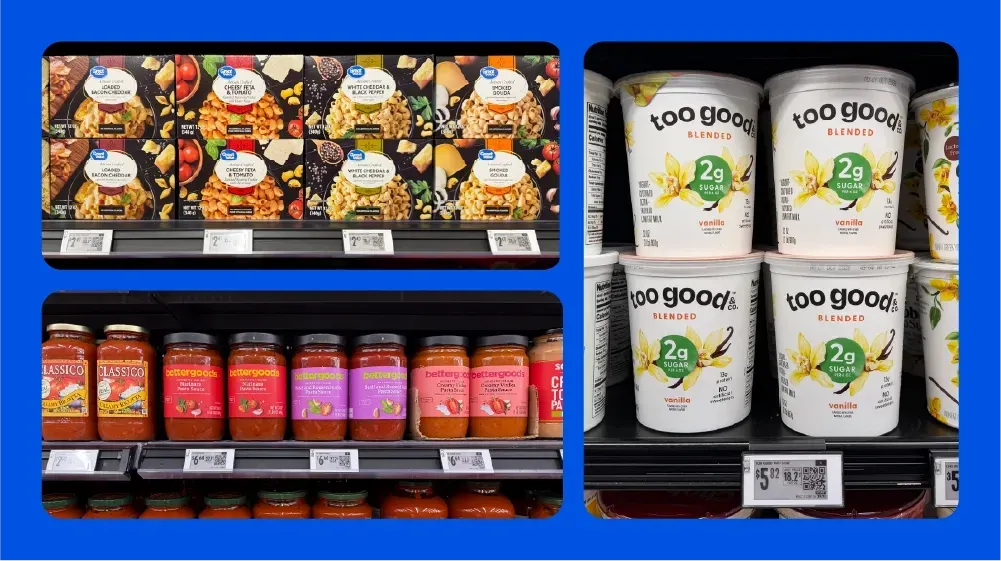
Walmart uses digital shelf labels to guide shoppers
Walmart’s new Shop to Light feature uses LEDs embedded in digital shelf labels to help customers find products in stores.

Walgreens expands vaccine access through Seniors Day in-store clinics
Vaccine clinics will take place on October 6th at Walgreens pharmacies nationwide.
Latest

Cleanlogic celebrates launch of Infusions collection in New York
Cleanlogic unveiled its new Infusions collection at a New York event marking its Ulta Beauty debut.
NCPA Foundation announces 2026 scholarship recipients
Scholarship awardees receive funds to be put toward their school tuition, complimentary registration to this year’s NCPA Annual Convention, and a travel stipend.

BodyBio launches supplements in over 500 Sprouts stores
Sprouts Farmers Market is adding a selection of BodyBio supplements focused on hydration, gut health, mineral replenishment, and cellular health.
NCPA Foundation honors Arkansas pharmacy leaders Megan Smith and Blake Torres
The Foundation recognized two Arkansas pharmacy leaders for their outstanding contributions to pharmacy education and community practice during the 2026 NCPA Annual Convention.