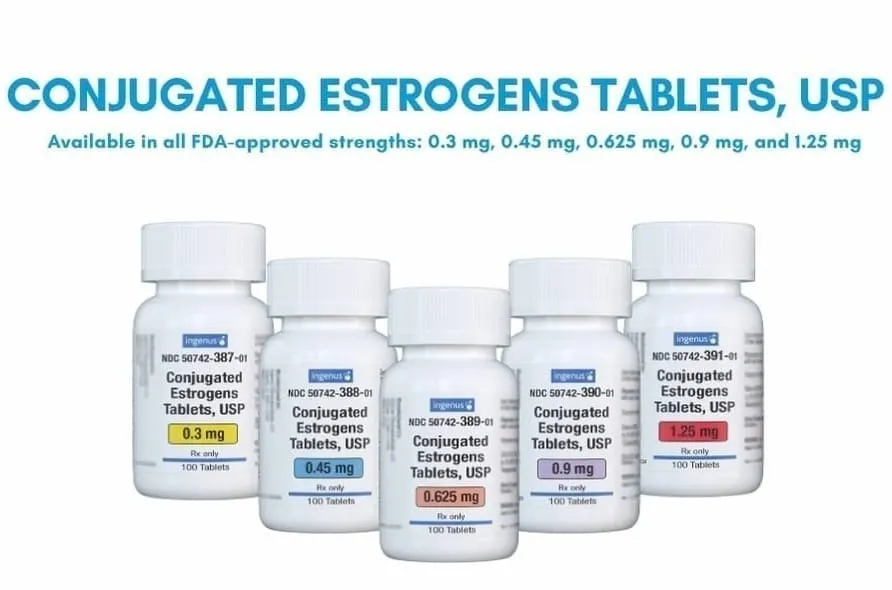
ORLANDO, Fla. — Ingenus Pharmaceuticals has received FDA approval and begun nationwide distribution of Conjugated Estrogens Tablets, USP, the first and only FDA-approved generic equivalent to Premarin Tablets. The product is available immediately across all approved strengths: 0.3 mg, 0.45 mg, 0.625 mg, 0.9 mg, and 1.25 mg.
Please see the full Prescribing Information of Conjugated Estrogens Tablets, USP, including Boxed Warning.
“The availability of the first generic version of Premarin® Tablets represents a significant step forward in expanding access to this important therapy,” said Paul Dutra, executive vice president at Ingenus Pharmaceuticals. “We are proud to continue our mission of delivering high-quality, affordable medicines to patients who need them.” Ingenus called the approval and launch “a major milestone” in the company’s growing women’s health and complex generics portfolio.
Conjugated Estrogens Tablets are indicated for the treatment of moderate to severe vasomotor symptoms due to menopause and for the prevention of postmenopausal osteoporosis, with guidance that the therapy should be considered only for women at significant risk of osteoporosis and after consideration of non-estrogen alternatives.
The product carries the full boxed warnings and safety information associated with estrogen and estrogen-progestin therapies. According to the company and WHI data, “there is an increased risk of endometrial cancer in a woman with a uterus who uses unopposed estrogens,” and adding a progestin has been shown to reduce the risk of endometrial hyperplasia. Estrogens with or without progestins “should not be used for the prevention of cardiovascular disease or dementia.”
The WHI estrogen-alone substudy “reported increased risks of stroke and deep vein thrombosis (DVT)” with daily oral conjugated estrogens 0.625 mg alone, while the estrogen plus progestin substudy “reported increased risks of DVT, pulmonary embolism, stroke, and myocardial infarction.” The WHI Memory Study found “an increased risk of developing probable dementia in postmenopausal women 65 years of age or older,” and the WHI estrogen plus progestin substudy “demonstrated an increased risk of invasive breast cancer.” Risks should be assumed to be similar for other doses or combinations in the absence of comparable data, the release noted.
The company also highlighted additional risks, including ovarian cancer, gallbladder disease and severe adverse reactions requiring discontinuation. Observational studies and meta-analyses cited in the release have reported increased risks of breast and ovarian cancer associated with hormone therapy, depending on duration of use. Estrogens “should be prescribed at the lowest effective dose and for the shortest duration consistent with treatment goals and risks for the individual woman.”
Conjugated Estrogens Tablets are contraindicated for women with undiagnosed abnormal genital bleeding; known, suspected, or a history of breast cancer; estrogen-dependent neoplasia; active or historical thromboembolic disease; arterial thromboembolic disease; liver impairment; thrombophilic disorders; pregnancy; or previous anaphylactic reaction or angioedema with the product. The most common adverse reactions (≥ 5 percent) include abdominal pain, asthenia, pain, back pain, headache, flatulence, nausea, depression, insomnia, breast pain, endometrial hyperplasia, leucorrhea, vaginal hemorrhage and vaginitis.
Ingenus is directing patients and providers to the full Prescribing Information, including the Boxed Warning, available through the company.