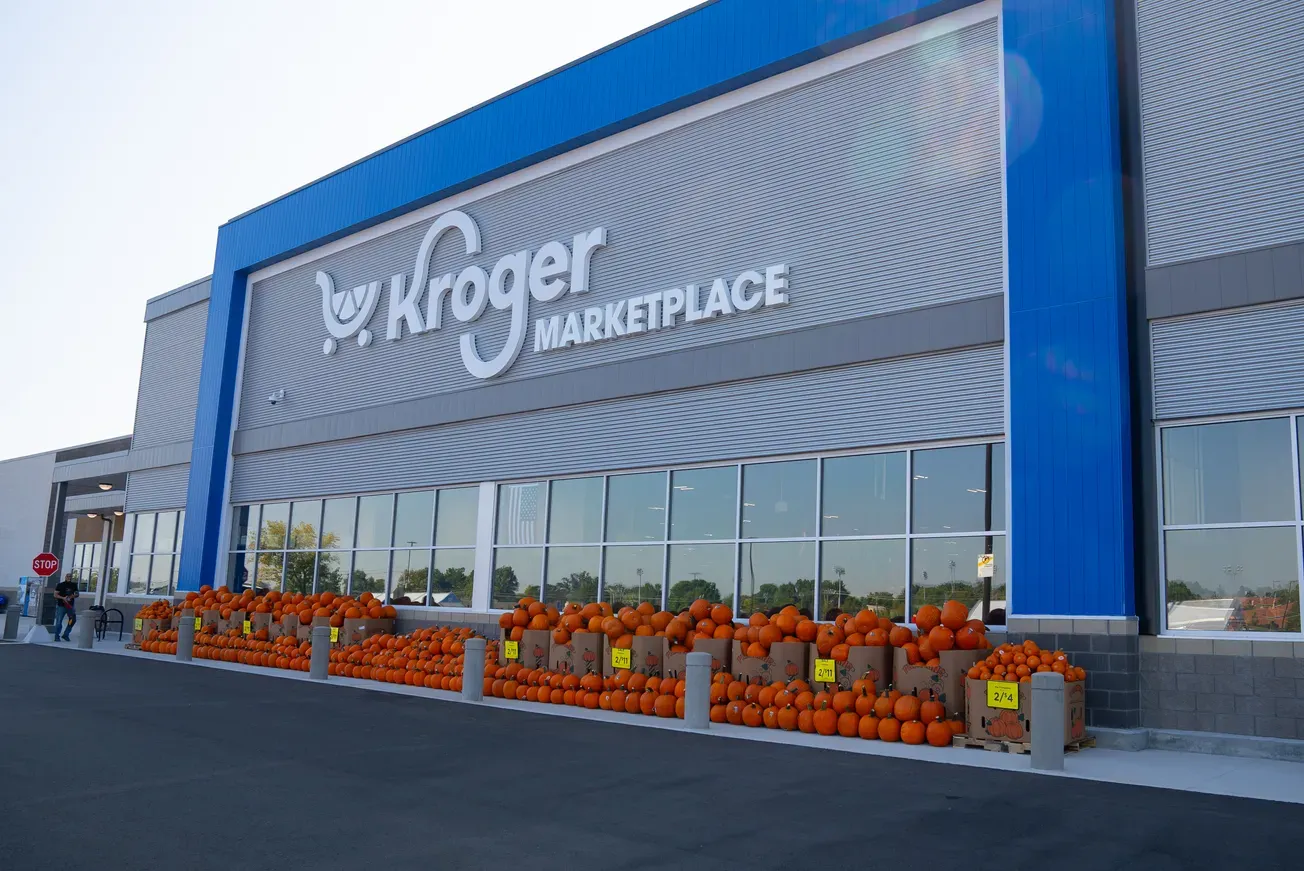
CINCINNATI — The Kroger Co. reported steady third-quarter results for fiscal 2025, reflecting improved margins, strong eCommerce growth and continued execution of its customer-first strategy even as the retailer absorbed a multibillion-dollar impairment tied to its automated fulfillment network.
For the 13 weeks ended Nov. 2, total company sales rose to $33.9 billion, up slightly from $33.6 billion a year earlier. Excluding fuel and the now-divested Kroger Specialty Pharmacy business, sales increased 2.6%, matching the company’s identical-store sales growth.
Kroger reported an operating loss of $1.54 billion, or a net loss of $2.02 per share, largely reflecting $2.6 billion in previously announced impairment and related charges—equivalent to a $3.00 per-share impact—associated with its automated fulfillment network. On an adjusted basis, FIFO operating profit was $1.09 billion, and adjusted earnings per share came in at $1.05.
Chairman and chief executive officer Ron Sargent said the quarter’s underlying performance underscores meaningful progress against Kroger’s long-term transformation priorities.
“Kroger delivered another quarter of strong results reflecting meaningful progress on our strategic priorities,” Sargent said. “Our eCommerce business posted another quarter of impressive performance. We have now completed our strategic review, which we expect will make our eCommerce business profitable in 2026.”
He added that the company remains focused on “serving our customers, running great stores, and strengthening our core business,” emphasizing that recent gains in customer satisfaction and store execution are building a stronger foundation for growth.
Gross margin improved to 22.8% of sales, up from 22.4% a year ago, supported by the sale of Kroger Specialty Pharmacy, strong performance from Our Brands, and lower supply chain and shrink costs. These gains were partially offset by growth in pharmacy sales, which carry lower margins, and continued price investments aimed at maintaining competitiveness.
The FIFO gross margin rate, excluding fuel and certain costs, improved by 49 basis points versus the prior year. Kroger recorded a LIFO charge of $44 million, up from $4 million a year earlier.
Operating, general and administrative expenses (excluding fuel and adjustments) increased modestly, rising 27 basis points as a share of sales, driven by higher associate wages and benefits and the effects of the pharmacy sale. The company also made an accelerated contribution to multi-employer pension plans, which added 8 basis points to the rate but reduced future obligations.
Kroger’s digital business continued to be a standout performer, with eCommerce sales up 17% year over year. The company said its recently completed strategic review would pave the way for profitability in the channel by 2026.
That momentum reflects ongoing investments in seamless online experiences, delivery partnerships, and digital personalization—all key elements of Kroger’s “Leading with Fresh and Accelerating with Digital” strategy.
Kroger reaffirmed its commitment to strong free cash flow generation and disciplined capital allocation. The company said it will continue investing in its business for sustainable long-term earnings growth while maintaining its investment-grade credit rating.
The grocer completed a $5 billion accelerated share repurchase (ASR) during the quarter as part of its $7.5 billion share repurchase authorization, and expects to complete the remaining $2.5 billion in open-market repurchases by fiscal year-end.
Kroger’s net total debt to adjusted EBITDA ratio stood at 1.73, compared with 1.21 a year ago, still comfortably within its targeted range of 2.30 to 2.50. The company continues to pay a quarterly dividend and expects increases over time, subject to board approval.
Chief financial officer David Kennerley said Kroger’s momentum in eCommerce and pharmacy, coupled with a resilient core grocery business, supports a more confident full-year outlook.
“Given our year-to-date results and outlook for the remainder of the year, we are narrowing our identical sales without fuel guidance to a new range of 2.8% to 3.0% and raising the lower end of our adjusted earnings per share guidance to a new range of $4.75 to $4.80,” Kennerley said.
Despite taking a large one-time charge to recalibrate its automation investments, Kroger’s results highlight continued improvement in store operations, private-brand performance, and digital growth—all key components of its post-merger strategic reset.
As Sargent summed up, “We are improving the customer experience and building a strong foundation for long-term growth.”