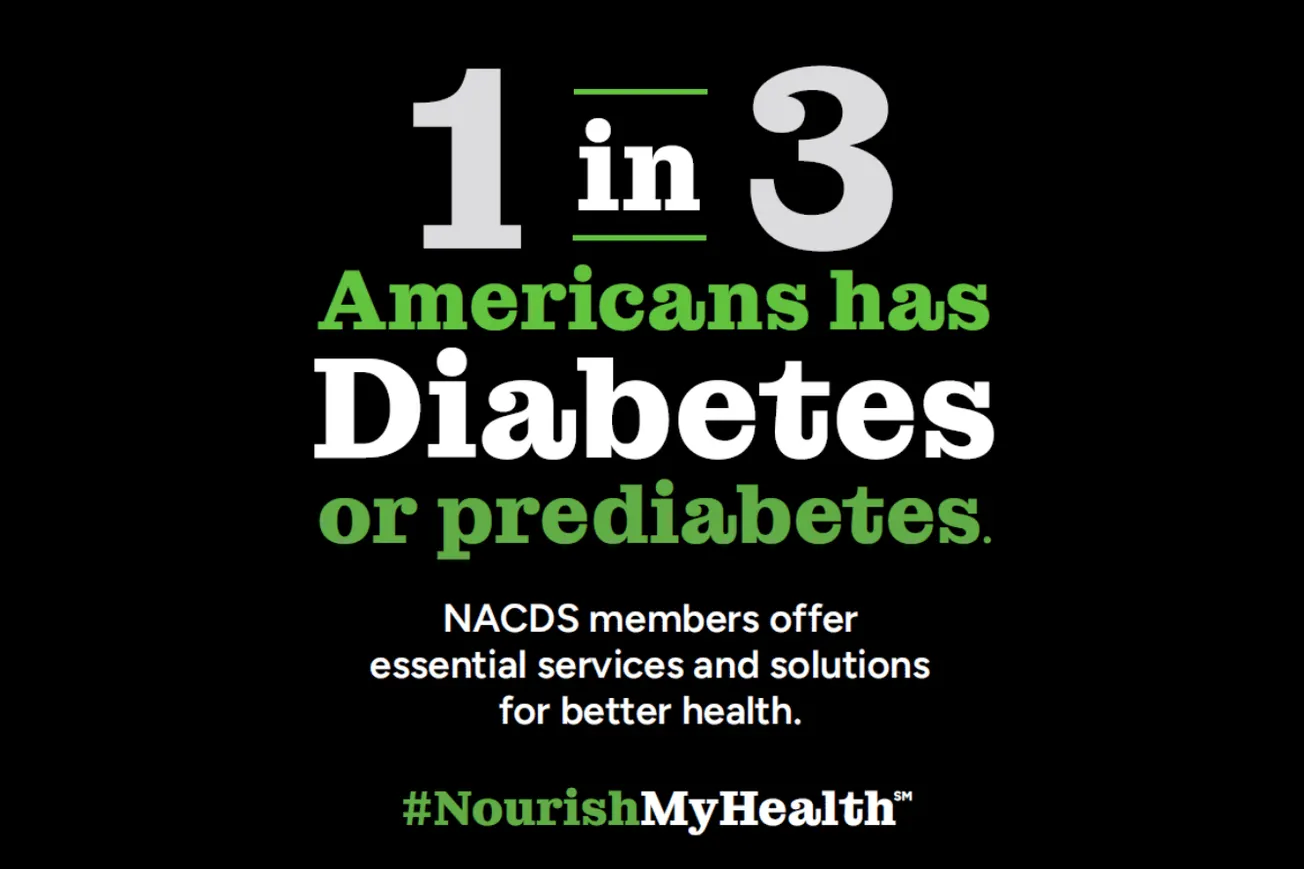
ARLINGTON, VA — As American Diabetes Month draws to a close, the National Association of Chain Drug Stores is urging renewed efforts to expand pharmacy-based care as the diabetes epidemic continues to grow. More than 38 million Americans have diabetes, and an additional 98 million are at risk. NACDS is urging policymakers to recognize and reimburse the clinical services pharmacists offer, especially in communities where access to traditional healthcare is decreasing.
A new Milken Institute report supported by NACDS, “Advancing Health Through Expanded Access to Pharmacy-Based Care,” outlines practical steps to expand the role of pharmacies in prevention, early detection, and chronic disease management. With a pharmacy within five miles of 90 percent of Americans, the report finds that pharmacies are uniquely positioned to provide screenings, education, and ongoing follow-up that improve health outcomes. Limited reimbursement and inconsistent scope-of-practice laws remain significant obstacles.
Access the Milken Institute report here.
“Diabetes is taking a heavy toll on families and our health system, but pharmacies can help change that,” said NACDS President and CEO Steven C. Anderson. “Pharmacies are often the first and most frequent point of contact for people with diabetes. When pharmacists are empowered to practice at the top of their education and training, we see better adherence and stronger health outcomes.”
Research shows that pharmacist-led care enhances early detection, encourages medication adherence, and aids in lowering blood sugar levels, thereby reducing the risk of serious complications. This approach is particularly valuable in rural and underserved areas where pharmacy teams help bridge care gaps through screenings, medication counseling, and support for healthy living.
The Milken Institute report emphasizes the importance of collaboration among pharmacies, health plans, policymakers, and technology leaders to break down barriers and speed up progress. It calls for federal and state actions to establish consistent payment models for pharmacists’ clinical services and to align scope-of-practice regulations so patients can fully benefit from pharmacists' training.
Anderson added, “As the diabetes epidemic grows and care gaps widen, it is time for policies that let pharmacists do more to help people prevent and manage chronic disease. By implementing these recommendations, we can keep neighborhood pharmacies open as vital access points for care, advance health equity, and help Americans live longer, healthier lives.”
Through its Nourish My Health public education campaign, NACDS and its member pharmacies are raising awareness and connecting patients with pharmacy-based screenings, nutrition tools, and resources to manage diabetes and other chronic conditions.