JACKSONVILLE, Fla. — As affordability remains a key concern for consumers, new research from Acosta Group indicates that grocery purchasing power and shopping behavior are increasingly diverging. The findings, detailed in the inaugural Acosta Group Affordability Tracker, assess grocery affordability by comparing the cost of a typical stock-up grocery trip with median hourly earnings in the United States.
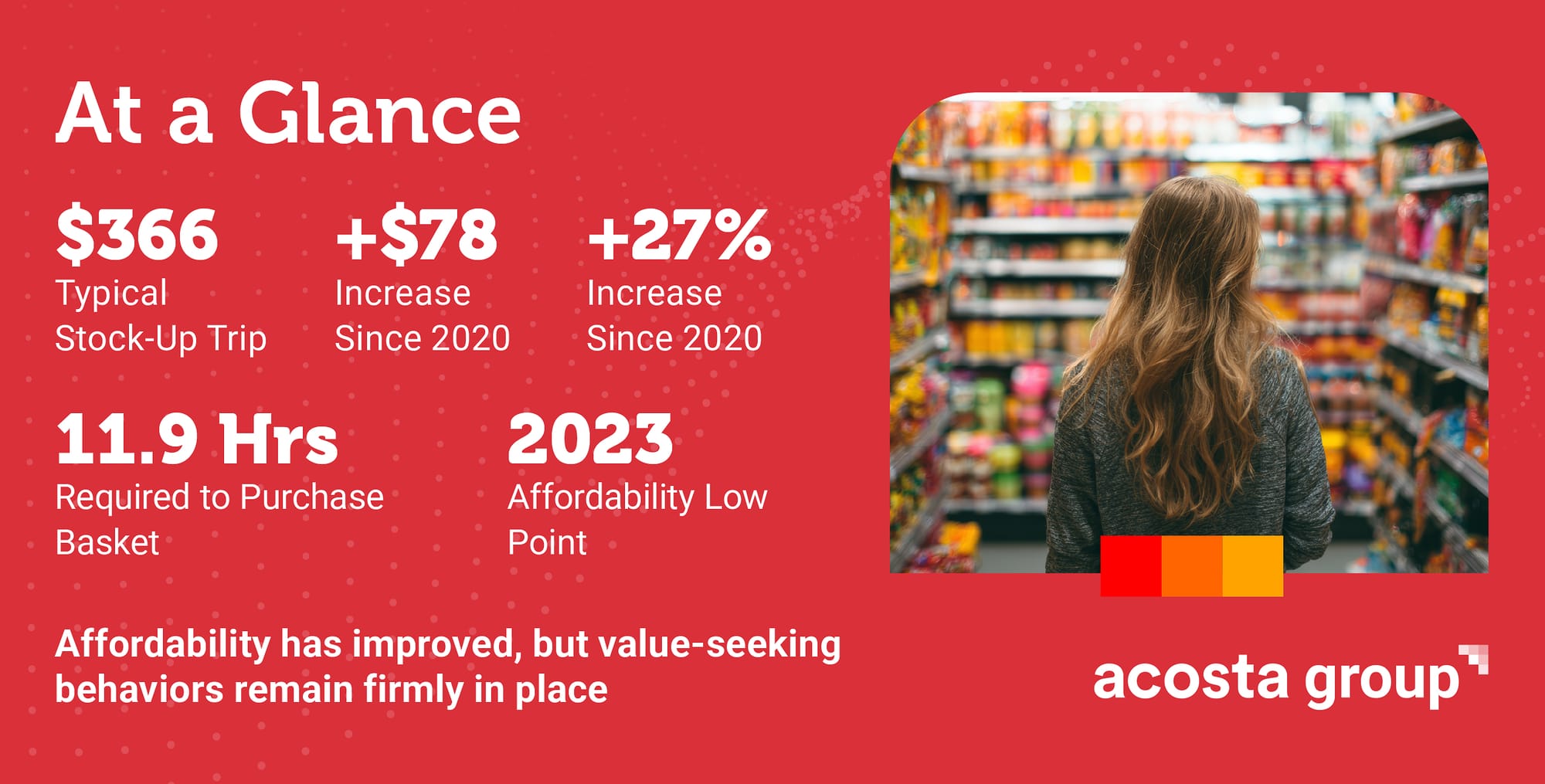
While grocery affordability has improved since reaching its low point in 2023, grocery prices remain historically elevated and many households continue feeling pressure from housing, insurance, healthcare and other essential expenses. Within grocery, however, wage growth has helped restore a portion of the purchasing power consumers lost during the inflationary period. Many of the shopping habits consumers developed during that period remain firmly embedded in the shopping process. Acosta Group's Typical Stock-Up Trip, an 84-item basket representing commonly purchased grocery and household essentials, now costs more than $366, approximately 27% more than a comparable basket in 2020.
Despite those gains, shoppers continue demonstrating elevated levels of promotional engagement, heightened price awareness and increased purchase scrutiny, suggesting that inflation's influence on consumer behavior may outlast the inflationary period itself. At the same time, many consumers continue making careful spending trade-offs as housing, insurance, health care and other household expenses compete for their budgets.
"As affordability continues to dominate conversations among consumers, retailers and policymakers alike, we wanted to step back and examine the issue through a different lens," said Colin Stewart, EVP, Business Intelligence, Acosta Group. "Most conversations focus primarily on prices, but grocery affordability is best understood through the relationship between what consumers spend and what they earn. What we found is that grocery purchasing power has improved since the peak inflation years, yet many of the shopping behaviors consumers developed during that period remain firmly in place. That suggests the inflationary period may have changed consumers in more durable ways than many expected."
Key findings from the report include:
• The Typical Stock-Up Trip now costs more than $366, approximately 27% more than in 2020.
• Wage growth helped restore a portion of the purchasing power consumers lost during the inflationary period.
• Grocery purchasing power improved from its 2023 low point as earnings growth outpaced grocery inflation during portions of the recovery period.
• The affordability recovery has largely stabilized, suggesting future gains may be more incremental than those experienced between 2023 and 2025.
• Consumers continue exhibiting many of the value-oriented shopping behaviors developed during the inflationary period, including elevated promotional engagement and more deliberate spending decisions.
The findings suggest retailers and brands may need to rethink assumptions about how consumers respond to improving economic conditions.
Historically, many shopper behaviors associated with economic stress moderated as conditions improved. The Acosta Group Affordability Tracker suggests a different pattern may be emerging. While grocery purchasing power has improved, many consumers continue evaluating purchases through a heightened value lens, actively comparing alternatives, seeking promotions and scrutinizing spending decisions more carefully than before the inflationary period.
"The most important implication may be that improving grocery purchasing power alone does not appear to be reversing many of the shopping behaviors consumers developed during the inflationary period," Stewart said. "Consumers have adapted to a marketplace defined by higher prices, and many of the habits developed during that adaptation now appear increasingly durable. For retailers and brands, future growth may depend less on waiting for economic conditions to normalize and more on understanding how consumer expectations around value have changed."
The report also highlights the distinction between grocery affordability and broader household financial sentiment. While grocery purchasing power has improved, consumers continue facing pressure from housing, insurance, healthcare, transportation and other household expenses, helping explain why many shoppers continue feeling financially constrained despite measurable gains in grocery affordability.
The inaugural edition of the Acosta Group Affordability Tracker focuses specifically on grocery affordability and is intended to serve as the foundation for a recurring research series examining affordability, purchasing power, value perceptions and consumer behavior.
The full report is available at https://www.acosta.group/affordability-mindset/
Submit Your Press Release
Have news to share? Send us your press releases and announcements.
Send Press Release