CHICAGO — CPG brands spend billions on promotions every year. But for decades, measurement hasn't kept up.
The result: one of the most powerful ways to get a product into the hands of a consumer (and keep it there) has been relegated to a tactical lever, hampered by industry stagnation, misaligned incentives, and inadequate third-party measurement.
That's a huge missed opportunity for brands, retailers, and consumers alike, especially in today's value economy, where inflation has changed how people shop: loyalty is down, price sensitivity is up, and brands are under pressure to prove the ROI of every dollar spent.
Done well, promotions don't discount the brand. They are a decision tool to drive CPG growth. New research from Circana helps quantify that impact using the same rigorous methodology applied to media effectiveness.
The partnership that brings the proof
Ibotta and Circana share a commitment to understanding real-world consumer behavior through complementary views of the purchase journey and the decisions that drive growth.
Ibotta is a performance platform that optimizes the path to purchase for brands, consumers, and retailers. Through a unique network of retailer partnerships and closed-loop, item-level transaction data, Ibotta enables leading CPG brands to deliver relevant incentives and validate incremental sales impact at scale.
Circana is a global leader in retail and media measurement, helping brands quantify the impact of marketing investments across channels. By applying consistent, transparent methodologies across both media and promotions, Circana enables marketers to compare performance on equal footing.
Using campaigns executed through Ibotta’s platform, Circana applied the same methodology commonly used in media effectiveness studies to evaluate promotional performance. The findings help reframe what promotions are capable of when evaluated using a consistent measurement approach.
The research: a new measurement standard for promotions
The Circana meta-study analyzed 48 Ibotta campaigns across multiple CPG categories using a causal methodology — the same rigorous approach applied to media effectiveness research. By comparing outcomes between matched buyer groups, the analysis isolated true incremental impact, separating what promotions actually drove from what would have happened anyway.
The results: Ibotta promotions outperformed media benchmarks
Ibotta campaigns didn't just move products. They drove trial, built new purchase habits, and extended impact well beyond the featured SKU.
- +16.5% average lift in incremental sales
- +17% average increase in new household penetration
- +10.9% average sales lift on non-promoted items within the same brand portfolio
- +10.6% average increase in household penetration across the broader portfolio
.png)
Sales and penetration lift represent Ibotta-Circana study averages. Circana benchmarks represent total store and across Programmatic Display and Video, Publisher Direct Display and Video, and Linear and CTV.
But here's the bigger story: when evaluated against Circana’s cross-channel benchmarks, the campaigns analyzed in this study performed above typical media ranges on key growth metrics.
- Sales lift: Ibotta campaigns in this study averaged 16.5% — exceeding total store benchmarks by 7x
- Household penetration lift: Ibotta campaigns in this study averaged 17% — 8x the total store benchmark
Circana’s broad cross-channel benchmarks show that when consistent causal methods are applied, promotions can deliver performance comparable to, and in some cases exceeding, traditional media across key growth metrics. This shift enables marketers to evaluate investments more holistically, based on their ability to drive true incremental outcomes rather than channel-specific metrics.

"For years, promotions and media have been evaluated on different standards, limiting marketers’ ability to make true investment comparisons. What this research shows is that when you apply the same methodology used for traditional media, promotions can play a much larger role in driving incremental growth than many organizations currently assume," Yeimy Garcia Smith, SVP, Global Media Enablement & Measurement.
The buyer segments that define brand growth
Promotional effectiveness isn’t simply about whether a promotion drives sales. It’s also about understanding how different buyer segments contribute to growth.
The analysis identified three distinct buyer segments, each tied to a different growth outcome.
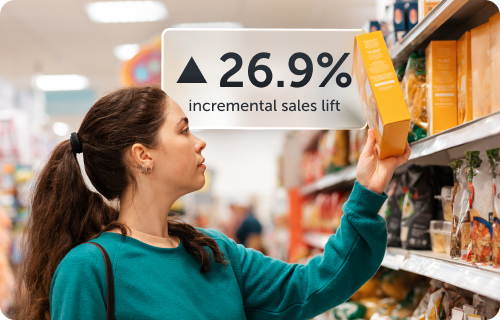
New-to-category buyers: expand the market
The strongest long-term growth strategies don't just capture existing demand. They create new demand entirely.
Among shoppers who hadn't purchased within a category in the previous 52 weeks, the research found an average +26.9% incremental sales lift.
The opportunity isn't simply competing for share — it's expanding category demand and acquiring entirely new buyers for the brand.
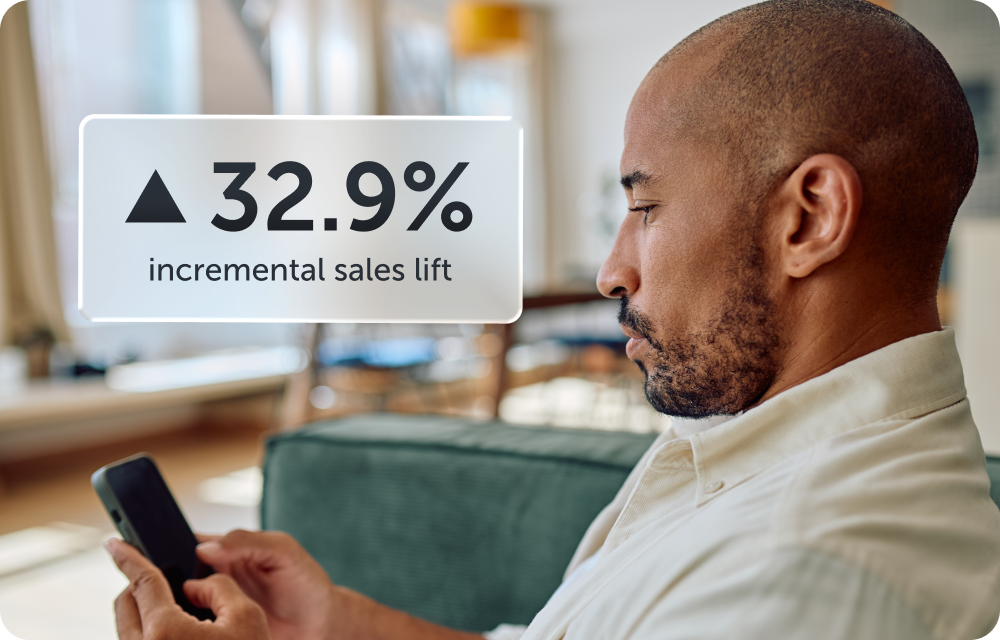
Among shoppers who purchased competing products in the previous 52 weeks, the research found a +32.9% average incremental sales lift when exposed to featured promotions.
Traditional digital media often struggles to influence shoppers at the exact moment a category decision is being made. The right promotional offer, positioned at that moment, doesn't just reach a shopper — it earns a switch.
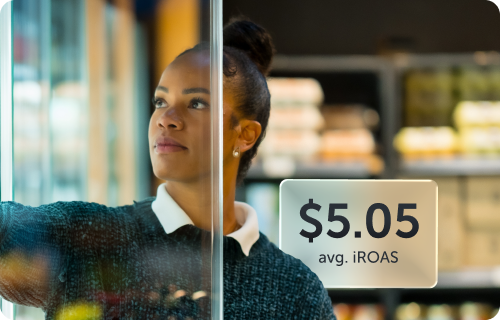
In a value economy, no buyer is guaranteed. Even loyal shoppers are reconsidering every purchase — and promotions are one of the most effective ways to protect that base.
Existing brand buyers delivered the highest return on ad spend, generating an average iROAS of $5.05. These shoppers are already familiar with the brand and already inclined to purchase. The promotion isn't there to create awareness — it's there to reinforce value and accelerate conversion at the moment of decision.
That's not incentivizing alone. It's protecting the equity brands have spent years building.
Promotions are precision growth levers
Rather than treating promotions as blunt instruments, marketers now have validation that promotions can be deployed intentionally against specific growth objectives — expanding category demand, converting competitive shoppers, or protecting existing share.
And because these outcomes can be measured with the same standards traditionally applied to media, promotions increasingly function as a conversion layer within the broader marketing system, helping connect media investment to measurable sales outcomes.
What makes promotions different from traditional media isn't just the measurement — it's the transaction. Instead of paying for the chance to be seen, brands are paying for the moment a consumer chooses them.
In an economy where every consumer dollar is increasingly deliberate, promotions are no longer simply discount mechanics. Deployed intelligently, they are one of the most precise growth levers available.