Pharmacy groups hailed Congress’ passage this month of PBM reforms.
President Trump signed the long-awaited reforms into law after they were included in a spending package approved by the House of Representatives. The legislation, which passed with a 217-214 vote, was approved earlier by the Senate, 71-29.
“Congress and the Trump administration are delivering a historic win for the American people and for the trusted pharmacies that serve as the face of neighborhood health care,” said National Association of Chain Drug Stores president and chief executive officer Steve Anderson. “These PBM reforms are integral to reducing people’s drug costs and keeping pharmacy care within reach, and they must be implemented swiftly, effectively and as intended by Congress.”
“The abuses of the dominant PBM middlemen are widely recognized, and this landmark federal action reflects the broad, bipartisan commitment to confront and remedy them,” added Anderson. “This is the most important federal achievement to date for PBM reform, and it will sustain momentum and enable further reforms where needed.”
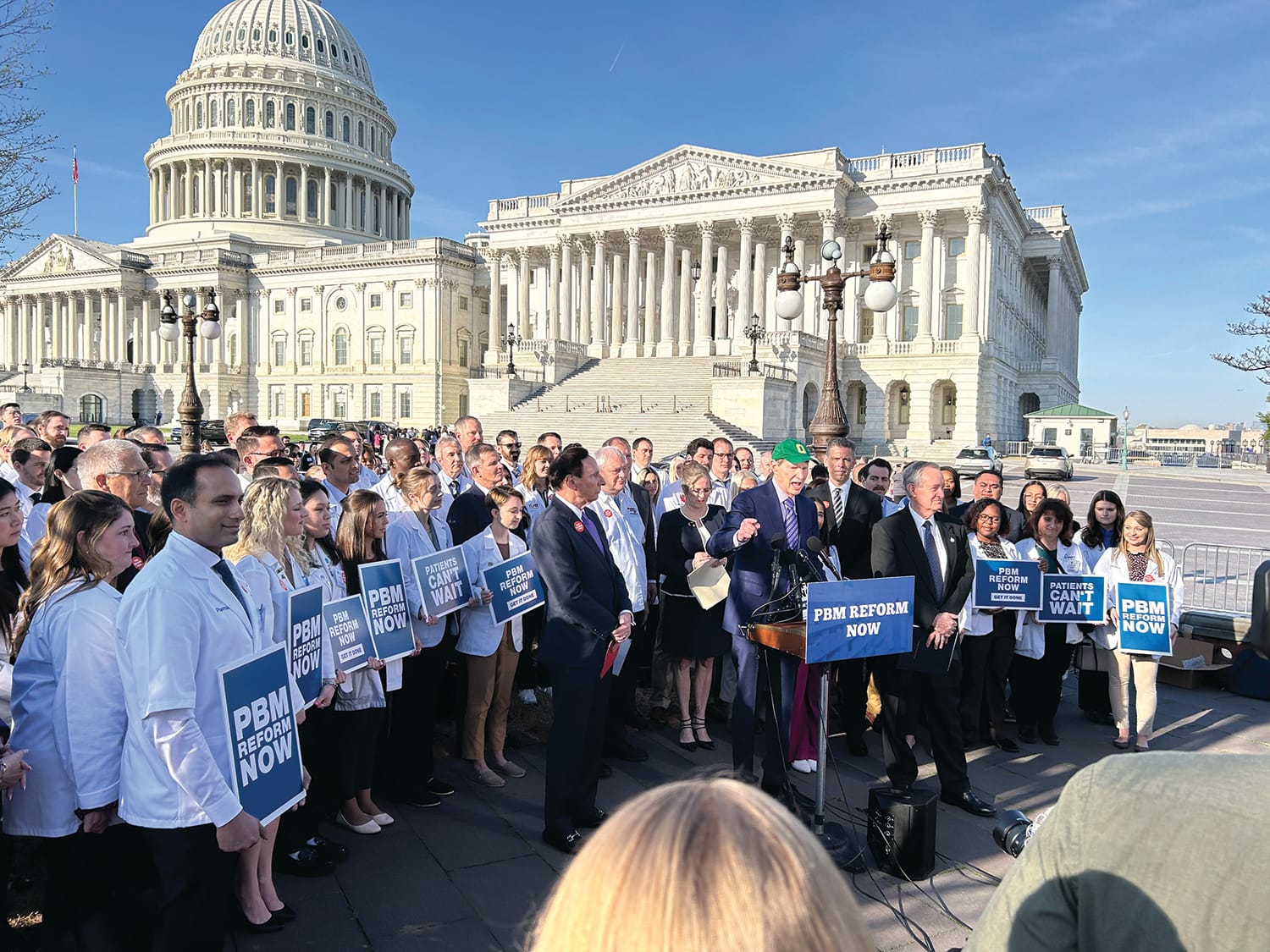
He expressed deep gratitude to “the bipartisan champions” who crafted and advanced the reforms, to members of Congress who cast decisive votes, and to Trump “for his commitment to rein in middlemen practices that have harmed patients and undermined pharmacy access.”
At the center of the government’s action is a landmark Medicare Part D reform requiring the Centers for Medicare and Medicaid Services (CMS) to define what constitutes “reasonable and relevant” PBM contract terms for pharmacies and to establish a formal appeals process for them to challenge unfair or noncompliant terms. This provides a clear enforcement mechanism to address PBM contracting practices that have left pharmacies with no meaningful ability to negotiate or dispute terms.
The legislative package also includes broader PBM transparency and compensation provisions that will benefit health plan sponsors and employers. These increase visibility into PBM revenue streams, rebate practices and payment structures, helping ensure PBMs are operating to support lower costs for patients and employers. The measures promote transparency by allowing CMS to track payment trends to pharmacies and pharmacy inclusion in PBM networks, including a new designation of essential retail pharmacies, and they prohibit PBM compensation in Medicare Part D from being tied to a drug’s list price in an effort to reduce drug prices and save money for taxpayers.
A spokesman for CVS Caremark, one of the “Big 3” PBMs, said the company was the first major PBM to launch a fully transparent drug-level price transparency initiative with clients, one that enables each client to share rebates all the way through to consumers.
“We welcome policy makers’ ideas around additional ways to improve the entire supply chain,” he said. “But those new policies should all be judged on whether they will actually lower prescription drug costs, versus simply limiting PBMs’ ability to serve as a counterweight to pharma price gouging. In this spending bill, pharma wins.”
Jennifer Hatcher, chief public policy officer for FMI – The Food Industry Association, called the reforms “a major step towards lower costs, better care and less red tape.” FMI and its members operating nearly 12,000 supermarket pharmacies “look forward to working with CMS to define and enforce ‘reasonable and relevant’ PBM contract terms that benefit customers.”
She credited House and Senate leadership for getting the measure passed in “an exceptionally challenging political environment.” The approval reflects “years of sustained advocacy and bipartisan work to address PBM practices that have increasingly undermined pharmacy viability and patient access,” she said.
Community pharmacy owners are “the canary in the coal mine when it comes to federal or state prescription programs,” said Doug Hoey, CEO of the National Community Pharmacists Association. “For years, our members and we have been telling anyone who will listen — and worked to convince others who wouldn’t listen — about the PBM-insurer conglomerates gobbling up market share, driving up drug costs, crushing small business pharmacies, and making it more difficult for patients to receive the care they need. We’ve been warning that unless action is taken, more pharmacies will close, and more pharmacy deserts will grow. Unfortunately, as time passed, we were proven correct and, finally, there is action to help reverse these trends.”
One note of dissatisfaction was expressed by the American Pharmacists Association, which welcomed the PBM provisions as meaningful progress but sharply criticized lawmakers for failing to include legislation that would enable Medicare to cover pharmacist-provided patient care services, like H.R. 3160, the Ensuring Community Access to Pharmacist Services Act.
“While these reforms begin to address one of the most significant challenges pharmacists face under Medicare, they represent only part of what’s needed,” said APhA CEO Michael Hogue. “To truly improve health care delivery, Congress and Medicare must also recognize and pay for the patient care services that pharmacists provide every day.”
APhA said the legislation stops short of fully modernizing pharmacy payment policy. It argued that without Medicare coverage for pharmacist-delivered preventive and clinical services, community pharmacies will remain financially strapped and patients will miss out on lower-cost care that can reduce hospitalizations and overall health spending.
“These reforms are an important first step,” Hogue said, “but lasting progress requires valuing pharmacists not only as dispensers of medications but as frontline health care providers.”