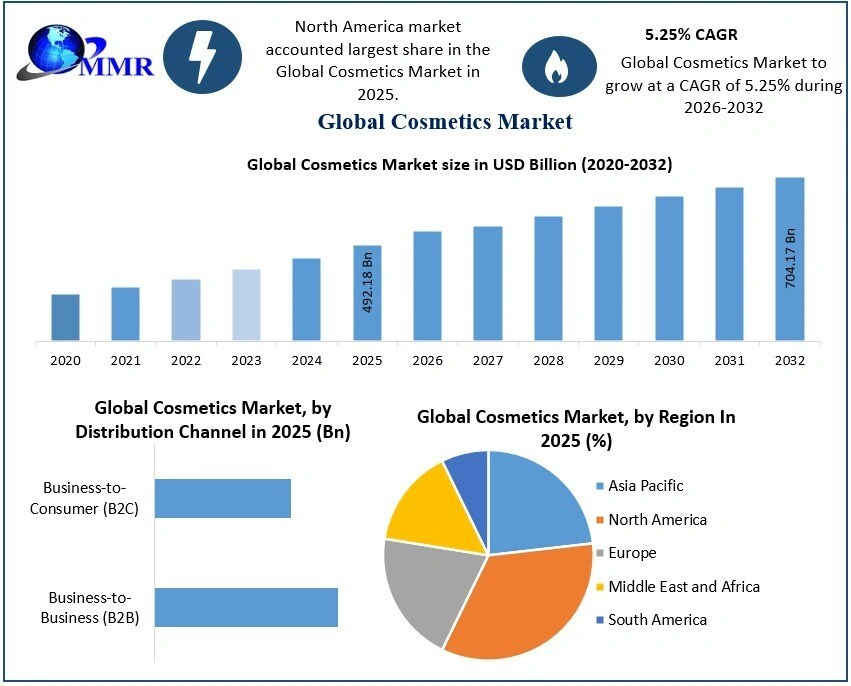
PUNE, India — The global cosmetics market is projected to reach $704.17 billion by 2032 from $492.18 billion in 2025, with a 5.25% CAGR, according to Maximize Market Research. Growth is broad, but the U.S. drives it, fueled by premium skincare demand, digital commerce, and AI-enabled beauty solutions.
North America, led by the United States, remains the largest regional cosmetics market. Growth is driven by premium skincare, clean-label branding, and digital-first engagement strategies. As AI-powered diagnostics, AR try-ons, and science-backed formulas continue to expand, U.S. retail will play a key role in shaping global beauty innovation through 2032.
Get Full PDF Sample Copy of Report: (Including Full TOC, List of Tables & Figures, Chart) here: https://www.maximizemarketresearch.com/request-sample/72541/
Skincare Anchors U.S. Market Performance
Skincare made up 48% of global cosmetics revenue in 2025, and the U.S. market reflects this leadership. American consumers still focus on dermatologist-recommended regimens, anti-aging solutions, sun care, and microbiome-friendly products.
Retailers across mass, drug and specialty channels are expanding assortments in:
- Serums and essences
- Moisturizers and barrier-repair creams
- SPF-infused daily care
- Acne and sensitive-skin treatments
The premiumization of skincare remains especially strong in the U.S., where science-backed claims and clinical positioning drive higher average unit retail.
AI and AR Transform Beauty Engagement
Technology integration is transforming the American beauty aisle. Companies like L'Oréal, Estée Lauder, and Shiseido are investing heavily in AI diagnostics, personalized product suggestions, and augmented reality virtual try-ons.
U.S. consumers are increasingly engaging with:
- AI-powered skincare assessments
- Virtual shade matching
- Custom foundation tools
- At-home beauty devices
These capabilities enhance omnichannel strategies by connecting digital discovery with in-store conversion.
Clean Beauty and Sustainability Gain Ground
The American market continues to lead in clean beauty adoption. Demand for cruelty-free, vegan, and plant-based products remains high, supported by retailer transparency initiatives and ingredient disclosure standards.
Growth is also visible in refillable packaging, recyclable parts, and zero-waste strategies. Regulatory scrutiny and retailer clean-label standards are speeding up reformulations for both luxury and mass-market brands.
Male Grooming and Inclusive Beauty Expand
U.S. growth is further boosted by increasing male skincare adoption and broader inclusive shade ranges. Brands are customizing anti-aging, beard care, and daily skin maintenance products specifically for male consumers, while inclusive marketing continues to reshape assortment strategies.
Retail Channel Dynamics
Business-to-consumer channels dominate in the U.S., particularly:
- Online retail platforms
- Mass merchants and supermarkets
- Specialty beauty retailers
- Brand-owned digital storefronts
Social commerce and influencer-led product launches are speeding up hybrid product innovation, including serum foundations and tinted SPF moisturizers.
Competitive Landscape
Key global players active in the U.S. market include:
- Procter & Gamble
- Revlon
- Beiersdorf
- Henkel
- Amway
Strategic priorities include AI-driven personalization, microbiome-focused cosmeceuticals, sustainable ingredient sourcing and premium anti-aging innovation.
Submit Your Press Release
Have news to share? Send us your press releases and announcements.
Send Press Release