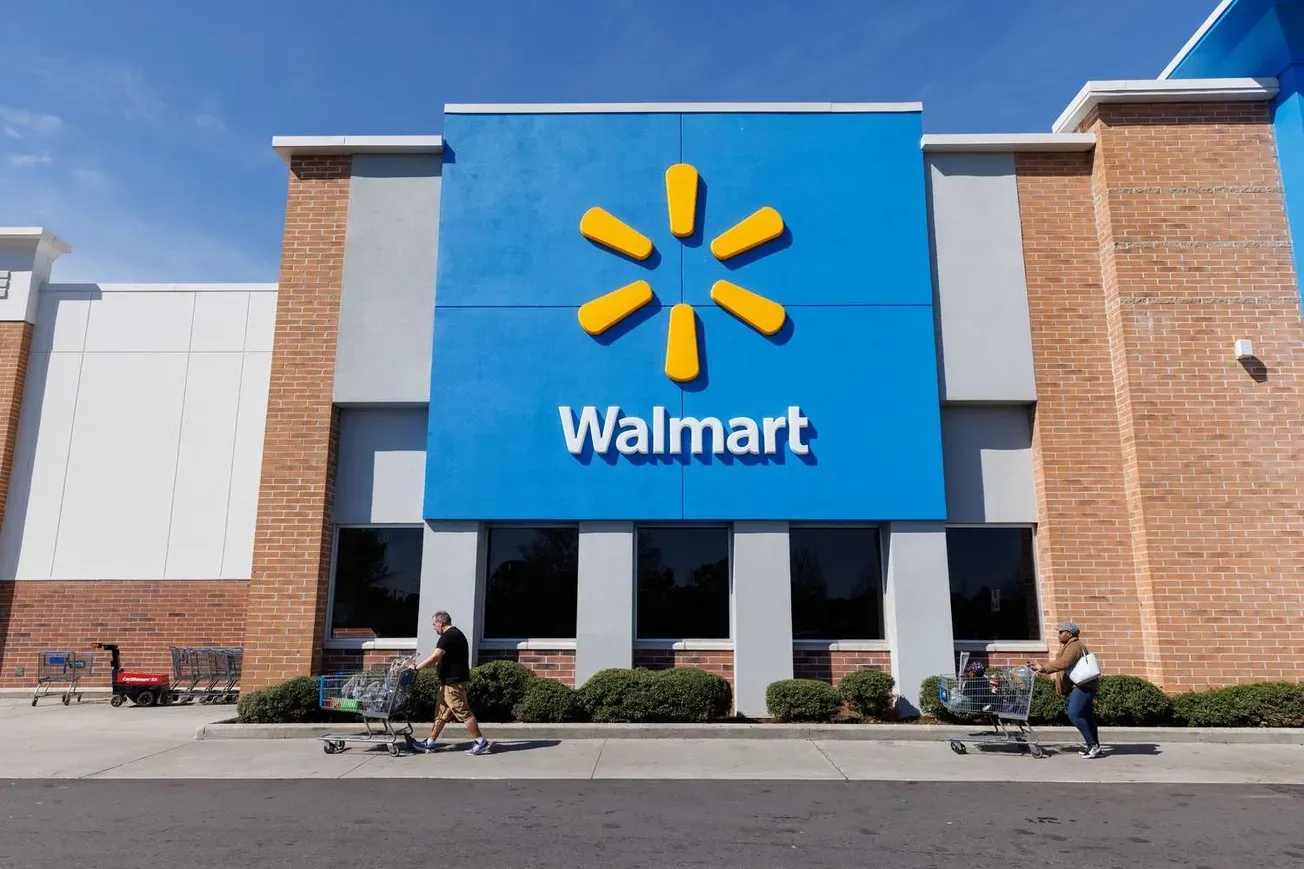
CINCINNATI — Financial strain is continuing to redraw the American grocery map, with Walmart reaching a record 72% grocery penetration as affordability concerns deepen across working-age households, according to new research from dunnhumby.
Wave 12 of dunnhumby’s Consumer Trends Tracker (CTT), released Wednesday, found that seven in 10 Americans ages 18 to 54 report difficulty covering an unexpected $400 expense — a level of financial insecurity that is driving measurable shifts in where and how consumers shop.
Walmart’s penetration rose six percentage points year over year, marking the largest gain among all retailers tracked in the quarterly study. The Bentonville-based retailer now serves more than 190 million Americans monthly — roughly 2.5 times the reach of second-place Dollar General, which posted 28.6% penetration.
More broadly, mass-channel retailers have reached 79% penetration, equaling traditional supermarkets for the first time since the tracker launched in April 2022. That milestone signals what researchers describe as a structural change in American shopping behavior.
“We are seeing that U.S. households are realigning where they shop based on affordability,” said Matt O’Grady, President of the Americas for dunnhumby. “What makes this different from the 2023 inflation spike is that consumer concern persists even as actual inflation moderates. The consumer is just not feeling it. Where they shop, how they use coupons, even how they adopt AI — everything aligns to saving money.”
Dollar Stores Surge as Pressure Builds
Dollar stores have climbed to 42% penetration, overtaking club stores for the first time since August 2023. Dollar Tree and Family Dollar joined Dollar General in gaining between four and six percentage points year over year.
The shift reflects deepening financial strain across income cohorts. Among households earning under $50,000 annually, 71% report financial insecurity. Even among households earning $50,000 to $100,000, nearly half — 48% — struggle to cover emergency expenses. Thirty-six percent of households earning more than $100,000 report similar difficulty.
Only seniors appear comparatively insulated, with 30% of Americans over 65 reporting financial insecurity.
Food insecurity — defined in the study as reducing meal size or skipping meals due to financial hardship — affects nearly 40% of Americans ages 45 to 54, the highest rate of any age group. One in three families with children report food insecurity, with rates highest in the South Central (34%) and West (32%) regions compared with the Northeast (22%).
Working-age adults experience food insecurity at more than four times the rate of seniors.
Inflation Perception Gap Persists
Compounding the pressure is a widening perception gap around inflation. While actual food inflation measured 2.4% in December 2025, consumers believe prices are rising at nearly 19.6% — more than eight times the reported rate. Lower-income households perceive inflation even higher, at 23.6%.
The disconnect, dunnhumby notes, underscores why behavior has not normalized despite moderation in official inflation figures.
“When financial insecurity becomes this entrenched, grocery affordability becomes paramount, and shopping behavior doesn’t just snap back,” O’Grady said.
Interestingly, the study found that consumers moderated some of their most aggressive price-seeking tactics during the holiday season. Shopping at low-price stores declined 2.1 percentage points, and premium purchases dipped 1.5 points. However, bulk buying increased 1.3 points, suggesting shoppers selectively spent in December while maintaining longer-term savings strategies through stockpiling.
Loyalty and Promotions Gain Traction
Coupon and loyalty engagement continues to climb. Nearly half of shoppers — 47% — now redeem coupons through store loyalty programs, up 2.5 percentage points from the prior wave. Fifty-two percent actively identify themselves at checkout to claim rewards.
Sixty-eight percent of shoppers seek discounts on items they buy regularly, and 62% expect abundant promotions from retailers.
The data reinforces the importance of first-party data and loyalty ecosystems as retailers compete for financially stretched shoppers who are increasingly strategic in their spending.
AI Adoption Remains Limited
Despite the proliferation of artificial intelligence tools across retail, adoption in grocery remains limited. Just 15% of U.S. consumers report using AI tools for grocery shopping.
Trust is the primary barrier. Thirty-eight percent say they see no need for AI, and 37% prefer making their own decisions. U.S. shoppers are more distrustful of AI recommendations (19%) than the broader Americas average (12%).
Among early adopters, Americans are more likely to use AI for shopping list creation (13%) than for price comparison (12%), suggesting utility-driven experimentation rather than broad reliance.
A Structural Realignment
The Wave 12 findings are based on interviews with 8,500 grocery shoppers across North and South America conducted in December 2025.
For retailers, the takeaway is clear: affordability is no longer a temporary response to inflation spikes but a sustained competitive battleground. As mass-channel retailers match traditional supermarkets in penetration — and Walmart extends its reach to nearly three-quarters of U.S. consumers — the shift appears less cyclical and more structural.
In an environment where 70% of working-age Americans feel financially insecure, value is not simply a promotional lever. It is the organizing principle reshaping the U.S. grocery landscape.
Submit Your Press Release
Have news to share? Send us your press releases and announcements.
Send Press Release