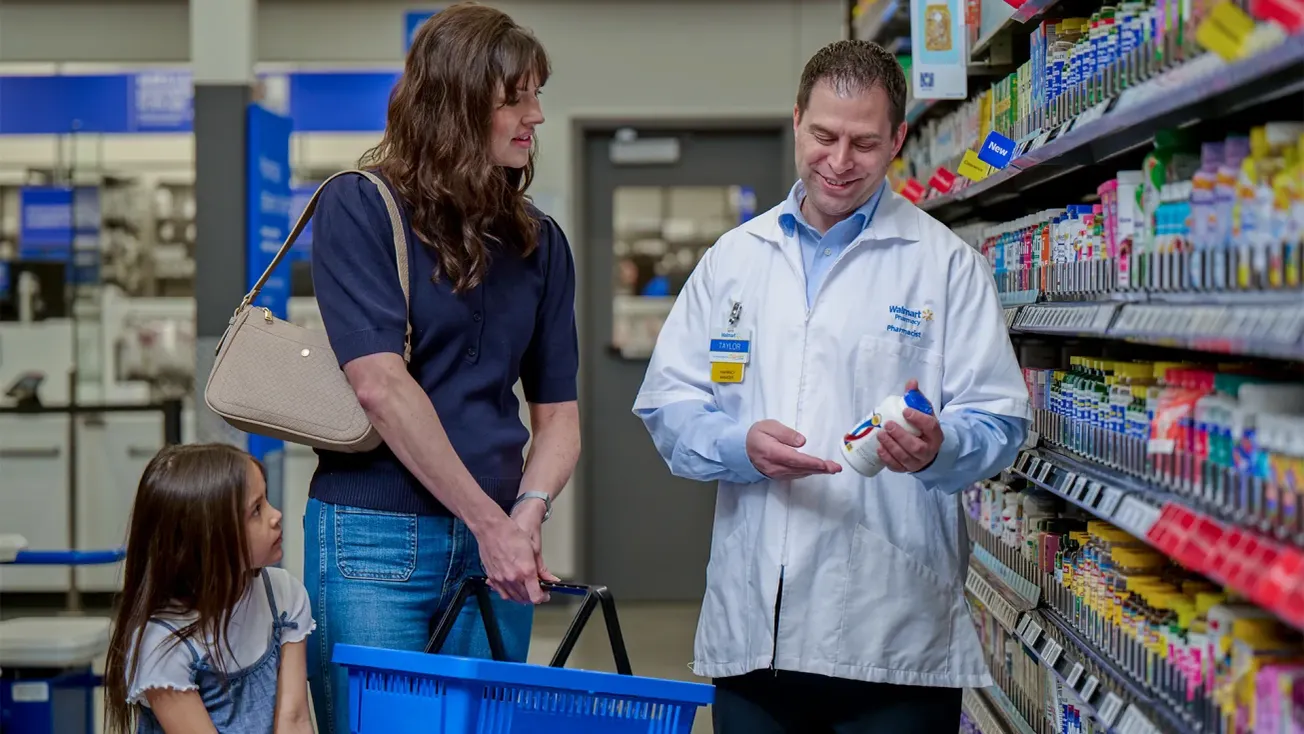
BENTONVILLE, Ark. — Walmart is launching a six-month rural health pilot that will give pharmacists dedicated time to work with customers beyond the pharmacy counter, provide health coaching, and connect them with clinical services, nutrition resources, digital tools, and community support.
The retailer’s new Health Ambassador associate role will be piloted at stores serving rural communities in Lexington, Tenn.; Caro, Mich.; Franklin, Va.; Fort Scott, Kan.; and Searcy, Ark., according to a company announcement.
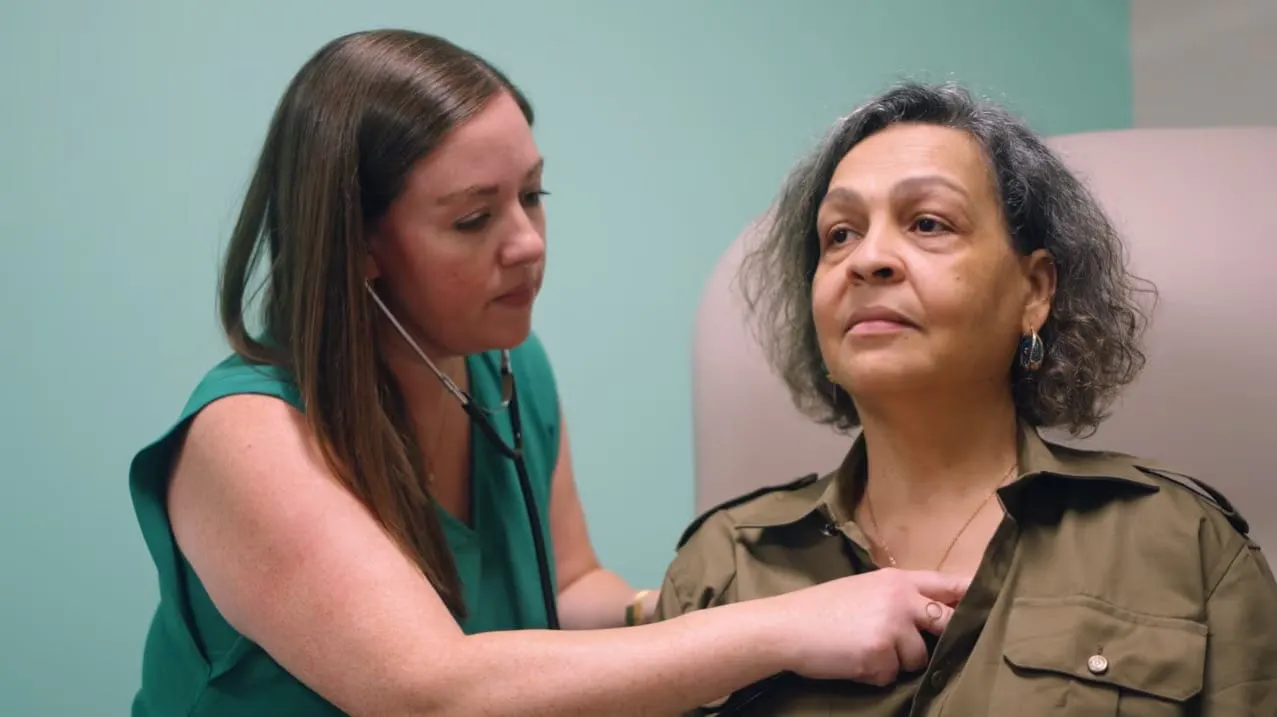
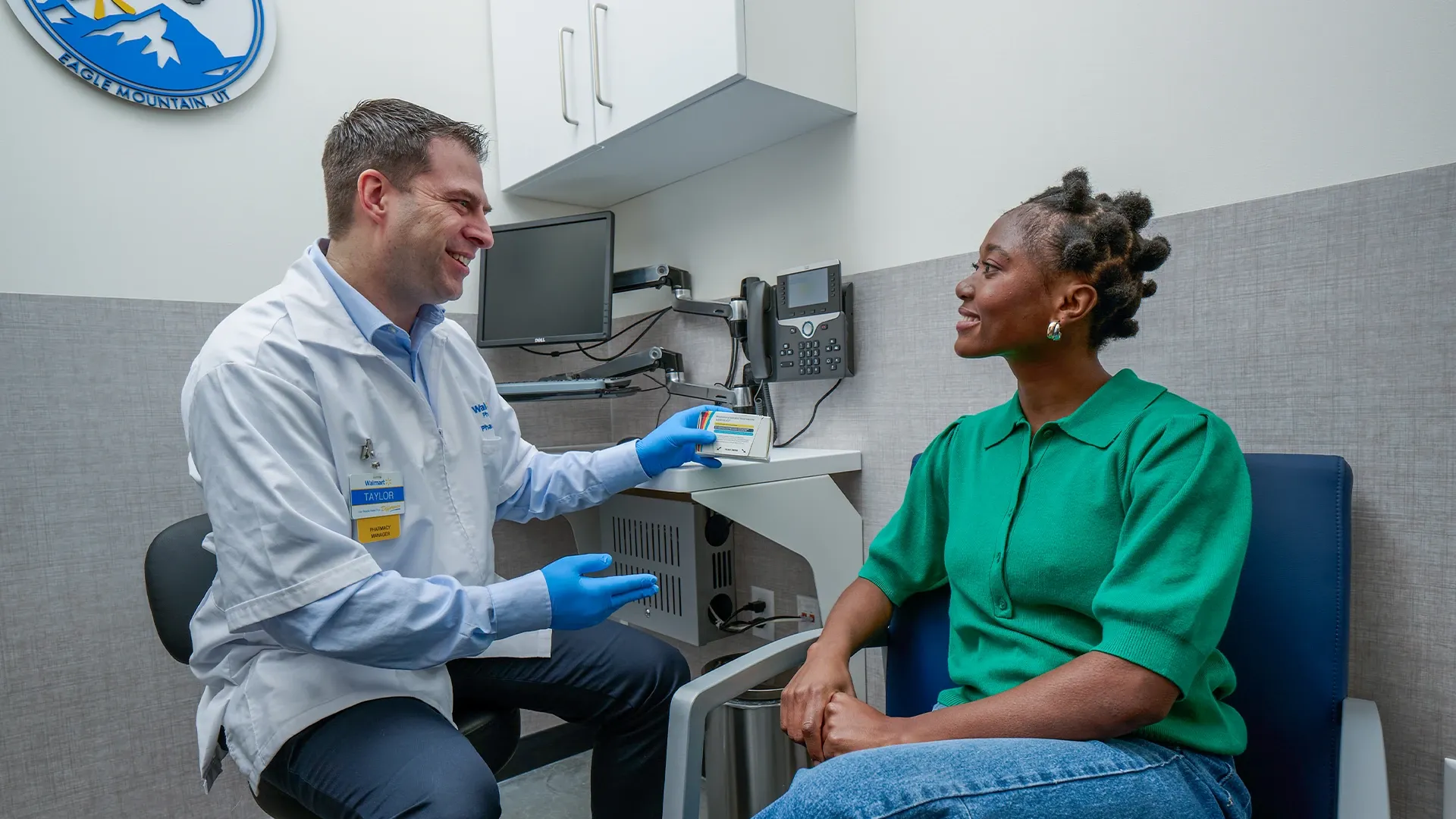
At each location, a trained Walmart pharmacist who knows the community will serve as the Health Ambassador. The pharmacists will have dedicated time to engage customers throughout the store, understand their health goals, provide coaching, and connect them with relevant services and resources.
The proof of concept comes as rural communities continue to face clinician shortages, long travel distances, and limited appointment availability. Emily Aaronson, M.D., M.P.H., chief medical officer at Walmart U.S., said pharmacists represent an existing clinical resource that could help fill some of those gaps.
“Health does not happen in one place, and it rarely fits neatly into a single appointment,” said Aaronson. “Customers already turn to Walmart for affordable food and everyday essentials, convenient services and pharmacists they know and trust. By giving pharmacists dedicated time to listen, coach and connect customers with relevant support, this pilot will help us learn how a familiar, trusted setting can make health resources more accessible, practical and actionable for people living in rural communities.”
In an article accompanying the pilot announcement, Aaronson argued that pharmacists remain an underused part of the health care workforce, particularly in rural areas where access to other clinicians is limited.
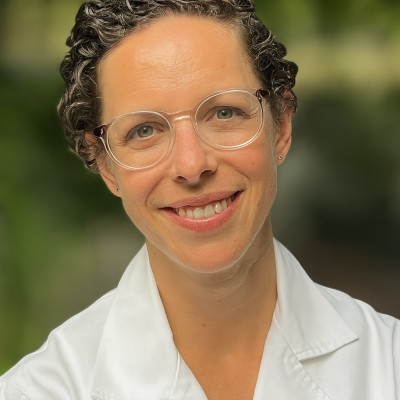
 Emily Aaronson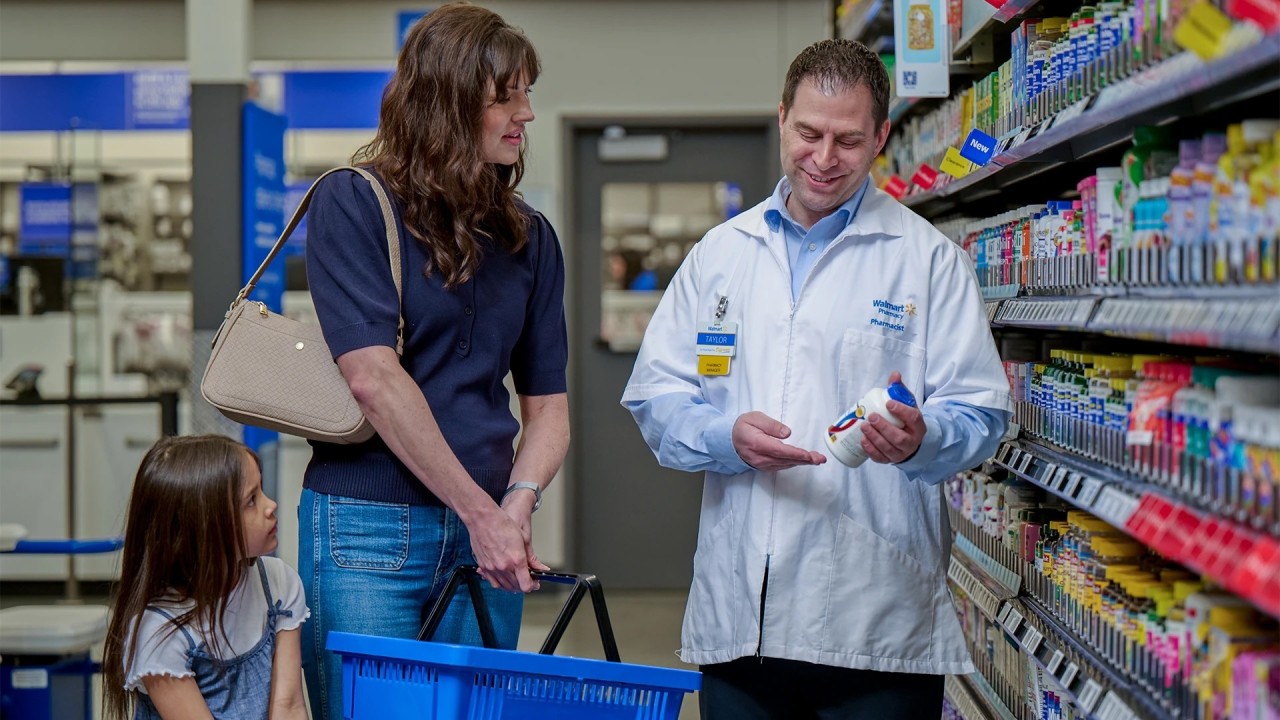
“Pharmacies are among the most accessible points of care in communities across the country,” Aaronson wrote. “Nearly 90% of Americans live within five miles of a community pharmacy, and research among Medicare beneficiaries found they visited community pharmacies nearly twice as often as primary care physicians. In rural areas, that difference was even greater.”
Aaronson cited pharmacists’ clinical education and their expanded responsibilities during the COVID-19 pandemic as evidence of their potential to serve as a more significant point of access to care.
“Pharmacists complete four years of doctoral training after college,” she wrote. “Their education includes pharmacology, clinical decision-making and patient counseling. Many complete residencies, and many are board-certified in specialties such as cardiology, oncology, psychiatry, geriatrics and infectious disease.”
Walmart said that approximately 90% of the U.S. population lives within 10 miles of a Walmart store or club, and that 4,000 Walmart stores are located in medically underserved areas. The company views that footprint, combined with pharmacists’ existing relationships with customers, as an opportunity to make health support more accessible.
Health Ambassadors will offer in-person conversations and tailored coaching on nutrition, movement, sleep, and stress management. They can also help customers navigate Walmart’s broader health and wellness offerings, including pharmacy clinical services, immunizations, screenings, vision care, medication support, virtual care through Walmart’s Better Care Services telehealth marketplace, nutrition resources, pharmacy delivery, Walmart+, and other digital tools.
A Health Ambassador interaction could begin on the sales floor and continue through a scheduled or walk-in coaching session. The pharmacist could walk a customer through relevant food or over-the-counter options and then help arrange an appropriate next step.
The pilot will initially focus on three health journeys: diabetes, weight management, and maternal health. Walmart said each is an area where progress can depend on decisions and support between traditional clinical appointments.
For example, a customer managing diabetes may need help understanding how medication, food choices, physical activity and health monitoring work together. Someone working toward a healthier weight may benefit from ongoing coaching and assistance in navigating available services. A new or expectant mother may be seeking help with nutrition, preventive services, self-care products and other resources.
“The Health Ambassador’s role is to help connect those pieces,” Aaronson wrote. “It gives a trusted pharmacist dedicated time to listen, coach, and make the next step easier to understand.”
The model is intended to complement, rather than replace, physicians, nurses, community health centers, and other clinicians, according to Aaronson.
“When pharmacists can address appropriate needs within clear protocols and connect people to higher levels of care when necessary, the entire system can use its clinical workforce more effectively,” she wrote.
Technology will also play a role in the model. Aaronson said digital tools can simplify scheduling, navigation, and follow-up, while automation can reduce repetitive administrative work in pharmacies. Delivery and virtual care can also remove barriers for customers, allowing pharmacists to devote more time to direct interactions.
“The strongest model is people-led and technology-powered,” Aaronson wrote. “Technology is helping create capacity: Digital tools are simplifying scheduling, navigation, and follow-up while Automation is reducing repetitive administrative work within the pharmacy. Pharmacy delivery and virtual care are removing practical barriers for customers. Trusted clinicians then get to step in and spend the time necessary with customers supporting their health needs, and helping them navigate their options for what’s next.”
Aaronson also used the announcement to call for changes beyond Walmart that would enable pharmacists to take on a larger clinical role.
“For models like this to reach their full potential, the surrounding healthcare system must evolve as well,” she wrote. “States should modernize scope-of-practice rules to reflect pharmacists’ training and competency and to maximize the potential impact that a role like this can have. Payers should reimburse pharmacist-delivered clinical services. Health systems and pharmacies should improve data sharing so all clinicians can work from a fuller view of the patient. Companies and organizations should design workflows that create real dedicated time for clinical care and community engagement.”
She also emphasized that addressing rural health care access will require coordination across multiple parts of the health care system.
“Rural communities also need partnership,” Aaronson wrote. “Hospitals, physicians, community health centers, public health agencies, pharmacies, local organizations, and retailers each bring different strengths. Better access will come from connecting those strengths around the people who live there.”
Walmart will evaluate customer engagement and outcomes during the six-month pilot and collect feedback from customers, pharmacists and community organizations. The company said the findings will help identify where the Health Ambassador model is useful, where barriers remain, and how the approach could be improved.
Aaronson said the initiative is ultimately designed to test whether pharmacists already embedded in rural communities can provide more consistent support if given the time and resources.
“Pharmacists are trusted. They are accessible during evenings and weekends. Many have served the same community for years and know their patients by name. In rural America, that familiarity is a form of health infrastructure. The pharmacist is already there. The customer is already there. The trust is already there.”
“Our Health Ambassador proof of concept asks whether dedicated time, practical tools, and better connections can turn that trust into more consistent support,” Aaronson wrote. “The answer will come from the six communities participating in the pilot and from the customers and pharmacists who experience it firsthand.”
“As an emergency physician, I have seen the cost of waiting until a health problem becomes a crisis. As Walmart’s chief medical officer, I see an opportunity to help people earlier, in places that are already part of their daily lives. The most underused clinician in rural America is ready to do more. Our responsibility is to build a system that makes room for that clinician to step forward.”
Submit Your Press Release
Have news to share? Send us your press releases and announcements.
Send Press Release