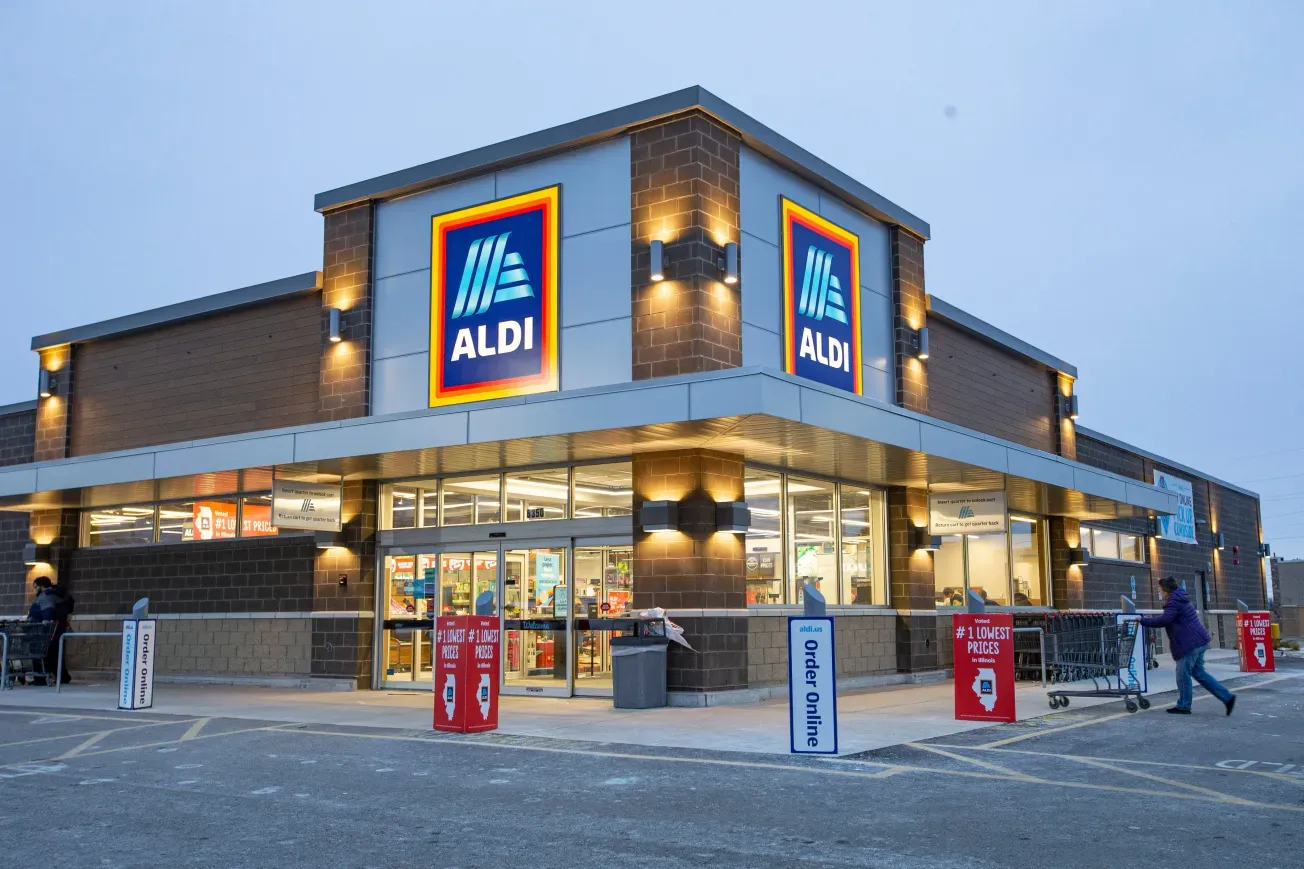
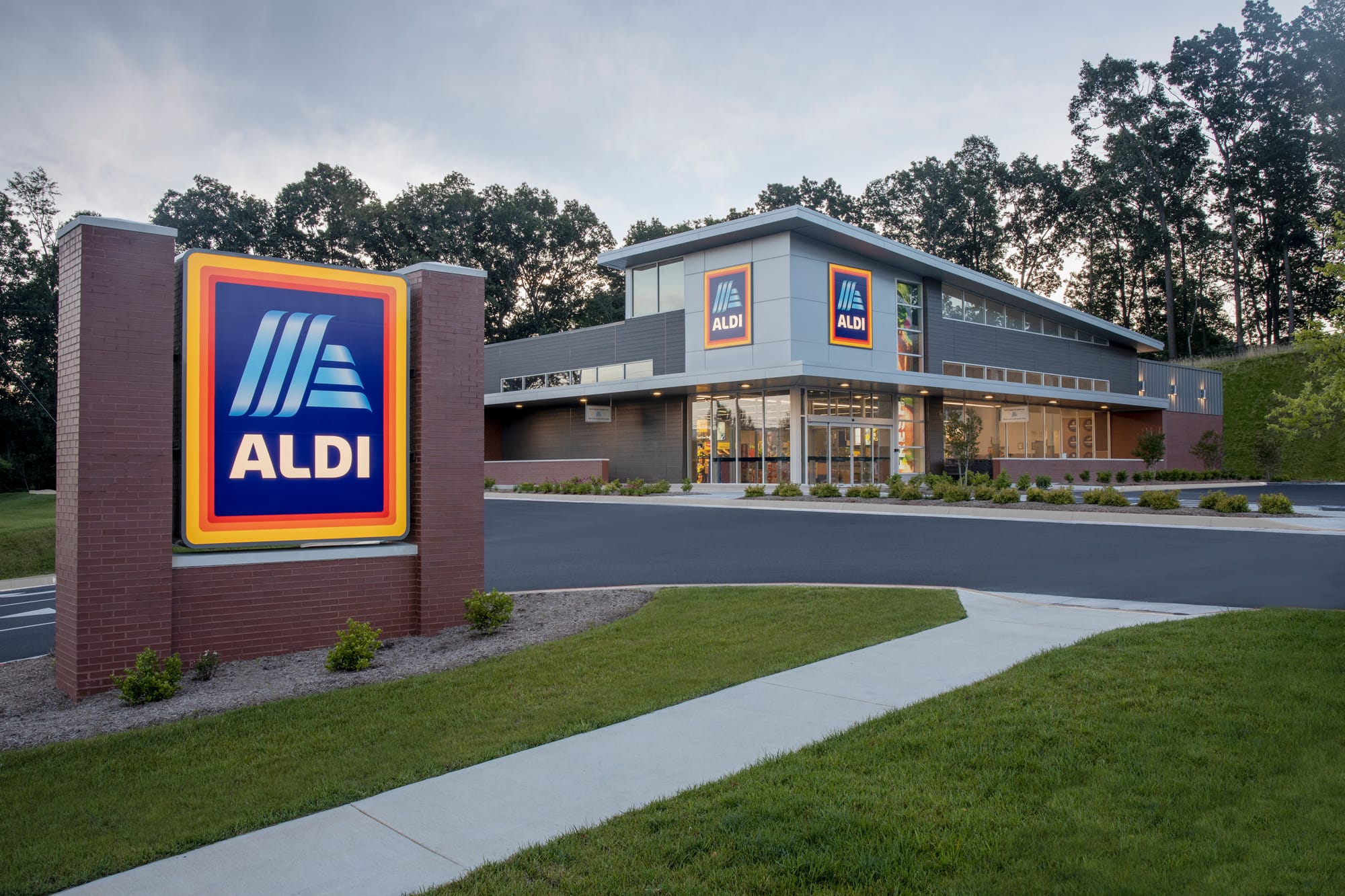
According to a recent article in The Wall Street Journal, Aldi is pushing forward with aggressive growth plans in the U.S., aiming to reach 3200 total stores by the end of 2028. The discount grocer opened nearly 200 locations in 2025 alone, strengthening its position as America’s fastest-growing grocery chain. This surge is fueled by strong demand for affordable options, with major expansions planned in the Southeast — through Winn-Dixie and Harveys conversions — and across the Western states. Aldi’s appeal now spans both budget-conscious shoppers and higher-income households seeking value. The chain currently operates over 2,600 stores in 39 states.
|
Entering 2026, its 50th year operating in the U.S., Aldi carries significant momentum. Well known for its streamlined, no-frills approach, the retailer has steadily grown a very loyal customer base. This year, Aldi is doubling down on brand growth, aiming to broaden its reach as inflation continues to reshape shopping behaviors. By positioning itself as a practical choice for a wide range of consumers, Aldi is reinforcing its role as a leading player in the evolving grocery landscape.
In recognition of its accomplishments over the past year, the editors of MMR and Chain Drug Review have named Aldi Grocer of the Year.

|
“Our strategy will remain focused on everything that’s earned us our reputation as a trusted destination for value. Even as we grow our store count in the U.S., we’re staying focused on delivering quality, affordable groceries and a simpler, easier shopping experience,” says Karla Waddleton, Aldi’s chief operating officer. Waddleton, a longtime Aldi vice president, was promoted to the role of COO in July, succeeding Atty McGrath, who was named chief executive officer in May. “Everything we do, from our quarter cart system and stocking produce in the boxes it arrives in, to a smaller store footprint, is to keep prices low. And we keep it easy by stocking a curated assortment that excites our shoppers, in a smaller footprint that takes an average of just 30 minutes to shop.”
She adds that Aldi’s shoppers don’t want a fancy store design with thousands of options. “They want to get in, fill their carts with affordable groceries, and get back to their lives outside the grocery store. The Aldi store experience allows them to do just that.”
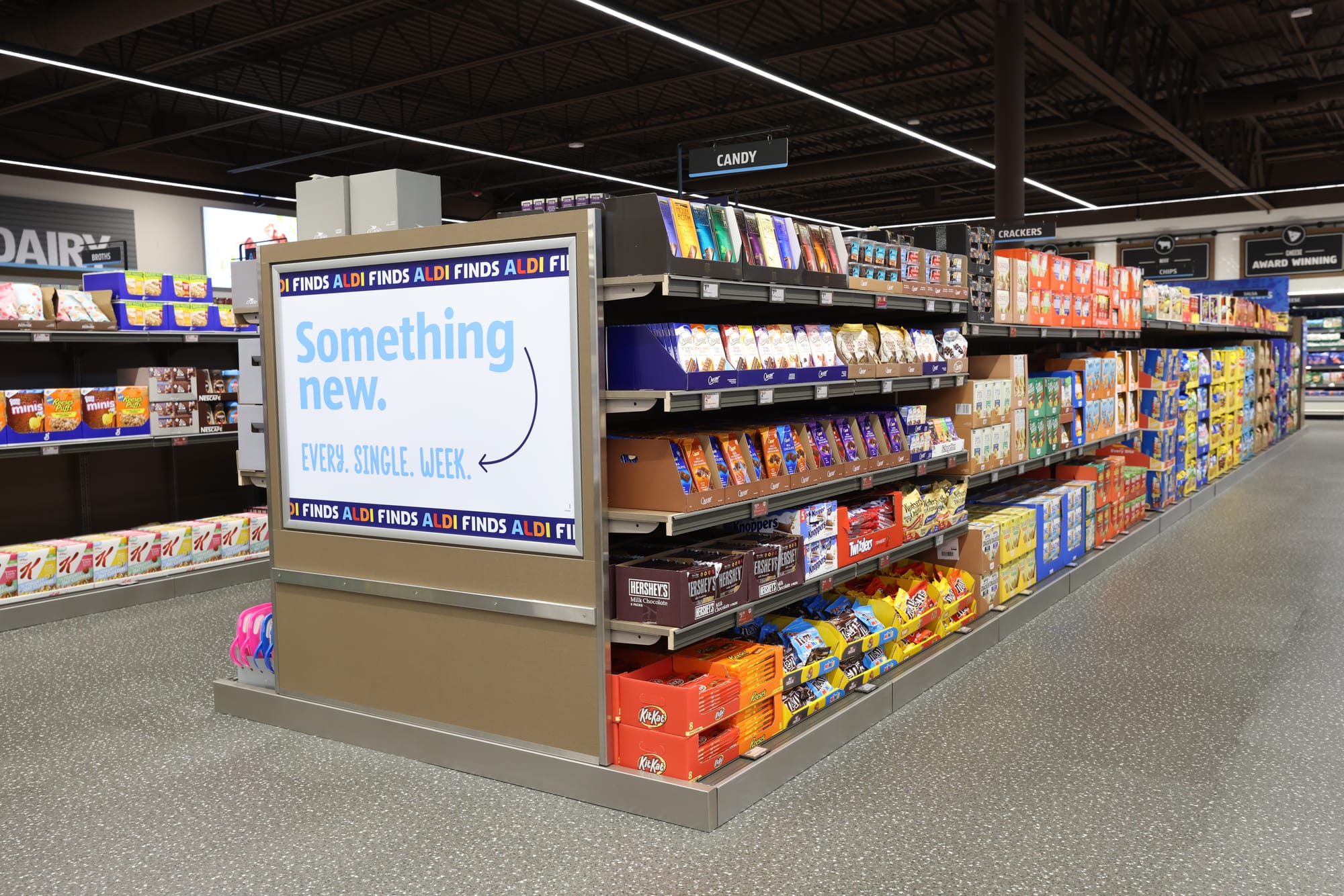
With growth also comes challenges, and Waddleton says they face those as well. “As we continue expanding our footprint across the country, our biggest challenge is filling our shelves with the private label products our shoppers love. Because 90% of our selection is made up of Aldi-exclusive products, we have more responsibility than competitors to work with our supplier partners and scale our supply chain to ensure we’re well stocked for increased demand. It’s no small task, because — if we run out of, say, ketchup — we don’t have another name brand option for shoppers on the shelf. We only have our brand. If it’s out of stock, we lose the sale completely, and potentially some shopper trust, too.”
Waddleton points out, “We’re investing in our supply chain to meet customer expectations without sacrificing the efficiency that sets us apart. By identifying smarter forecasting strategies, deepening supplier relationships and adding more infrastructure that allows us to keep up with growing demand, we feel well prepared to turn challenges into opportunities.”
Efficiency is key
She notes that Aldi focuses on efficiency to make sustainability affordable and accessible for all. “When we do that, we control costs without sacrificing quality, and we often find that the more efficient option is the more sustainable option. Take our Mama Cozzi’s Deli Style Pizzas for example. We removed the outer box, reducing weight, improving recyclability and cutting material use. This was part of a broader effort that led to a 15% reduction in primary packaging across Aldi-exclusive products.”
She says she uses a number of leadership principles to guide her decision making at the company. “For me, it’s all about quality, consistency, our shoppers and our teams. If one of these things is missing, it’s probably not the right call. With that foundation, I approach decisions by asking whether they genuinely improve the customer experience while staying true to our disciplined way of operating. Consistency matters — doing things well, the same way, every day is what drives reliability and results.”
She also places a strong emphasis on the company’s people. “Listening to our teams, trusting their expertise and setting them up for success leads to better decisions and stronger execution. Ultimately, I take a long-term view, balancing today’s needs with what will best support Aldi’s values, culture and sustainable growth over time.”
Fostering innovation
“At Aldi, we only pursue innovation that helps us deliver tangible value for shoppers,” she notes. “Strong relationships with our supplier network help us stay ahead of trends so we can constantly develop new products that surprise and delight our shoppers. A great example is our Summit Popz prebiotic soda. Until Aldi, no one offered a private label prebiotic soda. We saw the trend, acted fast and launched Popz in just nine months. We’re now selling nearly 22,000 cans per day and rolling out new flavors as a result of its success.”
When asked about the company’s current growth strategy, Waddleton replies that “our growth is driven by our shoppers. Across the country, we hear them asking for more Aldi stores in their neighborhoods because they know Aldi offers unbeatable value.”
She continues, “in fact, one in four households shopped our aisles within the past year. That tells us we’re becoming part of people’s weekly routines and a place they truly enjoy shopping — and it’s why we’re opening more stores, in more communities to create more access to the quality, affordable groceries that only Aldi can offer.”
She adds, “As we grow, we’re giving shoppers more places and ways to shop our aisles. In the past year, we added Uber Eats to our lineup of delivery partners, allowing shoppers to easily shop online or in-store.”
Utilizing technology
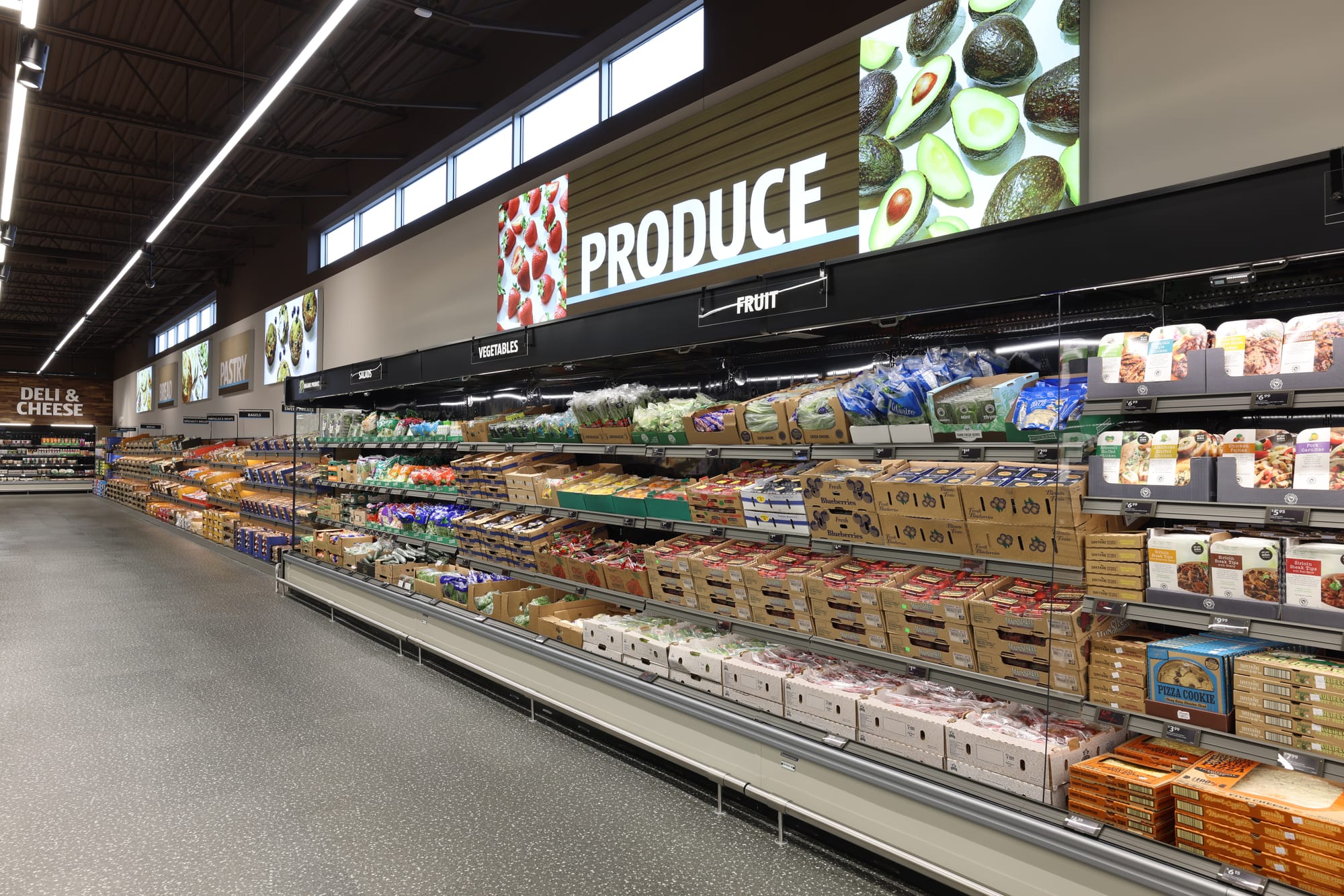
Waddleton notes that, like everything else, the retailer uses tech to make grocery shopping easy and affordable. “Take our online shopping experience, for example. Shoppers can visit us in-store, use curbside pickup or get groceries right at their doorstep through our delivery partners — whatever is most convenient. If they do visit us in-store, shoppers will see electronic shelf labels that reduce waste, save labor and keep shelves organized. That way our teams spend less time on manual tasks and more time serving shoppers.”
She explains that private label is key and vital to who the company is. “Aldi shelves are 90% private label, which gives us a huge advantage and more control over our products, from the ingredients that go in, to the packaging shoppers see and the price at checkout. That control is especially important now. According to industry research, 84% of shoppers say they trust private label quality as much as name brands. Our model is built to deliver and move with speed and scale because we own the process and a robust network of suppliers.”
Waddleton adds that by investing in the test kitchen, supplier relationships, and innovations, the company is able to outpace the competition and carry new products or refined favorites that deliver each time. “We know our private label strategy is working, because we hear it directly from our shoppers. According to our 2025 Price Leadership Report, 76% of Aldi shoppers said our store brands are just as good as national brands. They’re constantly going out of their way to find their favorites and share them — just check out the 3.8 million-member Facebook fan page dedicated to the Aldi Finds aisle. That brand trust and love is what turns first-time Aldi shoppers into loyal fans.”
She points out that the company is seeing several major shifts in consumer behavior, and Aldi is positioned to meet all of them. “First, shoppers are watching their spending closely but won’t compromise on quality. Price may get them in the door, but quality keeps them coming back. Luckily, that’s what we do best. We’re proud that at a time when budgets are stretched, a family of four can save nearly $4,000 each year shopping at Aldi without sacrificing quality.”
Waddleton says that, secondly, shoppers want cleaner labels, simpler ingredients and products that fit how they want to eat without a higher price tag. “We’ve been ahead of that curve for years. We removed synthetic dyes from all Aldi-exclusive products back in 2015, and we continue to evolve staples based on shopper feedback.”
“Lastly, private label demand keeps growing. It’s no longer seen as a compromise — many shoppers now actually say they trust private label quality as much as name brands. Our private labels continue to meet, and even exceed, expectations with on-trend, quality products shoppers can’t get anywhere else,” she concludes.
Submit Your Press Release
Have news to share? Send us your press releases and announcements.
Send Press Release