By Andrea Leigh
For generations, the corner drug store was one of the most important institutions in American retail. It was where you filled prescriptions, picked up late-night cough medicine for a sick child, grabbed a birthday card on your way to a party, developed vacation photos and bought forgotten grocery store items. In earlier years drug stores were post offices and diners, too. Drug stores were convenience before convenience became a category. Drug stores were neighborhood infrastructure.

However, that model is unraveling. According to Modern Retail’s January 2 article titled “Pharmacy Closures in 2025 Reshaped Where People Buy Health Products,” the U.S. has lost thousands of pharmacy locations in recent years, including more than 1,200 Rite Aid stores, roughly 500 Walgreens locations and hundreds of CVS stores, citing complex and tight pharmacy reimbursement economics, theft, labor shortages, and changing consumer behavior.
While the old model is unraveling, a large global retailer is waiting with bated breath to reinvent it — enter Amazon. Where traditional chain drug stores are retreating, Amazon is aggressively expanding.
Evidence No. 1:
Amazon Dominates O-T-C, Health and Personal Care, and
Beauty Categories
The first signal is category growth. Most brands I work with are seeing front-of-store sales shift to Amazon and Walmart. Health, personal care and beauty products are among Amazon’s fastest-growing retail segments.
Categories that once belonged almost exclusively to drug stores, such as vitamins, O-T-C medicine, skin care, hair care, feminine care, now belong largely to Amazon. The replenishment nature of these categories maps perfectly to Amazon’s strengths: search, subscription and fast delivery.
Amazon has built entire systems around replenishment purchasing, including Subscribe & Save and its newer Add-to-Order feature, which allows shoppers to tack small, frequently purchased items onto upcoming deliveries.
According to Amazon’s last earnings call, Amazon now ships 8 billon items same day or next day to Prime members, and customers who take advantage of 30-minute delivery shop three times more frequently.
Amazon now owns the “forgot something” trip.
Evidence No. 2:
Amazon Pharmacy Programs Are Built to Scale
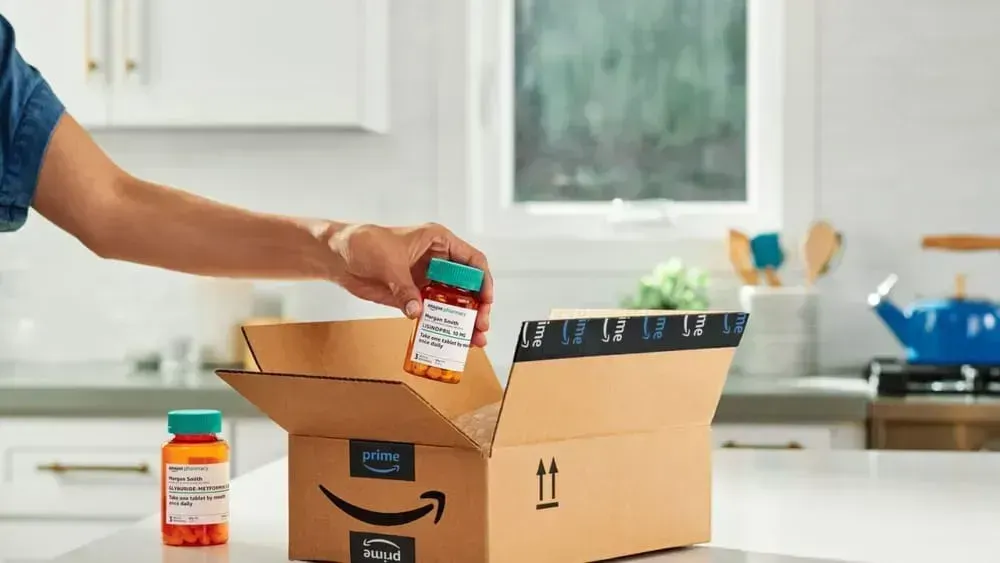
The second signal is Amazon’s push into prescription drugs with several programs designed precisely to solve common pain points presented by traditional pharmacies. Amazon also has the benefit of rebuilding the pharmacy experience around logistics instead of location.
• Amazon Pharmacy — a full-service online pharmacy with free home shipping.
• RxPass — Prime-exclusive subscription service covering 50 commonly prescribed medications with unlimited refills without insurance.
• Amazon Prime RX — a discount program (included with Prime) offering up to 80% off prescription drugs at up to 60,000 traditional pharmacies.
• Pillpack — mail order prescriptions, dosed and ready to go, delivered to your home.
Given the customer-centricity of these models, it’s no surprise they are scaling quickly. Industry analysts note that as pharmacies close and prescription access shifts online, digital pharmacy platforms such as Amazon are rapidly gaining traction among consumers seeking delivery and price transparency.
Evidence No. 3:
Amazon Improves Upon the Drug Store’s “convenience” With Algorithmically Defined Assortment and Agentic Commerce
The third signal is Amazon’s more relevant assortment for today’s busy consumer. Amazon is laser focused on what it’s calling “everyday items” — a hodgepodge of cross-category items that its data shows shoppers need fast. This is Amazon’s version of a drug store or convenience assortment, and it forward-deploys close to the consumers.
While drug stores historically thrived because of their carefully curated mix of cross-category products, Amazon uses shopper data to determine a dynamic, regionally optimized assortment across millions of SKUs, able to quickly adapt the “everyday items” to changing consumer needs and preferences. As a result, everyday items now represent over 30% of Amazon’s units sold, according to Amazon.
Remember, a single fulfillment center can serve millions of households, providing a distinct advantage for pure play e-commerce.
The Structural Risk of Drug Stores
Drug stores face a structural problem: The economics, inclusive of heavy physical infrastructure costs; slow/low reimbursement rates; and slowing foot traffic aren’t in their favor. If consumers no longer visit the store, that model breaks.
Despite the headwinds, drug stores are not disappearing entirely. Many services provided are difficult to digitize: vaccinations, in-person pharmacist consultations, urgent prescriptions, and health care access for communities that lack other medical infrastructure. In fact, “pharmacy deserts” created from pharmacy closures are shown to harm local economies.
However, the role of the drug store will likely need to evolve. The future model may look less like a convenience retailer and more like a health care hub — focused on clinical services, specialty pharmacy and community care rather than aisles of consumer packaged goods. These are areas where Amazon and other e-commerce cannot effectively compete.
The Bottom Line
For decades, chain drug stores were the closest thing America had to a universal neighborhood retailer. They combined pharmacy, beauty, health and convenience into a single location that served everyday needs. As consumer behavior shifts toward digital convenience, Amazon is quietly assembling the same mix of services that once defined the corner drug store, delivered through logistics networks, subscription models and digital storefronts instead of physical aisles.
The uncomfortable truth for chain drug stores is that Amazon doesn’t need to win the pharmacy business to win the drug store mission. If Amazon owns the replenishment items, the health and personal care basket, the beauty routine and, increasingly, the prescription delivery, the traditional drug store’s role in consumers’ lives shrinks dramatically.
The corner drug store once won because it was the most convenient place to solve everyday problems. Today, increasingly, Amazon wins that mission.
Andrea Leigh is founder and chief executive officer of Allume Group.
Submit Your Press Release
Have news to share? Send us your press releases and announcements.
Send Press Release