
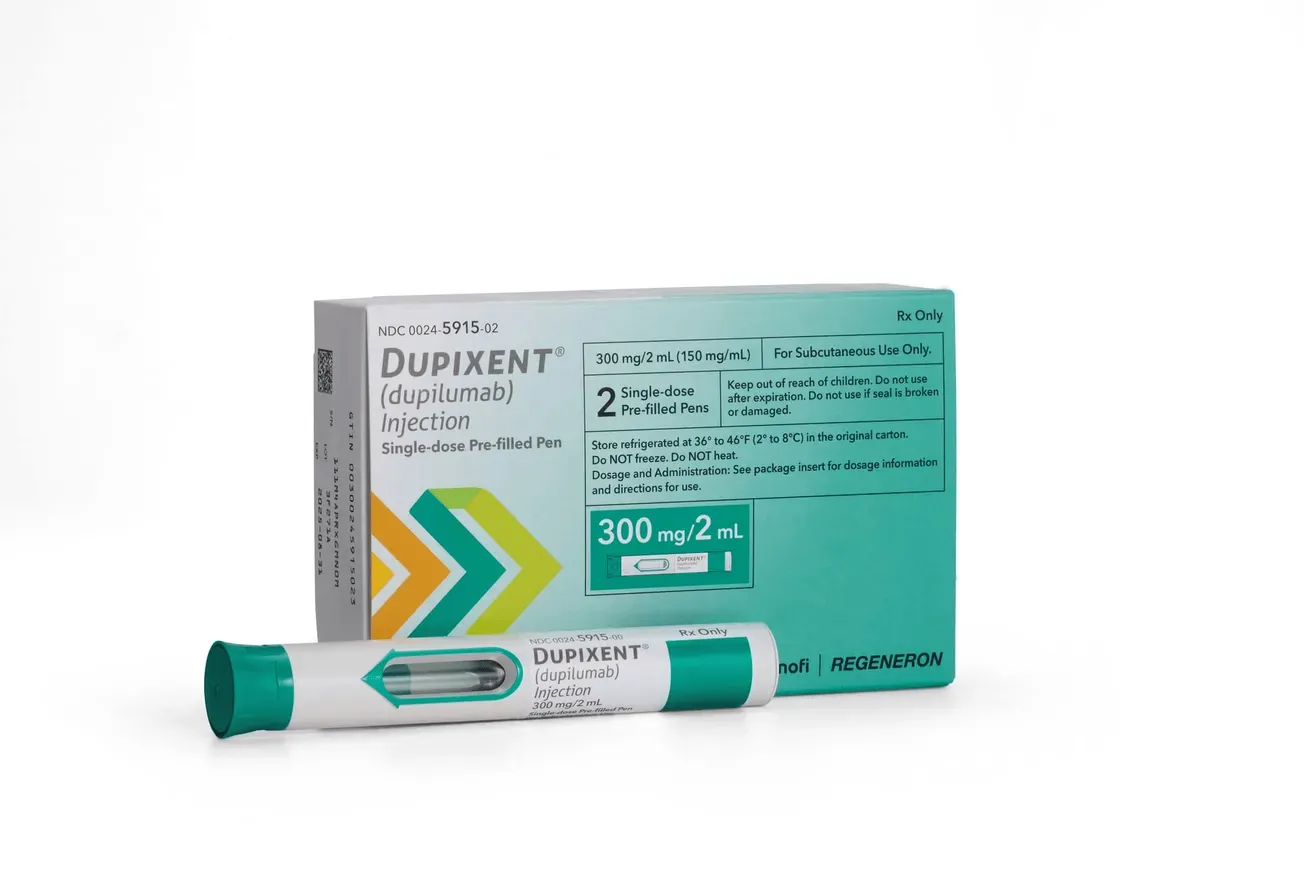
TARRYTOWN, N.Y. – Regeneron Pharmaceuticals and Sanofi today presented results from the REMODEL Phase 4 trial demonstrating that Dupixent (dupilumab) showed significant and clinically meaningful improvements in both esophageal distensibility (a measure of esophageal function) as well as disease-related structural changes to the esophagus compared to placebo in adults with eosinophilic esophagitis (EoE) at week 24.
The results reinforce the previously established ability of Dupixent to address underlying inflammation and symptoms of this disease; Dupixent was the first and is still the only biologic and leading treatment indicated for EoE. The new data were shared today in a late-breaking oral presentation at the 2026 Digestive Disease Week (DDW) conference.
EoE is a chronic, progressive inflammatory disease associated with type 2 inflammation that damages the esophagus and prevents it from working properly. For people with EoE, swallowing even small amounts of food can lead to choking and become a painful and worrisome experience. They are often left to contend with the frustration and anxiety of a constantly evolving list of foods to avoid, a poor quality of life and a higher risk of depression.
In cases where EoE causes the esophagus to narrow, and the esophagus can no longer distend to support normal swallowing, forced and potentially painful dilation (physical expansion) of the esophagus may be needed. In severe cases, a feeding tube was historically the only available option to ensure proper caloric intake and adequate nutrition. However, Dupixent has dramatically changed the standard of care for this disease, improving quality of life for many patients.
“For patients who have eosinophilic esophagitis, if the disease remains untreated, it can progress to narrowing of the esophagus, more severe symptoms, such as food impaction, and the need for esophageal dilation,” said Dr. Evan S. Dellon, Professor of Gastroenterology and Hepatology at the University of North Carolina School of Medicine and lead author of this study. “Dupixent showed a potential to modify the course of eosinophilic esophagitis – by improving esophageal size at just 6 months – the magnitude of this improvement corresponded to the benefit that could be seen from an esophageal dilation procedure. It also reduced hallmark endoscopic and histologic signs of disease, which further strengthens the evidence that type 2 inflammation plays an important role in the biology of this disease. The ongoing study will allow us to learn the even longer-term impact of Dupixent on the scarring and narrowing of the esophagus in EoE.”
In the REMODEL Phase 4 trial, 69 adults with EoE were treated with Dupixent 300 mg (n=46) every week or placebo (n=23). At week 24, the results for Dupixent compared to placebo were:
· Improved esophageal distensibility (a measure of esophageal function): 1.28 mm improvement in esophageal distensibility plateau from baseline compared to
-0.01 mm (1.30 mm placebo-corrected improvement; p<0.05), the primary endpoint. This represents a 9% improvement from baseline compared to 1% (8% placebo-corrected improvement; p<0.05), the key secondary endpoint. The esophageal distensibility plateau measures the ability of the esophagus to expand and allow food to be transported through the esophagus effectively, with higher numbers representing better esophageal function and lower numbers representing worse function.
· Reduced disease-related structural changes to the esophagus: 4.89-point reduction from baseline in abnormal endoscopic findings, as assessed by EREFS (a scale ranging from 0-18), evaluating a combination of esophageal edema (swelling), rings (bands of scar tissue that narrow the esophagus), exudates (white plaques indicative of inflammation), furrows (vertical grooves indicative of damaged lining) and strictures (narrowing), compared to 0.07-point increase (4.96-point placebo-corrected reduction; p<0.0001).
· Improved histological findings: 0.89-point and 0.80-point reductions from baseline in disease severity and extent, respectively, as assessed by the EoE-HSS grade and stage scores (both scales ranging from 0-3), measuring changes in eight cellular and tissue features of biopsy specimens at the microscopic level, compared to 0.18-point and 0.14-point reductions, respectively (0.71-point and 0.65-point placebo-corrected reductions, respectively; p<0.0001 for both).
· Increased histological remission: 59% of patients achieved peak esophageal intraepithelial counts of ≤6 eosinophils per high-power field (eos/hpf) compared to 4% (p<0.0001).
o Additionally, 78% of patients achieved peak esophageal intraepithelial counts of <15 eos/hpf, the diagnostic threshold for EoE, compared to 4% (nominal p<0.0001).
The safety results from the REMODEL trial were generally consistent with the known safety profile of Dupixent in EoE. The overall rates of adverse events (AEs) were 62% for Dupixent and 48% for placebo. AEs more commonly observed with Dupixent than placebo included injection site pain (9% vs. 4%) and headache (9% vs. 4%). There were no serious AEs in either treatment group.






%20Phase%204%20trial)