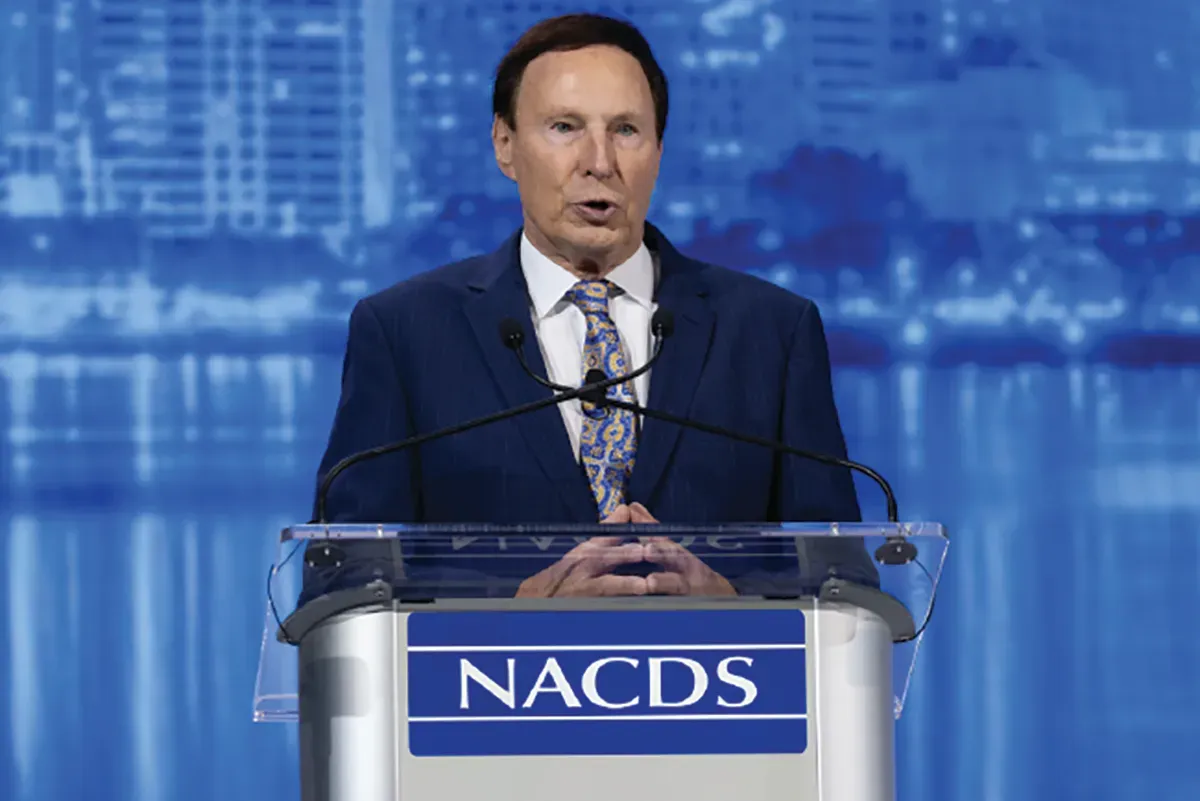
By most surface measures, the economy and U.S. consumers seem fine. Spending is holding up, equity markets are strong, and the economy is still growing. But those signals mask a far more fragile and uneven reality. “Consumer spending is actually doing reasonably well here in the United States, but it’s mainly because of upper-income households,” according to Deloitte chief global economist Ira Kalish, who noted that wealth gains from the AI-fueled stock market rally are concentrated among the top 10% of the population, and wage growth is skewing sharply toward college-educated workers. And these groups “account for a much larger share of the growth in spending.”

Meanwhile, the majority of consumers are under pressure. Higher food prices, elevated interest rates, rising utility bills and growing debt delinquencies are constraining discretionary spending. When politicians talk about affordability, Kalish said, “those are the people we’re talking about.”
Layer tariffs and immigration policy on top of that imbalance, and the outlook looks worse.
Kalish noted that tariffs are now at their highest levels in almost a century. Companies have so far passed on only about 10% of that cost to consumers, but their restraint is unlikely to last. “They’re not going to want to take a hit to their margins indefinitely,” he said, adding that he expects inflation, driven by tariffs, to climb from today’s 2.5%-to-3% range to “over four, maybe four and a half percent by the end of this year.”
In a consumer landscape already split by income and wealth, it could be destabilizing.
Meanwhile, immigration policy is quietly reshaping the labor market. Kalish pointed to a sharp plunge in employment growth driven not just by softer demand, but by reduced labor supply. “The immigration policy has led to a sharp slowdown in the growth of the labor supply,” he said, citing border restrictions, deportations and self-deportations. By one estimate, “about 500,000 people left the United States last year.”
Implications could include slower economic growth, labor shortages in agriculture, construction, health care and hospitality — and upward pressure on wages and prices. The Federal Reserve, Kalish noted, has acknowledged that immigration policy “will exacerbate whatever inflation we get from tariffs.”
Then there’s AI — a potential savior or saboteur.
AI investment has been a major growth engine for the U.S. economy. Spending on IT equipment and software tied to data centers “accounted for 90% of the growth” in the first half of 2025. The wealth effect from soaring tech stocks has also juiced spending among higher-income households.
But history offers a cautionary tale. “Many people are comparing the current situation to the dot-com bubble 25 years ago,” Kalish warned. In the event of a painful correction, “all that growth would disappear and the economy would slow down sharply or maybe even go into recession.”
AI is also bringing new cost pressures. Kalish said we may see double-digit electricity price increases in the near future, which would be a direct hit to household budgets and discretionary spending. And AI is already having an impact on jobs, with “companies starting to scale back the hiring of entry-level people … and allowing AI to do those tasks.” That raises unsettling questions about how future leaders will be developed, he said, and further disruption of the labor market is likely coming.
The upshot is that the economy may be shakier than it looks, with more uncertainty and downside risk than a cursory glance at some of the leading indicators might suggest.
Submit Your Press Release
Have news to share? Send us your press releases and announcements.
Send Press Release