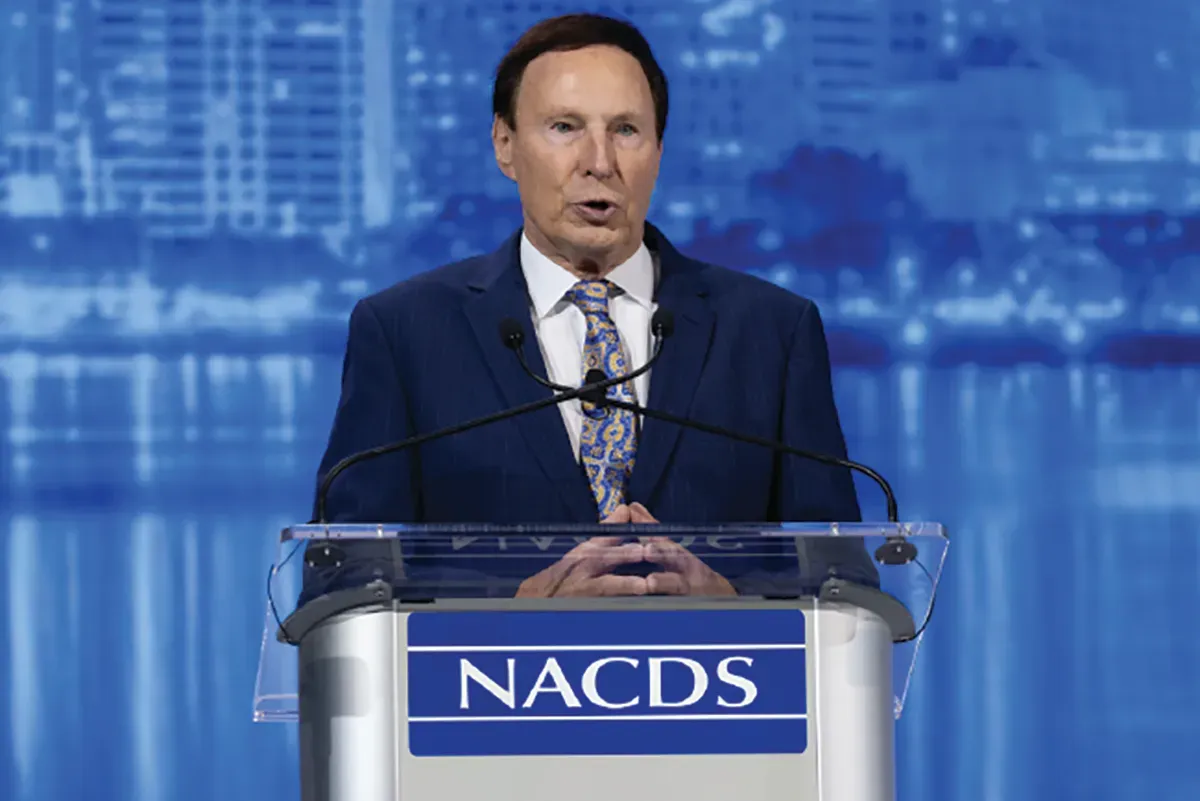
By Todd Huseby
Question: Would you bet your retirement on PBM relationships becoming fairer, more transparent, and more profitable in the coming years? I didn’t think so.

PBM reform has been elusive despite fierce lobbying for transparency, accountability and fairness. Legislators, on both sides of the aisle, have echoed your frustration. With three PBMs processing approximately 80% of all prescription claims, the structure is teed-up for oligopoly critiques.
The “One Big Beautiful Bill,” after months of effort and support ultimately excluded PBM reform. While popular politically, reform remains stubbornly out of reach legislatively. And now with Medicare’s insolvency crisis inching closer (2033 instead of 2036), the health care cost pressure cooker is intensifying rapidly.
And state legislatures are trying too. According to the National Association of Chain Drug Stores, 24 states enacted 33 PBM reform bills last year. Patchwork state efforts are getting at the same issue, underscoring why pharmacy executives cannot wait for a cohesive regulatory rescue.
Meanwhile, the financial squeeze on pharmacies continues. And recent blockbuster drugs aren’t helping. For example, GLP-1 therapies bring growth, but often reimburse below cost (note: Selling blockbuster drugs below cost isn’t strategy, it’s charity … and I doubt you’re feeling charitable). The sheer scale of opacity is stunning, with the gross-to-net bubble estimated to exceed $330 billion in 2023. Relying heavily on regulatory rescue won’t be enough.
Is there an alternative? Well, what if pharmacy chains started quietly quitting PBMs?
I don’t mean abruptly severing all PBM relationships; that’s neither practical nor wise. But pharmacy leaders could strategically reduce their reliance on traditional PBM-driven models by proactively developing alternative routes: direct-to-employer partnerships, transparent cost-plus PBM models and direct-to-consumer approaches.
I know what you’re thinking: That’s really hard to imagine, and harder to pull off successfully. Let’s consider the “Yeah, but …” considerations.
Yeah, but we’re a B2C business, not B2B: Sure, pharmacy chains are traditionally consumer-focused retail businesses. Transitioning to direct-to-employer relationships represents an enormous shift, requiring investments in sales infrastructure, account management, contracting, analytics and new operational capabilities. Developing B2B capabilities indeed would be tough. But so is bankruptcy. So pick your “tough.”
How tough would it be? Consider that many pharmacy chains already perform analogous B2B activities through indirect PBM relationships: handling complex contracts, formulary negotiations and compliance management. Could you start small with strategic employer coalitions, targeted pilots and joint ventures to minimize risk and build essential capabilities?
Yeah, but would alternative models even be profitable?: I think so, provided it’s designed well. Transparent, cost-plus models significantly reduce the opaque PBM administrative and rebate burdens and creates stable, predictable margins. To succeed, innovative pharmacies would need to maintain disciplined cost structures, leverage data-driven analytics to ensure efficient operations, and carefully manage direct employer relationships.
Yeah, but customers often have $0 co-pays — Why would they adopt?: It’s a fair critique: Many patients benefit from low or zero-dollar co-pays. Why would they adopt an alternative? I accept that patients love zero-dollar co-pays. They also loved free checking accounts until they realized they weren’t free.
We all must keep in mind that patients and employers are increasingly price-conscious indirectly through rising insurance premiums, deductibles and out-of-pocket expenses. And we see transparent pricing strategies resonate when indirect costs become clearer, enhancing patient trust and long-term loyalty. Mark Cuban’s Cost Plus Drug Co. and others are demonstrating this. Large employers are increasingly inviting innovator PBMs to propose services to them.
Further considerations:
affordability
As mentioned earlier, the Medicare Hospital Insurance trust fund depletion has accelerated from 2036 to 2033, underscoring the unsustainable trajectory of health care costs. Affordability is no longer merely desirable, it’s essential. Pharmacies stand at the intersection of patient care and cost management. By adopting radically transparent pricing strategies, they could proactively help Medicare beneficiaries stretch limited health care dollars, enhancing patient loyalty and becoming indispensable partners in patient affordability.
And let’s face it: patients are increasingly forced into difficult financial choices. Households aren’t ignoring health care costs; they’re actively deciding which bills to prioritize. Consumers, especially younger generations, demand transparent, seamless, digitally-enabled interactions. Pharmacies that fail to adapt will risk consumer rebellion, losing market share to disruptors over the long-run.
So what action could we take?
The blunt truth: Betting exclusively on PBM reform is risky. It’s time to invest far more aggressively in alternative models such as:
Pilot Direct-to-Employer Relationships: Start small, leverage strategic coalitions to test and refine this B2B approach
Implement Transparent Cash and Cost-Plus Pricing ASAP: Embrace straightforward, predictable pricing structures to build patient trust and stabilize margins.
Fast-Track Digital Convenience and Transparency: Elevate patient experiences to meet rising consumer expectations, especially as affordability pressures intensify
Relying so heavily on political intervention alone leaves pharmacy chains vulnerable. Politicians can make us optimistic, but it’s malpractice to rely solely on them. In parallel, chains must decisively embrace innovative, transparent and patient-centered models, quietly quitting legacy PBMs one strategic step at a time. Otherwise, plan for continued margin compression, patient frustration (and maybe competitive irrelevance). Now is the moment to strategically redefine your pharmacy’s future.
Todd Huseby is a partner and head of the health care practice at Kearney.