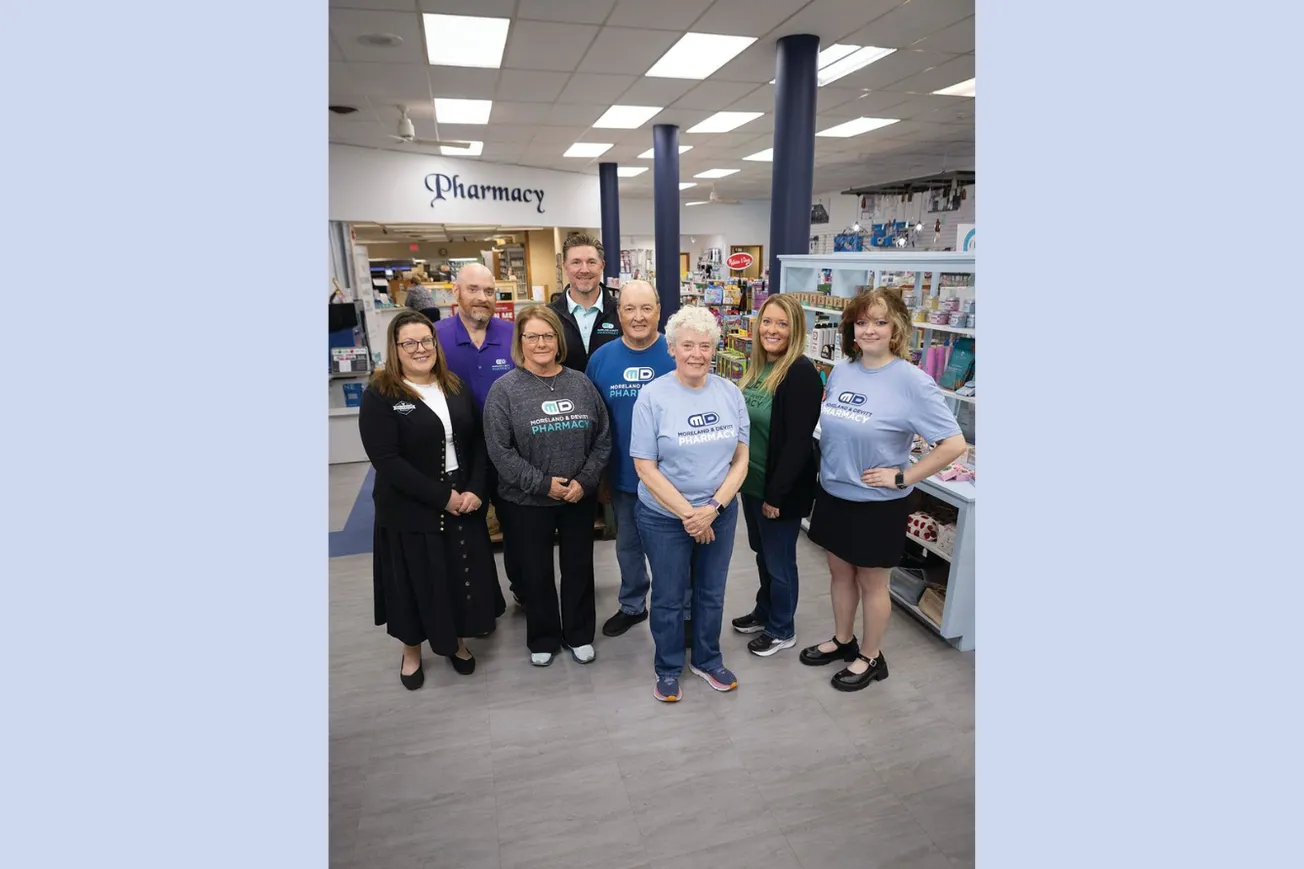
ORLANDO — At ThoughtSpot 2026, Good Neighbor Pharmacy recognized Moreland & Devitt Pharmacy as its Advocacy Champion for showing how independent pharmacies can turn local trust into meaningful policy engagement. Moreland & Devitt, a third-generation, family-owned pharmacy business with four locations in west central Illinois, helped mobilize patients and community members around state drug reimbursement reform, generating more than 650 letters, as well as numerous telephone calls and social media messages to state legislators in a two-week period ahead of voting for Illinois House Bill (HB) 1697, which was subsequently signed into law.
Chain Drug Review spoke with Moreland & Devitt pharmacist and CEO Scott Stoll, and Kenzie Hohman, national vice president of community pharmacy solutions, solution delivery, practice management and advocacy at Cencora, about what other pharmacy owners can learn from that effort.
CDR: Scott, what made advocacy such a priority for Moreland & Devitt?
STOLL: For us, advocacy comes back to patient access. Moreland & Devitt has been part of rural west central Illinois since 1960. Today, we have four locations and a contracted hospital pharmacy serving the majority of six counties, and our patients depend on us for prescription medications, DME products, oxygen-related services and day-to-day healthcare support close to home. Over the years, it became clear that many of the challenges affecting our patients, including reimbursement pressures, insurance barriers, drug shortages and access to personalized care, were connected to policy and system-level decisions. We saw that staying quiet was not an option if we wanted to keep serving our communities beyond the current 65 years.
CDR: Kenzie, why is advocacy such an important part of supporting independent pharmacies?
HOHMAN: Independent pharmacies are often the most accessible point of care, particularly in rural and underserved communities where healthcare options may be limited. Beyond dispensing medications, they play a critical role in helping patients navigate their care, manage chronic conditions, and access essential services such as immunizations. Through these interactions, pharmacies build trusted, long-term relationships that enhance care quality, improve patient outcomes, and strengthen community health.
Advocacy is essential to helping policymakers understand how community pharmacies support patient care and why their sustainability matters, especially as financial pressures continue to strain pharmacy operations. Good Neighbor Pharmacy and Cencora believe in the essential role of independent pharmacies in supporting the health and well-being of patients nationwide. That’s why we encourage pharmacies to share their stories and elevate the issues affecting their businesses, their teams and ultimately, their patients. Their voices offer the clearest and most compelling evidence of the impact — and of what communities stand to lose if mounting financial pressures force them to close their doors. Scott’s story illustrates that advocacy is ultimately about patients. By raising awareness and engaging his community, he is helping ensure access to care for the people who count on his pharmacy every day.
CDR: Scott, how did your team turn that message into action?
STOLL: We knew we had to make a statement that made our messaging impactful. Closing the doors of each of our pharmacies for Legislation Day –—the first time in our history of closing for something other than a federal holiday — made the point that this is serious. And just one simple day of closing the pharmacy was enough to create that impactful drive. We started by focusing on education. Our goal was to help people understand the players in the game and how policy decisions could affect their local pharmacy as it pertains to their own access to care. We used social media, community advertising, local news outreach, discussions with local organizations and in-store conversations to explain the issue in practical terms that showed the personal effects and what it meant for their own future healthcare options.
Then we took steps that made it easy for patients to participate in advocacy efforts. We put up in-store banners with QR codes so customers could send letters from their phones directly and in real-time to the governor, state representatives and senators. We also had pre-written hard-copy letters available for customers to sign — and we mailed those directly to government officials.
In total, Moreland & Devitt created an avenue for telephone calls, social media messaging from community members, and mailed out more than 650 letters in two weeks and 800-plus overall prior to the voting for HB 1697, which was ultimately signed into Illinois law.
CDR: Kenzie, what can other pharmacy owners learn from that approach?
HOHMAN: The biggest lesson is that advocacy can be integrated into pharmacy operations without disrupting daily workflows or requiring significant staff time. While Scott’s team went above and beyond — winning the Advocacy category in the 2026 Good Neighbor Pharmacy Champion Awards — their approach was also rooted in everyday pharmacy operations, using routine patient interactions to educate patients on policy issues and offer simple ways for them to take action.
What pharmacy owners may lack in time or staff to stage advocacy efforts, they make up for in trusted patient relationships. This was reflected in Good Neighbor Pharmacy’s recognition by JD Power as No. 1 in customer satisfaction among chain drug store pharmacies and most trusted.
Patients already understand the value of their local pharmacy — especially in communities where pharmacies are a primary source of care –—and there’s very personal incentive for them to join the cause to incite change. Your community will rally around you if you give them the information and a quick, easy way to engage with legislators.
CDR: Scott, what advice would you give another pharmacy owner who wants to get more involved?
STOLL: Start with the people you already serve. Patients do not need to know every detail of the legislation. They simply need to understand how an issue could affect their and their family’s access to care close to home.
I would also make participation as simple as possible. The QR codes and hard-copy letters worked because people could act while they were already in the pharmacy. Local media also helped us extend the message beyond our walls and create a much larger coalition with other pharmacies. Sometimes others can’t start the effort, but become extremely active supporters when others lead the charge.
Most importantly, be consistent. Advocacy has been part of our family and our pharmacy for generations, including involvement and support with the Illinois Pharmacists Association. You do not have to do everything at once, but you do have to keep showing up.
CDR: Kenzie, looking ahead, what role should advocacy play in the future of community pharmacy?
HOHMAN: Advocacy is, and will continue to be, essential to shaping the future of community pharmacy. That’s one of the key reasons the Community Pharmacy Solutions team was established this past May within Cencora’s broader Community, Retail and Long-term Care (CRLTC) organization.
Across the country, community pharmacies are being asked to do more to support the health of their communities. This growing responsibility isn’t sustainable without policy changes that recognize their value as care providers and compensate them accordingly for the services and medications they provide.
At our recent ThoughtSpot event, we heard clearly that pharmacies are actively adapting their businesses, expanding services, and exploring new ways to better serve their communities while navigating a rapidly changing healthcare landscape. As Scott’s story shows, pharmacies have the power to influence the future by speaking up and advocating for changes that support their longevity and the high-touch, high-quality care they provide. Good Neighbor Pharmacy and Cencora are proud to partner in shaping that future.
Submit Your Press Release
Have news to share? Send us your press releases and announcements.
Send Press Release