BONITA SPRINGS, Fla. – National Association of Chain Drug Stores leaders at the NACDS Regional Chain Conference underscored both the urgency facing pharmacy and the industry’s ability to meet the moment.
They hailed the industry for unified advocacy, practical innovation, and a relentless focus on keeping pharmacies open and patients served. The conference also emphasized the power of chain and supplier collaboration to create the future.
Pathway to Progress: Collaboration That Drives Solutions
Conference chair John McGrath, senior vice president of pharmacy at H-E-B and NACDS board member, emphasized that progress starts when members convene, collaborate, and build solutions that work in the real world:
“When regional chains collaborate, share best practices, and learn from each other, we can amplify our voice and create solutions for our businesses and the patients who depend on us,” he said.
McGrath framed this year’s theme, “Pathway to Progress,” around supporting pharmacy teams with the tools needed to deliver care where it matters most: “For us as retail chain leaders, guiding our pathway is to provide the pharmacists we work for the resources, technologies, and information they need to remain at the center of care and deliver the value patients have found from our profession for decades.”
Access at Risk: Why Action Is Urgent
As NACDS chair Rick Gates, chief pharmacy officer at Walgreens, outlined, access challenges are not theoretical — they show up immediately in communities when pharmacies cannot sustain operations.
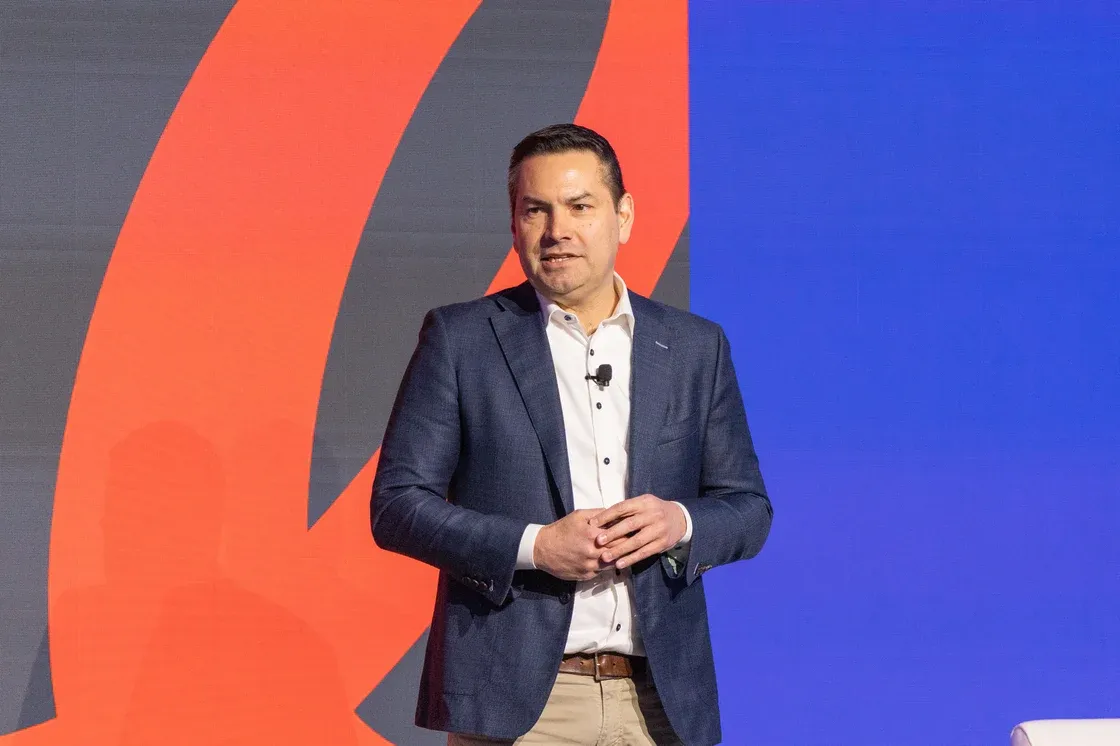
“When a pharmacy closes, it’s not just an inconvenience. It means lost access, longer drives, delayed care and real consequences for communities that already have limited options.”
NACDS president and CEO Steve Anderson underscored the real-world stakes — patients and pharmacies are confronting affordability and access pressures every day.
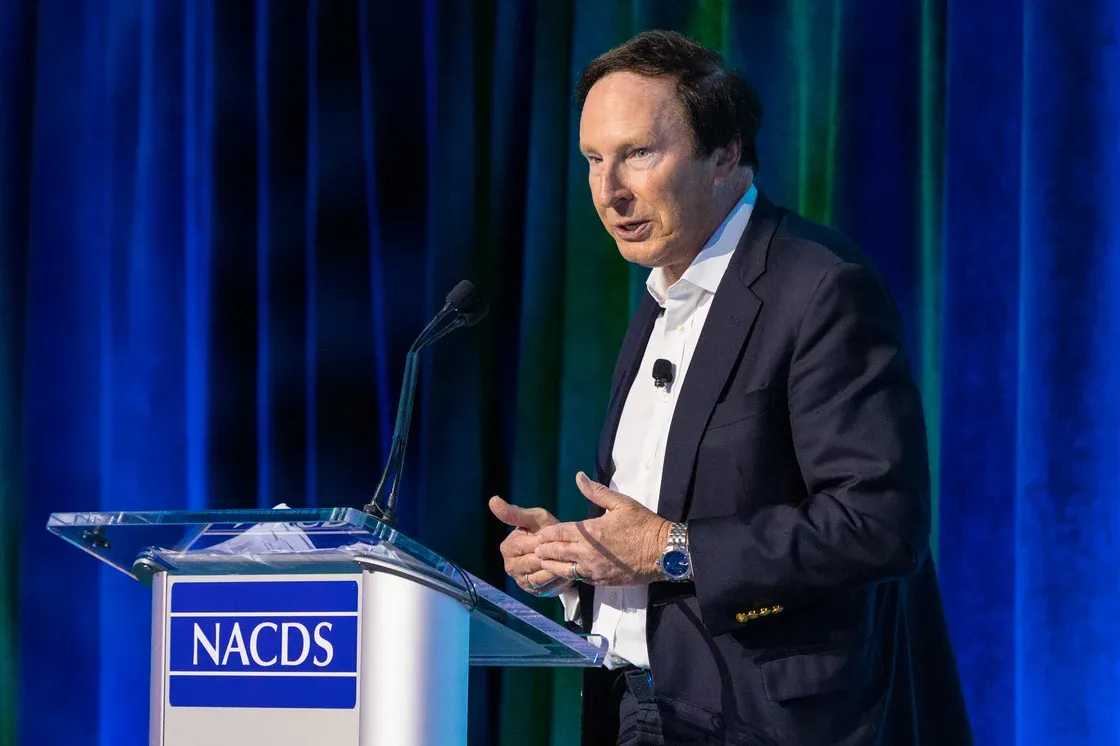
“Americans and their pharmacies are fighting for healthcare affordability…They are fighting for healthcare access. And care is getting more and more out of reach.”
Advocacy: PBM Reform and Sustainable Reimbursement
McGrath underscored that meaningful pharmacy benefit manager (PBM) reform remains a shared priority across the industry, at all levels of government:
“We are advocating for PBM reform to ensure fairness and transparency for every pharmacy, large or small at the federal and state levels.”
Gates connected overall reimbursement reform directly to sustainability, calling out the mismatch between today’s care and yesterday’s reimbursement:
“We can’t keep delivering 21st century care on a 20th century reimbursement model.”
Anderson framed the work in terms of practical outcomes — keeping pharmacies open and ensuring patients can get help when they need it:
“I’m talking about change that provides sustainable reimbursement, that expands services, and that keeps pharmacies open.”
Anderson further emphasized that meaningful progress requires direct action on PBMs — especially at the federal level:
“Government simply can’t fix it [healthcare] until they deal with the PBMs.”
Unity: One Direction, One Voice
Speakers stressed that progress on issues such as PBM reform requires alignment — across regions, business models, and stakeholder groups.
Gates argued that the moment demands coherence and a shared direction:
“Fragmentation is a luxury that this industry can’t afford.”
Anderson tied that unity to NACDS’ mission of aligning the industry and pressing decisionmakers for change:
“We must squeeze enough sense out of government to deliver the change pharmacies need — and that the American people expect.”
Innovation: Technology That Expands Care
Looking ahead, McGrath pointed to the rapid acceleration of innovation — including AI — and the operational transformation it will drive:
“At the same time, we are in an era of rapid advancements and adoption of artificial intelligence and agentic assistance… These technologies will likely transform workflows, redefine efficiency, and reshape how patients access care.”
Anderson emphasized a practical approach: while technology cannot solve every structural challenge, it can strengthen what pharmacy teams can control — and help them succeed:
“Technology can’t overcome outright ruthless treatment by PBMs. But it can help pharmacies control what they can control — empowering their teams for success. And it includes AI.”
Pharmacy at the Center of Care: Optimism With Resolve
Leaders emphasized that while care models continue to evolve, pharmacy’s value proposition remains grounded in trust, access, and human connection — and that this foundation fuels confidence in the profession’s future.
“I am optimistic. Our profession has not only navigated decades of change, it has consistently proven its value,” McGrath said.
Gates cited a clear example of that essential role in action: “We continue to show why retail pharmacy and community pharmacy is the go-to place for vaccines across America.”
The program acknowledged the seriousness of the moment while emphasizing that optimism is rooted in action — and in results, he said. “We must continue to evolve, adapt to new models, and actively demonstrate the value we bring to patient care.”
Results That Matter: Advocacy in Action
Anderson emphasized that optimism is grounded in measurable progress — particularly at the state level — including through NACDS’ efforts surrounding the Rural Health Transformation Program.
“In 2025, we earned 79 new laws across 38 states — advancing 152 NACDS policy priorities,” Anderson noted.
He further highlighted how sustained NACDS advocacy has reshaped policymaker engagement with pharmacy as essential healthcare infrastructure: “NACDS efforts helped to create the reality that 65% of [Rural Health Transformation Program] state funding proposals include initiatives involving pharmacies or pharmacists.”
Gates closed with a call for speed and collective momentum: “The next six months are as critical as they’ve ever been for this industry.”
Anderson ended with the posture NACDS is asking members to share: show up, keep pushing, and keep building what works: “Our path is clear… We keep showing up — together — in Washington, and in the states. We keep adapting our strategies and tactics when needed… NACDS is tough, but we’re constructive. Congress needs to do its job.”
More information about the event is at regional.nacds.org.