DUBLIN, Ohio — When severe weather strikes, communities brace for impact, and so do the healthcare systems, pharmacies and providers that support them. That’s why, from the initial forecast, our pharmaceutical and specialty supply chain team starts preparing. While disruptions are inevitable, collaboration between our commercial and operational teams ensures we are prepared to adapt quickly by activating our weather contingency plans to ensure safe and efficient delivery to our customers and their patients throughout the severe weather.
Early this year, winter storms swept across the southern and eastern parts of the United States. Meteorologists described conditions as historic, 24 governors issued emergency declarations, and winter weather alerts impacted up to 230 million people.
Preparing for the storm with our customers
Jamie Barker, senior vice president of Pharmaceutical and Specialty Supply Chain at Cardinal Health said, “Healthcare does not stop during severe weather, and neither do we. No matter the type or severity of the storm, our response is grounded in early preparation, teamwork and clear communication. Our resilient framework ensures we’re ready for any weather event.”
Throughout such events, our cross-functional teams activate protocols and business continuity plans, coordinate outreach and use real-time operational data to plan ahead. Advanced inventory and network visibility tools allow teams to monitor product availability across the network and reroute orders when needed to maintain continuity for customers.
Our customer-facing teams work closely with our supply chain teams to proactively reach out to customers, encouraging advance ordering when appropriate and sharing timely updates. This collaboration helps our customers prepare for potential disruptions while maintaining access to the medications and supplies their patients depend on.
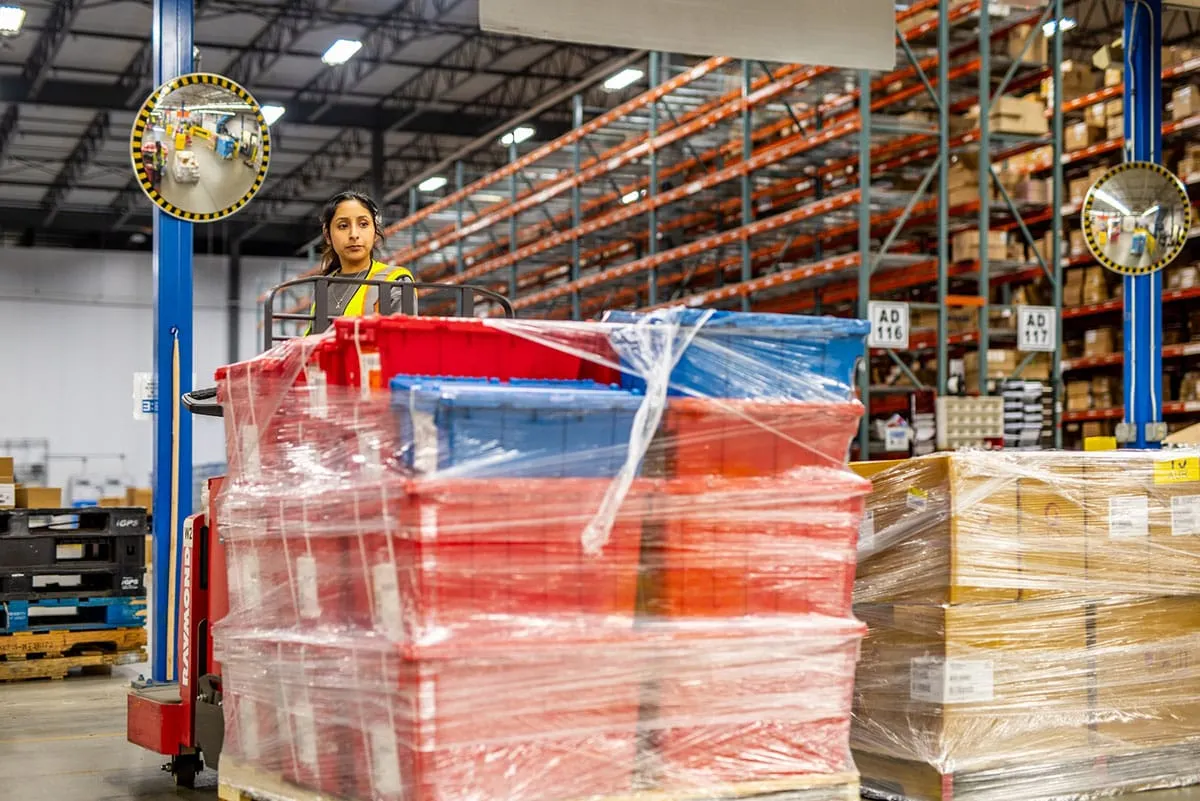
Ahead of disruptions, DCs increase inbound shipments from manufacturers, our Consumer Health Logistics Center and National Logistics Center (both national replenishment hubs) to build inventory. Facilities also prepare backup generators and fuel to ensure operations can keep running if power outages occur.
Workforce planning is another critical component. Our leaders use a mobile scheduling platform that enables managers to post open shifts while allowing employees to voluntarily claim or swap coverage in real time, based on their ability to safely report to work. Staffing decisions are further supported by operations directors who monitor extended forecasts and track updates from the National Weather Service, departments of transportation and local emergency agencies to anticipate impacts and adjust staffing plans ahead of storms.
Responding when severe weather hits
During the most recent winter storms, DC teams adapted quickly to changing conditions, keeping operations moving while prioritizing employee safety. Anticipating hazardous roads and transportation delays, some leaders and employees stayed at nearby hotels to ensure they could be on site when needed, ready to support teams and keep critical shipments moving— delivering all emergency orders.
Across impacted areas, multiple DCs experienced disruptions, putting employees’ resilience and commitment to the test. In Dallas, for example, where wintry weather is uncommon, the storm hit hard. Roads iced over as temperatures dropped sharply. Uncertainty about how conditions would evolve required teams to stay flexible and safety focused. For Nalani Edgar, outbound supervisor at the Dallas DC, that uncertainty shaped how she prepared and supported her team.
“I looked out my window and saw the roads turning white with ice, and I knew if I went home, I might not make it back to help my team,” she recalled. “Patients were counting on us. Staying nearby meant I could be there alongside my crew, ensuring every critical order got out the door, no matter what it took. It was a long night, but I wouldn’t have chosen differently.”
Thanks to decisions like Edgar’s, the Dallas team kept vital products moving as long as possible, even as the storm closed in. When severe ice ultimately forced Dallas operations to pause, the strength of our network, combined with real-time visibility enabled by our technology platforms, supported a rapid response. The Houston DC stepped in, taking on additional volume, adjusting shifts and prioritizing urgent deliveries to ensure customers continued to receive critical shipments without interruption.
The cold-chain challenge: protecting products in extreme conditions
At the LaVergne, Tennessee, specialty pharmaceutical DC (SPD), the team manages temperature-sensitive products year-round. Extreme heat or cold always poses risks to product integrity.
Regardless of the threat, product integrity comes first. Working closely with the Quality and Regulatory Affairs team, the SPD team expedites shipments ahead of severe weather, when possible, holds others until it’s safe to send them and keeps customers informed at every step.
The team has one rule: if product safety cannot be guaranteed, shipments are held.
Looking ahead: when not if
As severe weather events become more frequent and unpredictable, supply chains and the customers who depend on them face growing pressure.
Hurricanes are intensifying more rapidly, winter storms are affecting regions that rarely experience them, flooding events are becoming more common, and wildfire seasons are lengthening.
“Our investments in infrastructure, technology and our people make us more resilient and enable us to operate safely and efficiently in any environment,” Barker said. “We are not just moving products — we are the backbone of healthcare, ensuring critical medications reach the right place at the right time, even in the face of severe weather and disruption. When challenges arise, our teams adapt to deliver the products that improve the lives of people every day.”