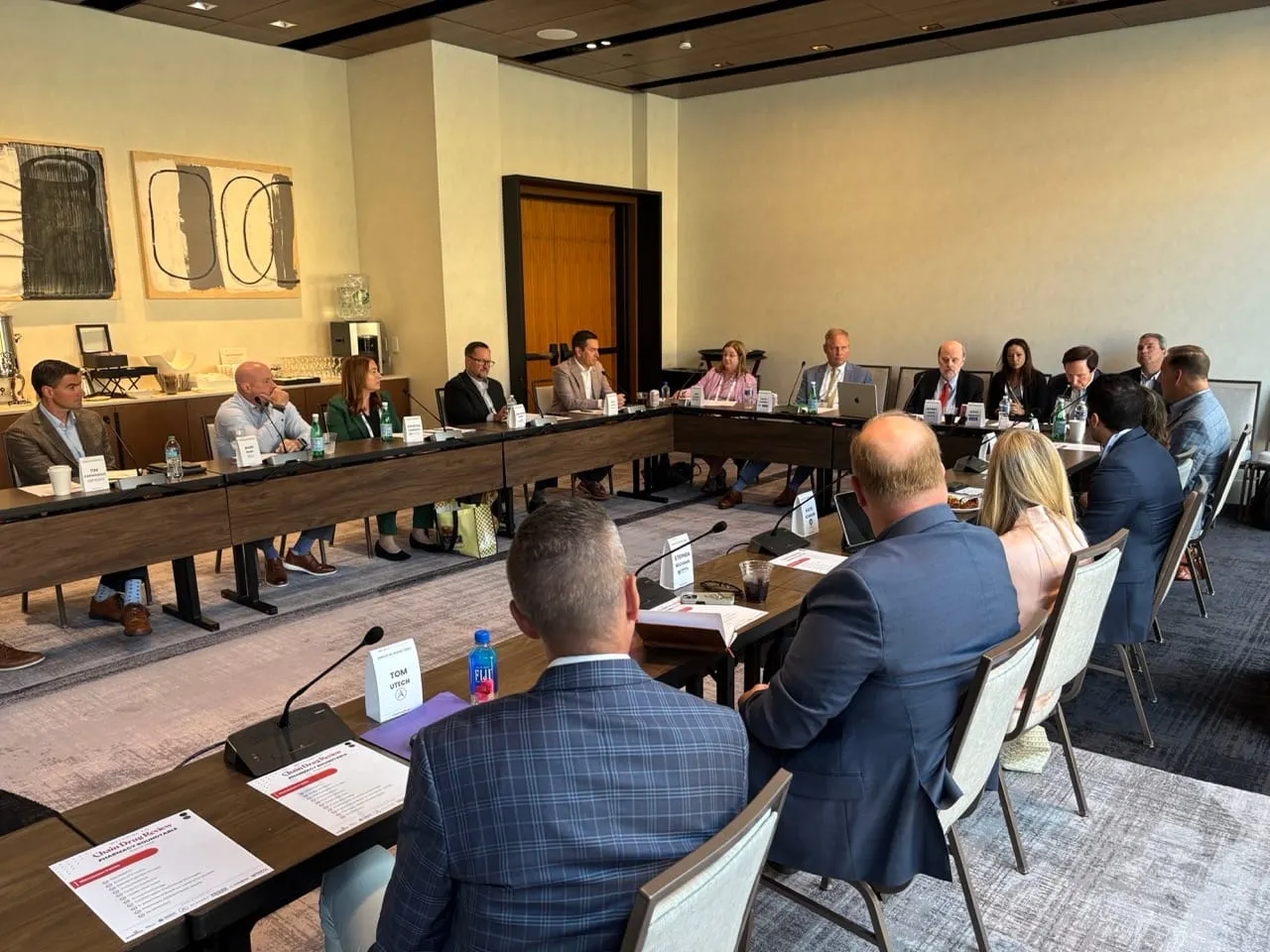
BOSTON — At the 2026 NACDS Total Store Expo, retailmediaIQ convened leaders from pharmacy retailing, distribution, industry associations, and supplier companies to assess the state of pharmacy.
Moderated by Jeffrey Woldt, retailmediaIQ’s editor-in-chief, the Rx Roundtable focused on ensuring PBM reform delivers meaningful results, expanding pharmacists’ scope of practice through measures such as the Main Street Pharmacy Access Act, and securing reimbursement for clinical services. Participants also examined how automation, artificial intelligence, and better-connected technology can free pharmacists to spend more time with patients.
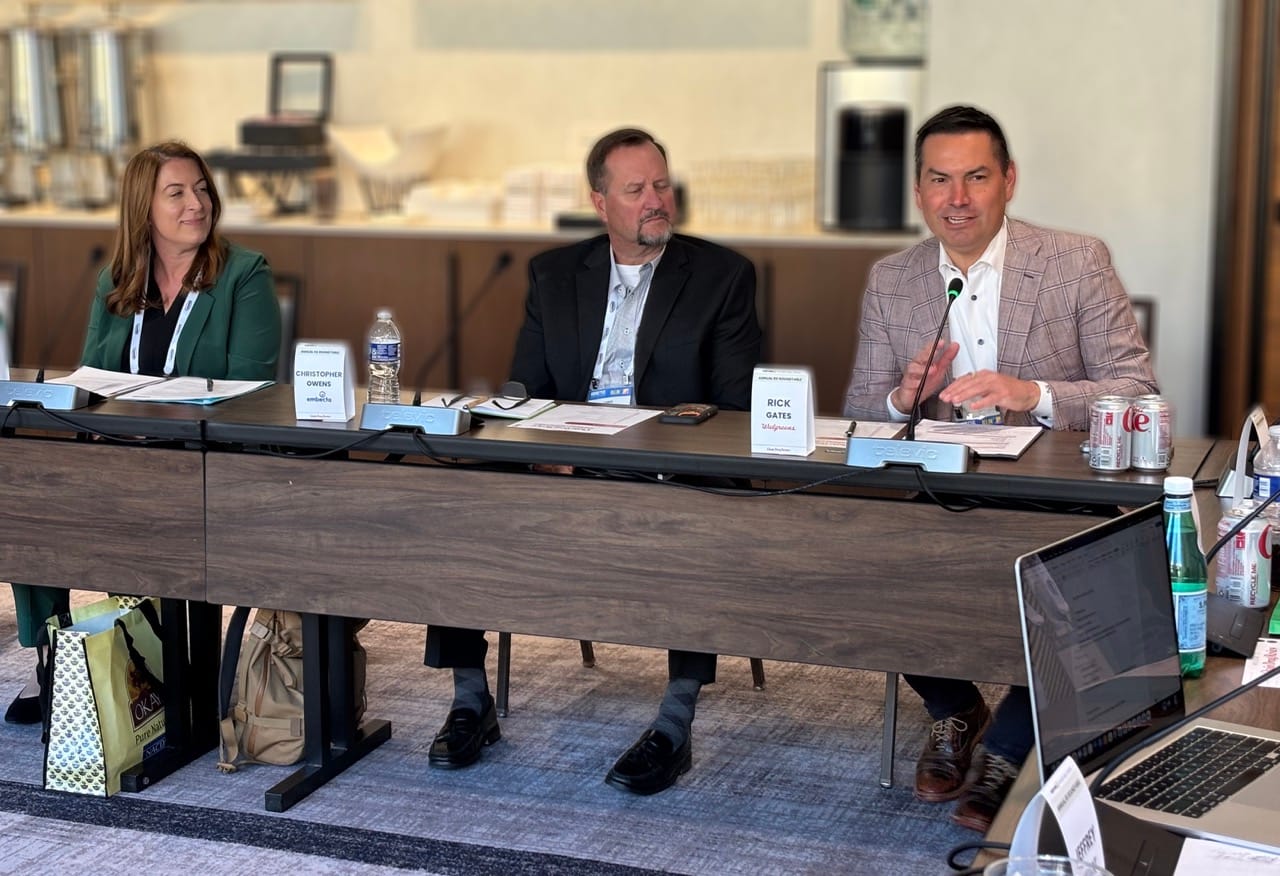
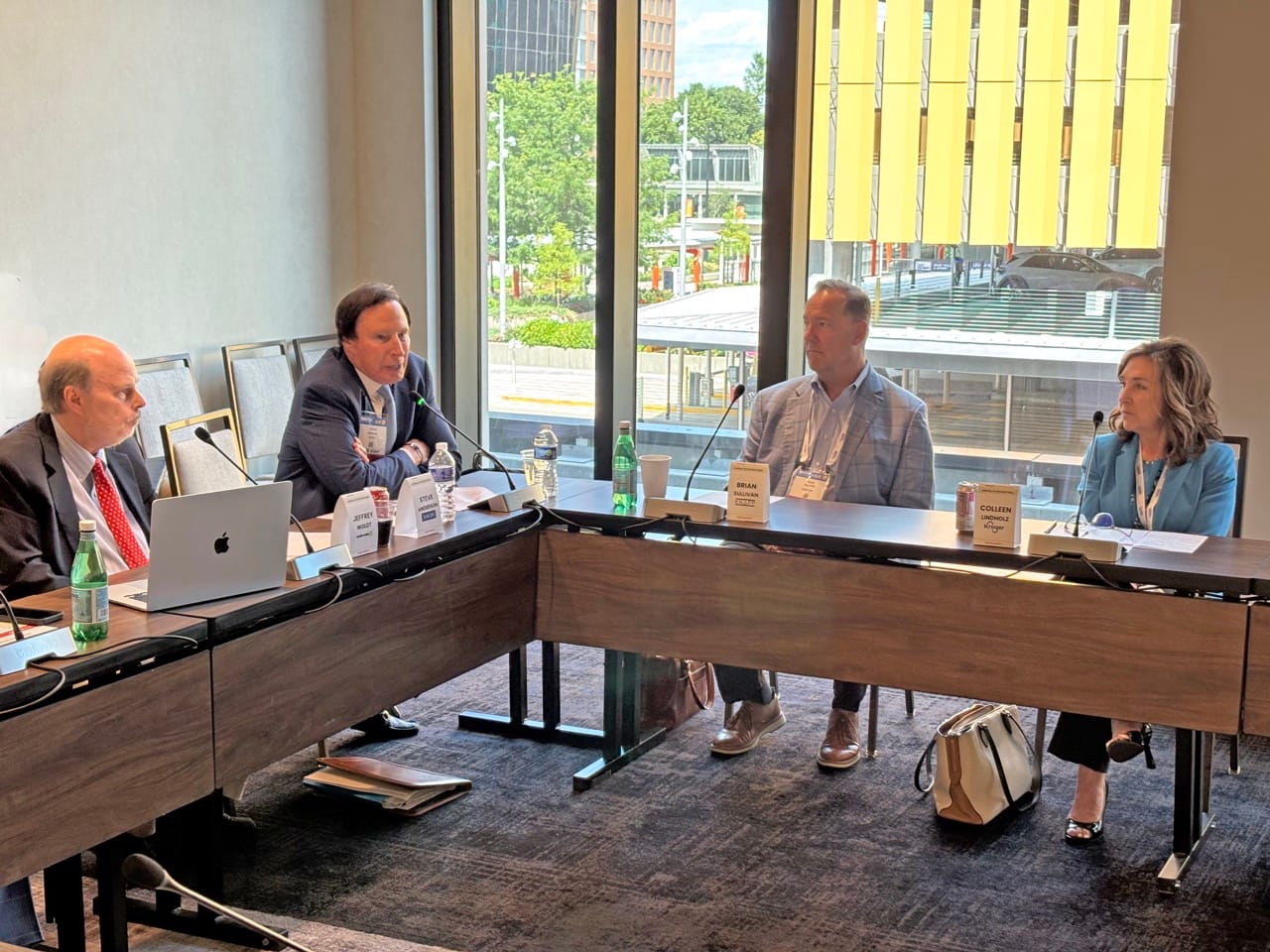
Participants included Steve Anderson, president and CEO of NACDS; Tim Cernohous, president of community retail and LTC pharmacy at Cencora; Rick Gates, chief pharmacy officer at Walgreens; Crystal Lennartz, president of Health Mart and Health Mart Atlas; Colleen Lindholz, president of Kroger Health; Katie Scanlon, vice president of pharmacy at Publix; and Dave Warner, president and CEO of KPH Healthcare Services and NACDS chairman.
Joining them were Stephen Beckman, CEO of Yaral Pharma; Lari Harding, senior vice president of healthcare industry affairs and strategic partnerships at Inmar Intelligence; Todd Huseby, partner and leader of the healthcare sector at Kearney; Christopher Owens, director of national accounts at embecta; Dain Rusk, CEO of Fillex; Purya Sarmadi, co-founder and CEO of MedMe Health; Brian Sullivan, principal of pharmacy solutions at KNAPP; and Tom Utech, CEO of iA.
Retailers


Suppliers


Lari Harding
Senior Vice President of Healthcare Industry Affairs and Strategic Partnerships
Inmar Intelligence


Moderator

The following is their conversation.
WOLDT: Thank you all for being here. We certainly have a lot to talk about, some positive developments affecting the industry and then some problems that still need to be addressed. As we always do, we will ask the current NACDS chairman, Dave Warner, to give us his overview of where things stand.
WARNER: As always, there are a lot of things going on in our industry. Probably the biggest development, at least from our seat, is seeing what’s transpiring with the scope of practice and how quickly it’s evolving. We knew this was coming at some point. We didn’t know when it was going to come. But it’s accelerated at a pace that we haven’t seen before. As pharmacists continue to do more and reach higher scope of practice, it is important to continue to expand on automation so pharmacists can spend more time with patients. So this conversation with the people we have in this room is very timely, based on where we see pharmacy is going and hopefully going faster than I’ve ever seen in my career.
WOLDT: Steve, give us the view from your position at NACDS.
ANDERSON: We are at a turning point in this industry, in the profession of pharmacy and at NACDS. As I said at the [NACDS] Annual Meeting in April, this association has gone through various rhythms over the last 20 years, starting with the financial crisis. We had to do a pretty significant turnaround in NACDS. And then there was COVID. One of the things that we’re going to be doing here at TSE is begin talking about our new strategic framework. It’s going to be a game changer for this association and enable us to take advantage of this inflection point in the industry.
My tenure is drawing to a close at NACDS. The press clips say we really turned this into a pretty powerful healthcare association, and that doesn’t happen if the members aren’t involved. You know what we did after COVID, we told the story of what pharmacy can do and then asked, OK, what are we going to do next? We decided to focus on chronic disease and launched NourishMyHealth to emphasize the link between health and nutrition. And it just gives us so much opportunity in terms of what we’re doing and the impact we can make.
The recognition that pharmacy received after COVID was incredible. We administered 340 million COVID shots at retail pharmacy. That’s 52% of the 600 million and something in the United States. One of our priorities is making sure that NACDS continues with that work. We made sure that the appreciation that we got from everybody — the public, federal lawmakers, regulators, state legislators and healthcare providers — wasn’t squandered. That recognition helped us achieve successes like the PBM reform legislation we had, which is the most sweeping historical change in PBM laws that we’ve had at the federal level.
But a lot more needs to be done, and the proof’s in the pudding. The next big step is what Dave and the board are going to announce next year. I’m really excited to watch what they’re going to be doing. The reason we were so successful during COVID is that this industry was united, and we operated at speed and scale. I’m pretty confident that what you’re going to see from Dave will fall into that category. So pharmacy’s at a good point in terms of our long-term prospects.
WOLDT: Rick, let me turn to you. You were NACDS chairman last February when the PBM reform finally got across the finish line. Tell us a little bit about how you managed to do that after years of trying as an industry, and also what more needs to be done.
GATES: PBM reform was an important milestone, but it’s not the finish line. The work now shifts to implementation and ensuring the regulations ultimately create a more sustainable pharmacy ecosystem. While we made meaningful progress on the Medicare side, there is still significant work ahead.
Looking forward, three priorities remain critical. First, reimbursement must reflect the true cost of dispensing medications. Second, patients should have the freedom to choose their pharmacy and pharmacists should be able to participate on a level playing field. Third, we need meaningful reimbursement pathways for clinical services. Expanding pharmacists’ ability to bill for care through legislation like the Main Street Pharmacy Access Act is essential if we’re going to fully realize pharmacy’s role in healthcare.
We should be proud of what the industry accomplished, but we also need to stay focused on ensuring pharmacy remains sustainable and accessible for the patients who depend on us every day.
LINDHOLZ: I agree with Rick. We need to be aligned with messages. We have been up until now, but the fatigue will be severe, and then the devil’s in the details. Our work on both the federal level and state level obviously is very critical. We’ve gotten a lot done at the state level. We need to continue to do that.
We need to stick with our plan and not give up. But we also have to keep the broader purpose in mind. For decades, our healthcare system has been built primarily around treating illness after it happens. Pharmacy has an opportunity to help move care upstream toward prevention, earlier intervention and better health outcomes.
We’re in a lot of trouble. Someone’s got to step in and do something about it. That’s what the strategy we will roll out — pharmacy will be a part of the puzzle that we put together in order to improve health outcomes of people in the country.
WOLDT: A lot of significant progress on PBM reform has been made at the state level. Both Katie and Dain did a lot in Florida to get legislation enacted. Katie, talk a little bit about the process and then how the reforms have played out over time.
SCANLON: It’s a marathon, not a sprint. It’s something that we’ll just keep having to chip away at. We had some great wins in Florida, but we don’t contract just in Florida, so improvements in one market can be offset by pressures in another.
The solution will be a combination of all these things that is going to turn the tide for pharmacy. But again, it’s just keeping at it and understanding the loopholes that are there. We’ve got to stay ahead of that and see where we can continue to get wins.
RUSK: It goes back to what Rick and Katie said — it’s a marathon. The process is frustrating because you get stuff to the finish line only for the key parts of the bill to be negotiated away. Suddenly you don’t have rate floors and other things that really protect reimbursement. There have been a lot of challenges.
Certainly, we’re winning at the state level, which caused people at the federal level to look at reform. But I think Rick said it best — it was a start, but the bill was really watered down by the time it was done. It’s just going to be a long effort of really trying to get additional reforms done so that we are protecting the profession. The challenge right now, though, is these PBMs are trying to react and change their own reimbursement model. This cost-plus approach is just moving your cheese around, so to speak.
WOLDT: The PBMs have also become tremendously aggressive in terms of public relations.
ANDERSON: We’ve had a lot of state-level wins on PBM reform and reimbursement. There have been 300 changes enacted. There were 38 bills in 26 states in 2024. There were 79 bills in 38 states in 2025, and 24 bills in 16 states in 2026. We were asked by our board to set policy priorities, and we’ve achieved about 63 of those policy changes just this year.
So, as Dain pointed out, the action is in the states. But the earlier question that you had asked, Colleen, was what is a fair and reasonable contract? That can go a lot of different ways. And, you know, the PBMs delay these implementations; they find ways to do it, they file lawsuits, and the battle next year is going to be at CMS [the Centers for Medicare and Medicaid Services] to get them focused on this issue probably more than they are right now.
GATES: I also don’t want to undersell what’s been accomplished. PBM reform was important, and it’s important that we got something across the finish line. Anyone who has spent time on Capitol Hill can tell you there’s been a significant shift over the past five years. Lawmakers understand what PBMs are and they have a much better understanding of the challenges facing pharmacy today.
We didn’t get everything we wanted, but we did make meaningful progress. That’s important to recognize. Now we need to keep the momentum going because there’s still a lot more work to be done.
WOLDT: I’d like to hear from Crystal and Tim about how this issue looks from the perspective of independent pharmacies.
LENNARTZ: I think it’s a shared perspective. Whether independent, drug chain or grocer, having reimbursement that’s adequate is essential. Dispensing fees are also critically important, because the issue goes beyond product cost as well, and, as Rick mentioned, includes payment for services. As scope expands, especially across the states, getting that companion reimbursement is going to be critical.
And, in terms of healthcare access, we’re all looking at pharmacy closures, a problem that is really important, especially in the rural and underserved communities. Some of our pharmacies are the only pharmacy in the county. So we need to make sure that reimbursement is reflective of the services that they provide, regardless of the practice setting.
CERNOHOUS: Crystal, you said it really well in terms of access points. What we’re seeing consistently, unfortunately, in many cases is that independents — because they don’t have a more broad-based, diversified sort of revenue stream — are making decisions on which patients they can afford to accept. That really creates a disparity in an underserved market. That’s a huge pressure point for independents. We have to figure out a way for them to be able to serve their communities more holistically and not have to make the decisions purely on the economics of dispensing a prescription.
WOLDT: Todd, I saw a report the other day that many employers are turning away from the big three PBMs. They seem to be looking for alternatives. As an industry observer, is that what you see as well?
HUSEBY: Yes. Employers are craving innovation and transparency. There is a transparency gap in the PBM market, and entrepreneurs are rushing to fill it. The challengers are still relatively small, but some are growing quickly because there is a real market need. I’m particularly interested in models built around simpler, more transparent economics. And competition is healthy. It’s forcing the large incumbents to respond.
WOLDT: Lari, you keep a close eye on payments and how funds flow. What’s your view of PBMs at this point?
HARDING: We’re really in a critical transitionary period from the way reimbursement models have historically worked to where they’re going. If you just think about dispensing fees, they’re way too low. And you can’t move from the model that you’re in now to cost-plus with a dispensing fee that low, because it just doesn’t work. We also have to think about these next few years before a lot of the federal PBM reform takes effect. As an industry, we have to make sure that we don’t set a precedent that is used as reasonable and relevant in the future. We need to be really thoughtful about that.
We did some modeling at Inmar where we just took what Mark Cuban has done with his cost-plus-plus kind of model. We just took a lot of data and said what if in 2025, retail pharmacies were reimbursed at cost using the Mark Cuban model. We looked at it with the $5 dispensing fee that he gets. But that’s a central fill. It’s not the kind of environment that you are in. And then we also looked at it at $12, which is more like the average dispensing fee. And in every scenario, using NADAC [National Average Drug Acquisition Cost] or WAC [Wholesale Acquisition Cost], the reimbursement’s better for retail pharmacy using the cost-plus-plus model.
As we all get into these new contracting terms, we really need to be thinking about that. I think cost-plus-plus is probably just a transitionary thing. Ultimately, getting paid for outcomes is where we want to head as an industry. I’m looking at Colleen and Katie because the grocery store pharmacies are especially well positioned to connect to total healthcare. Being able to prove that you’re making people healthier and lowering the costs is ultimately where we want to go.
RUSK: Lari, a question. Did your analysis contemplate if everyone participated in NADAC? Because certainly that would drop what cost looks like.
HARDING: That’s a great question. We did do some modeling on what we think would happen to NADAC if there was more broad participation. I think it still is a winning model. And I also think about what’s happening with the price of drugs. All this regulation around lowering the cost of drugs, it’s just going to create a lot of instability if we don’t get to a plus-plus model.
WOLDT: Stephen, how do you view this as a pharmaceutical manufacturer?
BECKMAN: One thing I’d offer is that I’m here because, as our organization, we have put a premium on the pharmacy channel. I’ve been in the industry for over 30 years, and I think we’ve neglected it as a manufacturer more than any of the other communities which make up healthcare delivery. One of the arguments I make — whether it be a PBM or another provider — is we have to understand the interdependency of the system. The impact that you guys are talking about is the same impact that we’re talking about as a manufacturer. interdependency really goes from manufacturer to patient.
And I think we need a bigger voice, because pharmacies can make progress, but you’re only making so much progress. Drug makers do things, and we only make so much progress. There’s a lot of change that has to happen, and we can be more effective if we speak with one voice. When that message becomes fully integrated you’re going to see even more effective change. We need to be able to ensure that we get to a world where the focus is on finding a sustainable economic balance that supports a reliable supply chain. If you look at the generics industry, there are 17 suppliers of levothyroxine capsules. The key is ensuring that the market remains sustainable and that suppliers can continue to reliably meet patient needs. So we need to start creating a balance that will effectively go from beginning to end. And when we do that, we’ll start correcting some of the things that need to be corrected.
WOLDT: Christopher, do you want to jump in?
OWENS: I hear comments here about access, sustainability and automation. As manufacturers we have to do a better job of partnering with your organizations and your retailers to fight these battles with you. Anytime we take a pharmacist out of that continuum of care for our patient, we all lose. We have to ensure that that pharmacist stays in that continuum of care — one, for compliance and, two, for better outcomes. I’ve been doing this 35 years now and I think we just have to do a better job of partnering with our retailers and distributors to make it make sure it is financially feasible for our partners.
WOLDT: Purya, you do most of your business in Canada. Now you’re also in the U.S. How do you view these payment issues across the border?
SARMADI: We’ve been talking about expanding scope of practice, but a lot of that stuff is underpinned by predictability of revenue. When you don’t know about what you’ll be paid and the margins are so bare, it makes it very, very difficult to justify the P&L of, say, a clinical services program. We’ve also been talking about PBM reform, but with some of these new PBMs, what’s really important is understanding that, if we’re not careful, they will also want to encroach on clinical services and what the future of pharmacy is really supposed to be. The cautionary tale is to be very proactive and defensive against that and almost try to define it before it is defined for pharmacy. Folks in the room here are doing a great job of that and it’s very inspiring to see.
The other thing I’d point out is that developments are on a little bit of a phase delay. What we were able to see in Canada was that maybe that shift of scope of practice expansion was starting right before COVID. And then, to Steve’s point, COVID really accelerated it. What we saw in Canada at that 2019, 2020 point, we’re now starting to see stateside. What’s actually so exciting is that there’s this opportunity to reinvent what pharmacy really is, beyond just dispending medications.
SULLIVAN: The scope of practice broadening in Canada has been helpful for us as we’ve been adding in more of our retail pharmacy solutions up there. When we talk about freeing up time for more clinical practice in the U.S., that’s all great unless you’re not getting paid for it. And in Canada they were getting paid for it. So we were able to put in new workflow that allowed them to open up that time for the pharmacist and to do more activities. It’s been life changing for retail pharmacy.
WOLDT: Tom, how do you view the discussion so far?
UTECH: When you look at PBM reform and scope of practice, the one thing that’s clear is the need to free up the pharmacist but also take costs out of the system. No matter if the reimbursement model is stabilized, costs are going to continue to rise. How can we counter that trend? And we’ve got an issue on the horizon — not that it wasn’t already there — will there be enough pharmacists to really provide the care that patients require? The more we can shift to technology that really puts pharmacists in a different position will benefit everyone.
WARNER: I agree with that comment about the shortage of pharmacists, but the scope of practice change is going to entice more people to join the profession. When students see that there’s more to pharmacy practice than lick, stick and pour, many of them will want to get involved. Automation can play a part in it. Fair reimbursements can play a part, but people will come back to the profession. Students will get interested in being pharmacists if they’re doing more than just filling vials.
WOLDT: How optimistic are we that the Main Street Pharmacy Access Act will pass in the near future, that it won’t be another years-long battle like we had with PBM reform?
ANDERSON: Rick talked about the name of ECAPS [the Equitable Community Access to Pharmacist Services Act]. Nobody could really figure out what the title was, but everybody knew ECAPS. And then our board met with the chairman of the House Ways and Means Committee, and he said, I don’t like that name. So he changed it to what we currently have in the Main Street Pharmacy Access Act. And nobody’s using that acronym.
With PBM reform, it’s highly dysfunctional in Washington, I don’t have to tell you that. But we always find a way to thread the needle. We had this thing locked and loaded a couple years ago and it was done. I thought we had totally won. And it was in part of a continuing resolution. And then, all of a sudden, Elon Musk comes out of nowhere because he’s doing the DOGE thing, and he says, These are just Democratic giveaways. And, you know, why is this a 1,500-page bill if we’re just extending the funding of the government?” This was all before President Trump was inaugurated. And then Don Jr. sent a similar tweet out and then the president-elect did. So that’s when it went down.
But we’ve been able to thread the needle on this because we have earned broad bipartisan support. We had a fabulous press conference on Capitol Hill, just as an illustration, with [Senator]Ron Wyden, who was then chairman of the Finance Committee, Democrat from Oregon, and Sen. Mike Crapo of Idaho, who was the ranking Republican member. So what we’re doing is looking for must-pass pieces of legislation that have appeal on both sides of the aisle. The bill that was finally enacted earlier this year dealt with consolidated appropriations, and we managed to get PBM reform included in it. It took a lot of work over the years — on the ground stuff, burning the midnight oil — just to make sure it got across the finish line.
There is a possibility that other must-pass bills related to pharmacy will be enacted this year. Congress has to pass a defense appropriation bill, which includes our Tricare language. We’ve made great strides in getting pharmacy back in the game on Tricare. We’re getting such good support from everybody on the Hill that there’ll have to be a bill by the end of the year. It could happen in a lame duck session where politics are a little less intense than they are just before a midterm election.
At the same time, there’s a lot going on in the states. I don’t need to tell you Dave’s had great success up in Vermont. We’ve had more than 400 scope-of-practice policy changes that were enacted over the last three years. There were 48 bills in 29 states in 2024 and 60 bills in 35 states in 2025. We’ve had 74 bills in 35 states so far in 2026, for a total of 209 policy changes.
Just this week, you probably saw I sent out a memo about the Your Care Coalition, which is focusing on test-and-treat laws in the states. And this was what we asked our chain members to get involved in, and then we asked our associate members, because our associate members can’t sell their products if they don’t have the stores to sell them in. And they’ve been joining too. The response was overwhelming.
This was set up several years ago by Abbott, Pfizer, Walgreens, Walmart and NACDS. And so far this year it has brought wins in Alaska, Arizona, Colorado, Georgia, Michigan, Missouri, New Jersey, North Dakota, Rhode Island and Vermont, as I said earlier. With the exception of the formerly named ECAPS bill, the action’s in the states, and there’s been great progress. But it’s hard to digest that because it’s so fragmented and, as Katie pointed out, you’re involved in interstate commerce. So that makes it extraordinarily difficult.
WOLDT: Colleen, maybe you could tell us about what Kroger is doing in terms of trying to expand the scope of practice.
LINDHOLZ: We have to get the Main Street Pharmacy Access Act done. It’s sort of the bridge to us expanding services and really getting to be a part of the larger healthcare ecosystem. It is still limited. We do know that. But to Rick’s point, it gets us into Medicare Part B. It is an amendment to the Social Security Act. It’s a big deal. We’ve been talking about this for years. To go under Medicare Part B will be wonderful.
At the same time, I think about the standard of care model that needs to happen. Like what’s occurred up in Canada, where we can basically agree on a certain level of service across all pharmacies in the United States of America that we’re going to be able to provide in order to support primary care. Everyone knows that by 2030 there will not be enough primary care physicians to take care of the country. That’s why it’s so important that patients know what they can expect from a pharmacy, no matter where they live. So we have to align on a standard set of services and be able to code them appropriately, be billed for them appropriately and reimbursed appropriately. So I’m excited about the opportunity.
But we’ve got to get the Main Street Pharmacy Access Act done. We’re on the ramp to the road to being able to truly expand services, and we’re doing test-to-treat and things like that in the states in which we can do them. And, by the way, the training is atrocious. There just needs to be standard training. It shouldn’t be different by state, shouldn’t be 16 hours in this state and eight hours in that state. We have to standardize. That’s our next step — we unite as an industry and standardize around a credible standard of care and build the infrastructure to deliver it consistently.
SARMADI: Even though scope of practice evolves on a provincial level in Canada, there was always a baseline there. And getting that baseline in place, both on the reimbursement side and the training at the pharmacy schools, is a difference-maker because then, retail pharmacy chains across communities have a standard to work with.
Staffing is always going to be a problem to some extent. But beyond the staffing part, that wasn’t always the blocker in the pharmacies we’ve seen that have done the best with capitalizing on scope of practice. It’s the ones that actually had a set of workflows, had been able to do the change management and had infrastructure not only for the workflow of delivering the service, but also for billing it. And so once that baseline is there, the scope of practice is there, the training is standardized.
One thing you had said as well, was helping clinicians, pharmacists — in this case — rediscover their schooling. We think there’s this amazing opportunity right now where two things are happening. The scope of practice is increasing and then, underlying that, there’s the AI industrial revolution. We try to actively go to schools of pharmacy across different states and give them our tools for one reason only — so that the folks that are in school today can imagine what their life will be like as a pharmacist in 2030. Like, I don’t know if there are Ironman fans here, but imagine if you have Jarvis for pharmacy and Jarvis for pharmacy is helping you be in front of the counter spending time with the patient. And by that time in 2030, so much more central fill will be in place, so much more automation will be in place. It’s about getting the profession excited about the future and being a part of designing it. That starts with the baseline of scope of practice and a minimum of a set of services, so that there’s standardization around the training and then getting people used to working that way, and expecting to go out into communities and actually provide the care that way.
SULLIVAN: The pharmacies that we’re working with are not waiting for the scope of practice expansion. They’re anticipating it. They are reaching up into the Canadian market to understand how they can advance that, but they’re setting up the underlying infrastructure for automation — whether it’s at central fill, whether it’s at retail pharmacy — and incorporating AI into that. The whole technology and AI portion, coupled with working at the top of their license, is going to excite more students.
GATES: I want to double down on something I think is important. We still have too much inconsistency in the marketplace. Consumers often don’t know what services they can get at a pharmacy because the experience varies by company and, in some cases, by state. One pharmacy may offer a service while another doesn’t, and that creates confusion for patients.
The challenge becomes even greater when you look at it from a payer perspective. Payers want solutions they can scale across large populations. If services aren’t consistently available, it’s much harder for them to contract around those services because they can’t ensure a consistent experience for their members, whether they’re in one state or all 50.
As an industry, we need to align around the next few services that matter most, commit to delivering them consistently and then scale them together. Until we do that, it will be difficult to drive broader payer adoption because they’re looking for consistency, accessibility and a predictable member experience.
WOLDT: Crystal, how does that dynamic affect an independent pharmacy network where you have many different owners? How do you view this whole question of expanded scope of practice?
LENNARTZ: It’s a 50-state experience. Each state is unique in its approach. But like the chains in the room, we’re working to help support our pharmacists and equip them to practice at the top of their license. We’re aligned with a lot of the things that have been mentioned — streamlining operations and training staff technicians, as well as supporting community health workers and helping pharmacies extend their reach, either through delivery drivers or into the home to support patients. So I think there’s an ability not only for a pharmacist to practice in that scope, but rising tides with the support staff and the way that they’re utilized.
We’re seeing a lot of that across our independent pharmacy network as well. And I agree with the sentiment around continuing to have one voice as pharmacy. Whether we’re on the Hill with your Care Coalition or working with the Future of Pharmacy Care Coalition as well. Just making sure that we get that legislation over the finish line is going to be key.
LINDHOLZ: One exciting thing is we met with NCPA [the National Community Pharmacy Association], with Dave leading the charge now, and it was really awesome to see us considering going out with a campaign on, Did You Know? Because it doesn’t matter if you’re an independent pharmacy or if you’re a drug chain or a grocery store. Do you know what pharmacists can do? So we’re excited about the work with NCPA as we come together, because it’s not just one association or even one company. As big and powerful as Walgreens is, they can’t get it done alone. We most definitely must unite.
Regarding that whole standard of care model, we’ve got to get that done. Otherwise, we’re going to be limping along state by state and still facing the same issues. It has to be led by technology. And that’s why we’re excited to work on the interoperability platform for the country. We’re excited to work on the clinically integrated network, where we will then opt in. We should be ready to go.
When the Main Street act passes, we want to be ready to deliver on expectations. We’ve been waiting for this for a very long time. It’s critical that pharmacy associations unite around this issue.
LENNARTZ: Yes, it’s critical to speak with one voice and have one patient expectation. As Rick said, patients now know that they can expect immunizations no matter what pharmacy or setting they go to. We need to do that with these other services. The people we care for need to know what to expect, and they’re asking for it. When we reach that point, we’ll see more payment reform.
WARNER: The exciting part of what Colleen was referring to — this uniting or collaborating with NCPA — is that it doesn’t matter whether you’re a chain or an independent. It is about community pharmacy. It didn’t matter if you have 10,000 pharmacies or one. Everybody in the room realized that this is where pharmacy is going, this is where pharmacy needs to go, and we all need to work there, work together to get there.
SCANLON: It’s a marathon, not a sprint. It’s something that we’ll just keep having to chip away at. We had some great wins in Florida, but we don’t contract just in Florida, so improvements in one market can be offset by pressures in another.
The solution will be a combination of all these things that is going to turn the tide for pharmacy. But again, it’s just keeping at it and understanding the loopholes that are there. We’ve got to stay ahead of that and see where we can continue to get wins.
When it comes to standard of care, immunizations are a prime example. Pharmacists are educated and trained as immunization experts. The fact that we still have a patchwork of state regulations creates confusion for both patients and pharmacy teams. We need a more consistent national approach.
CERNOHOUS: I agree with many of the comments that have been made. One of the issues we face is creating a more seamless experience for independent pharmacy providers to be able to compete at scale. If you think about it, they don’t have the same resources that many chains do in terms of technology. And so independents, if they want to have a consistent experience as Rick talked about, and want to adopt standards of care, must have time to do that, which they don’t today. So it’s a challenge for the industry and some of our tech vendors that we have to think about — how can we feed in technology that supports independent pharmacists to be able to have time, quite honestly, to practice. And it’s at the right cost.
What we see is there are still a fair number of walled gardens where vendors are doing their thing, but there’s not an interconnection behind that. We need the whole industry to support that consistency if we want all 56,000 pharmacies to be able to provide a consistent level of service. That’s a challenge for our software and technology providers — connecting it from the patient all the way back to the prescriber.
SULLIVAN: Tim, that’s one of the areas that we’ve been working on. If you think of Knapp, most people think large central-fill facilities. They don’t think about retail pharmacy. I’ve talked to some of the people in this room about this. Over the last few years, we’ve been migrating our retail pharmacy automation over into North America, primarily into Canada, because their model is a little more attractive to do that. We’ve had some really good success in the last year with that model, freeing up time within the independent pharmacy. Yes, independent pharmacies so that the pharmacists have time to do that clinical activity. So if you look at either of your independent models, this is a low-cost way that you can potentially free up that time for the pharmacist and their technicians within those four walls.
UTECH: Technology in the store is one way to help meet these needs, but I think it’s also challenging the existing model to provide a service to pharmacies that outsources prescription filling. And while we’re still in the early stages of that, some of the state laws and even federal laws challenge that type of model from really operating seamlessly. But you’re right on. We’ve got to get the filling process out of the store so pharmacists can spend their time interacting with patients.
CERNOHOUS: I wasn’t necessarily pointing the finger at any of the technology. I’m really thinking about more digital to the patient as well because that’s a huge gap. We saw that in the recent U.S. pharmacy study by J.D. Power that that is a place that independents are lagging. They are just not as strong at engaging their patients digitally. It’s a dated experience in many cases. And if we want to be able to have the appropriate amount of patient acquisition as well as patient engagement longitudinally, that’s what patients expect. We’ve got to be able to connect that back into filling automation, back into patient management, into clinical services. What I wanted to emphasize if the importance of connecting that full patient experience at the right cost to serve.
WOLDT: Dain, until recently you were a retailer, and now you’re on the technology side of the business. What are your thoughts on these questions?
RUSK: I’ll give a shameless plug to Fillex, but certainly that was what we were created for — helping these capital-constrained type models, like independent pharmacies, by creating shared capacity so they can bank on those types of opportunities. It goes back to when we said we have to work together collectively because one of the challenges when you talk about technology, or just investing in technology, is the variability amongst all these different states.
Unfortunately, it’s infighting amongst boards of pharmacy, it’s the makeup of those pharmacies, because someone feels that if we approve this, it’s giving competitive edge to a chain versus the independent or the health system or the hospital. Since COVID we’ve seen boards of pharmacy get a little bit more lenient, or maybe the makeup of those boards has changed, and people recognize that we need to lean into technology because that’s what’s going to allow pharmacies to remain not only relevant but viable. Who would have thought that some of the retailers that have gone under over the past couple years would ever disappear? From that standpoint, it’s uniting boards of pharmacy to recognize that leaning in on innovation makes a difference and certainly creating economies of scale where we can help independents take advantage of capacity.
LENNARTZ: Colleen mentioned this, but more work is needed around interoperability between systems, because we have very disparate systems today. I know many of the organizations across the table were part of some of the recent CMS interoperability and data-sharing initiatives, and having them connect seamlessly will be critical. That is an industrywide issue, in particular with independents and the multiple different technology platforms they utilize.
HUSEBY: From where I sit, every pharmacy should be asking how to free up two to four hours per pharmacist per day. But that’s actually the easy question. The harder question is: What are you going to do with those hours? As scope of practice expands, we need to be ready to redeploy that capacity into higher-value patient care. Otherwise, we will have solved the wrong problem.
LINDHOLZ: We must show the outcome of what pharmacists can do together — because we can take care of people better than anybody, because we are the most accessible points of care, because we have the patient relationships, and can tie the nutrition component to it. I would love to collectively go to the Hill with a report that in so many states we were able to do X, Y and Z to improve population health. It can be done, but without interoperability, without us being able to connect to the EMRs [electronic medical records], we’re not going to be able to do it well.
SCANLON: Reimbursement is a critical piece of this puzzle. Pharmacists already provide valuable clinical services, and it’s getting recognized and paid for those services that will allow us to create the capacity to expand that care and then scale it.
WOLDT: Why hasn’t a comprehensive study on the impact of pharmacy been done?
LINDHOLZ: There are pockets of excellence out there right now; we’ve got to be able to scale them. But in order to scale them and demonstrate the value of pharmacy to the healthcare system, we’ve got to be able to connect, especially back to the electronic medical records. It’s not easy now. It needs to be easy and seamless, incorporated into the workflow. We must make the practice of pharmacy easier.
RUSK: As Colleen said, one of the greatest challenges is that pharmacy has been built so disparately. Everyone’s got their own systems, everyone’s got their own technology. The ability to create interoperability is a massive lift. But, to Colleen’s point, everyone needs to collectively come together. It’s easy to say that it’s almost impossible to create interoperability amongst all these different systems. And, when you’re talking about large organizations, there’s such a hesitancy about data sharing, and that’s what interoperability creates.
So there are these internal battles that you deal with, and there’s this massive technology battle. It’d be great if everyone was on one platform. As the EMRs came out, it created these standardized platforms that people then adopted. But every pharmacy out there, pretty much across the board, either has their own proprietary system or they’re leaning in on others. And technology vendors are not willing to create the integration points. So that part results in such an uphill battle.
WOLDT: Purya, you and I were talking about this a little bit earlier.
SARMADI: There are other barriers we haven’t talked about, like other parts of the circle of care, let’s say other clinical associations. I’ll make the argument today that, sure, we could expand scope of practice for pharmacies, but that’s happening outside of the purview of the fill-in-the-blank health system. What I have observed is up till now it’s been almost like asking for permission to be part of that patient’s profile. And part of that’s also the barriers inherent in, to Dain’s point, the existing systems that have been supporting retail dispensing workflows for decades.
As part of this “think pharmacist” movement that we collectively are about, it starts with arming the pharmacists with the same system for records that allows them to pass that standard information and a full patient profile. And that is the underpinning piece that then allows the industry to de-identify and aggregate the data and then go to Washington and the states and make the argument. And that is totally possible. Today the data is flowing in pockets. But if it’s not on a data standard, like in other healthcare professions, then it’s impossible to do that. So that collective commitment is really important.
Having experiences on both sides of the border, the amazing thing is that the United States is actually very well set up for this, because back in 2015, CMS issued a rule that stops data blocking. But pharmacy as an industry is only awakening to it now. There are a lot of things that can be done. And, in contrast, similar legislation in Canada has lagged behind. I think there’s a great opportunity now, and it’s just a matter of the collective commitment and having the mindset and belief that pharmacists are part of the circle of care and that they have the right tools to be part of that circle of care.
GATES: I love what you just said because I recently had a conversation on Capitol Hill with a physician legislator about the Main Street Pharmacy Access Act and what we’re trying to accomplish. His concern was that people would walk into a pharmacy thinking they had COVID-19, get tested and treated and that information wouldn’t make its way back to their physician.
I told him that’s not the goal at all. A patient comes in with symptoms. We assess them, test appropriately, provide treatment when appropriate and communicate that information back to their physician.
Pharmacists are among the most accessible healthcare professionals in the country. Patients see us in their communities, often without an appointment and often much sooner than they can access other parts of the healthcare system. That’s not about replacing anyone’s role. It’s about making sure patients can get the right care at the right time and then connecting them back into the broader healthcare ecosystem.
What I’ve found is that when you explain what pharmacists actually do and what they’re capable of doing, it starts to change people’s perceptions of the profession. We simply don’t tell that story well enough.
Consumers should think of their local pharmacy as one of the first places to turn when they wake up with symptoms or have a healthcare question. We need people to see pharmacy as part of the solution and as a trusted entry point into the broader healthcare system. That’s the narrative we need to continue building.
BECKMAN: I have a question. You have to have the physician on board too, right? Because isn’t there a span of control there and a physician not wanting to lose some of that? Because in essence, we’re all fighting for patients, right? So how do you have both sides of that and make that really work?
GATES: They need to understand how they’re going to be informed. At the end of the day, we’re not trying to replace or supersede the role of the primary care physician. If a patient goes to an urgent care center, that’s not their physician either, but there’s an expectation that information is communicated back so care remains coordinated.
Pharmacy should be viewed the same way. It’s an extension of care for the patient. Our job is to assess, treat when appropriate and ensure the physician has the information they need. We just have to do a better job explaining how that process works and how it ultimately helps physicians better care for their patients
BECKMAN: That’s how we’re thinking about it. As Christopher said, we’ve got to get closer to how we can change some of the ways the system works. My concern is that you’ll still have that interdependency. If I’m a physician, maybe I’m reducing my workload and pressure on the office. But we also have to make sure they understand what things they view as acceptable that the pharmacist should or can do to create that new dynamic. And, then as a manufacturer, why I’m here is I want to learn how do we tap into that make it more successful.
LINDHOLZ: But if the pharmacists are trained to do a certain service, would they question their colleagues in medicine or nurse practitioners, other people who have gone through training to do a simple point-of-care test? I don’t think so. It’s not like we’re trying to do brain surgery; we are literally trying to complement what they do. That’s especially important in a world of value-based care, because by 2030, CMS said all Medicare and Medicaid beneficiaries need to be in a value-based-care plan. The opportunity is not to compete for the patient. It is to build a more complete circle of care around the patient.
BECKMAN: Look at me as a person that goes to the pharmacy — I go to my local independent pharmacy and I’m looking for that standard of care. I just think that we have to understand again the interdependencies and make sure that people appreciate and respect that the pharmacy as a resource that is poised for a tremendous renaissance. I live in a rural area, and work in the city, and I see everything and I know that there is such an opportunity for change, and we all can be a part of it. One of the things I want to know is, as a manufacturer, how can we help you achieve all the things that we’ve been talking about?
HARDING: I want to go back to what Rick and Colleen were saying, because I think that there is a fear of increasing utilization. Think about how many retail pharmacies there are, and they’re more accessible than any other healthcare provider. It’s a lower cost of care for low acuity, but there are more of them. And so it’s very possible there might be increased utilization of services. We can connect the triangle of that increased utilization by looking at what’s saved by the whole system. It’s hard to argue with a great business case, and we need a great business case so that everybody is singing from the same song.
CERNOHOUS: I agree with that. I struggle, though, with the idea that we need a business case, or we need to prove our value. A recent study showed that 58% of Americans first go to a pharmacy for triage services on non-emergency care.
They might go to that lower-cost site of care, and we can help.
But I do think we really need to also level this up a little bit in pharmacy and talk to our healthcare colleagues. We need to talk to MDs, we need to talk to the RNs. Because there is also just an economic challenge here, right? At the end of the day, we’re in a constrained pool of dollars. If we want to get provider status, we also have to figure out how do we get AMA [the American Medical Association] and others on board? Because those that are in medical practice, when you talk to the local physician, the local nurse practitioner, they love you, they want the help. It’s then when we get to other levels that we create stakeholder misalignment at times. It’s really key that as both associations and a profession, we try to figure out how to bridge those divides. And I don’t know that we always spend enough time there.
ANDERSON: In Congress, we have great support for the Main Street legislation. When I talked about the bill that might pass at the end of the year, it includes the doc fix you’ve heard so much about reimbursement for the doctors. The quid pro quo is that if they get the doc fix, we get the Main Street provisions. Even the physicians caucus on the Hill supports the bill. We’ll see where that goes, but thanks to the people in this room, our message seems to be working. And it’s obviously resonating in the states.
The federal Rural Health Transformation Program is going to be huge in terms of what we’re doing. We’ve identified states, we’re doing hotlines. You can pick up the phone and talk to our staff team on this. And I’ve spent a lot of time with [Secretary of Health and Human Services] Dr. [Mehmet] Oz in the last two months. He was talking about how people should go in and see your pharmacist and get their numbers right. That’s what he’s doing.
We have great access to decision-makers at HHS. I just met with Steph Carlton at CMS in terms of what we can do. She’s the deputy administrator of CMS, but also AI clinical technician specialist. And that’s what she’s focused on. So we have friends at HHS and CMS that we never had before.
WARNER: We talked about increasing care. We keep forgetting the employer who’s many times footing the bill. If they can get an employee who’s been tested for flu or whatever back to work — that’s key to them. So we need to sell to that audience. And then to the point that Vermont just passed a test-and-treat bill. When it went to a hearing in front of the state house and the senate, the physicians association never even sent anybody to the hearings — they had already conceded to that they can’t always cover every patient that needs care at a given moment. So they’re starting to see that pharmacists are going to play a huge, important role in primary care.
ANDERSON: And when we talk about coalitions, we talk about NCPA. We work with NCPA all the time. But we’re setting up new coalitions, because pharmacy alone can’t move this. We’ve got this fabulous group with employers. We’re working with other healthcare professionals in other areas. We’re working with all kinds of different segments. We can’t do this alone. This isn’t just a pharmacy issue. Everybody’s got a stake in the game, particularly employers.
If you look at the employer initiative that we have coming out, it’s stunning. The data coming back from our polling is just extraordinary in terms of how much employers want this. They want to reduce their healthcare costs and guess what? Pharmacists are the ones that can do it for them. So there’s all kinds of different partners that we’re now working with that we probably never worked with before. We have different issues, different partners, but we’re all moving in the same direction of advancing pharmacy.
WOLDT: Christopher, we’ve heard calls from Steve and others about the importance of a unified voice, a unified effort. I’ve always thought that there is room for the pharmaceutical companies to work more closely with pharmacies because they both are involved in medication therapy, which, I would argue, delivers a solid return on investment. Is there a need for greater cooperation between those sectors?
OWENS: Absolutely. Not only is there more room for it, but there should also be a demand for it from your organization and from our retail and wholesale customers. When you look at just how embecta and other companies compete, we actually spend much more time and strategically focus on pharmacies as opposed to just physicians, as we can have a bigger impact marketing to and educating pharmacists on how to work better to improve patient outcomes.
Katie mentioned something earlier, and down here I heard also about freeing up pharmacists’ time, two to four hours a day. The question is what do you do with that time, and how do you get reimbursed? A high priority for us is to partner to help facilitate training for those pharmacists with our dollars to make it a win-win for all of us in this room. We definitely need to do a better job of that.
WOLDT: Todd, we’ve heard about the problem of silos for many years. Can healthcare be fixed without looking at the entire system? Can you fix pharmacy without also addressing other providers?
HUSEBY: No. Healthcare is a giant balloon-squeezing problem. Push cost or work out of one part of the system and it usually pops up somewhere else. So you can’t really fix pharmacy in isolation. You have to understand what happens to the payer, the provider, the manufacturer and, ultimately, the patient.
WOLDT: There was a recent report from the Yale School of Public Health saying that if the U.S. adopted a single-payer system, we would save over $1 trillion and over 100,000 lives a year. I think that idea is worth exploring.
LINDHOLZ: I’ll comment on that in the area of prevention. The problem with selling prevention is that people move from one place to another. I can’t pay for that program because next year they’re going to go from working for Procter & Gamble to working for Kroger, or whatever. If we had a single-payer system, then we could get really serious about prevention. Prevention is hard to fund because the benefits often show up later.
And that’s something we need to get serious about, because our country is in a terrible spot. The U.S. is one of the unhealthiest countries, yet we spend a lot more money on healthcare than anybody else does. The ROI is not there. But if you intervened earlier in the process — keeping in mind that when you wait until later you pay more — patient outcomes would improve and costs would be lowered. I feel like the prevention piece is not going to be paid for appropriately until they stop worrying about people jumping from one payer to another. We’ve got to find better ways to invest in prevention, because waiting until people are sick is the most expensive option available.
HUSEBY: Colleen makes a good point. I haven’t studied the Yale analysis, so I’d want to understand exactly where the savings come from. But a trillion dollars is roughly 20% of the U.S. healthcare system. You don’t take 20% of the cost out of a system this large while assuming the physical system stays exactly the same. If a meaningful portion of those savings comes from taking capacity out, we also have to ask what happens to access. Cost, capacity and access are connected.
WOLDT: Colleen, let me stick with you for a minute. You spoke about the benefits of moving from an emphasis on treatment to prevention. Toward that end, Kroger is championing the concept of food for health.
LINDHOLZ: We’ve been trying to, for quite some time, not just help people make healthier food choices at the shelf through a simple, easily understood nutrition scoring system, but actually to transform the food system to put pressure on the CPGs and on people who make food to actually put better-for-you products on the shelf. We have been working with employers and signed contracts to basically help people through nutrition intervention. Nutrition is hard because it’s not just what consumers put in their cart at a grocery store, but also the way they live their lives, which includes where they go out to eat and what they wind up eating. The challenge isn’t knowing what’s healthy. The challenge is helping people make healthier choices consistently in the real world. Somebody that can come to the market with digital technology connecting people or some other tool to get them to change behavior is going to be key.
We would hope that the federal government at some point would require all grocers to put in a nutrition scoring system so that people can more easily make healthier food choices and that the insurers would come back and reward people for doing so. We do have a research project going on right now with United Healthcare around the opt-up score, which is our nutrition score overall, and whether we can correlate that to lowering the total cost of care. That would be a gamechanger for healthcare payers.
So we continue to push on it and, more importantly, encourage others to do the same, which many have, including Walmart, Hy-Vee, Albertsons and Publix. Many of our peers have done the right thing with trying to push the public to understanding what they’re putting in their mouth.
ANDERSON: NACDS is involved in that effort through our Nourishing My Health campaign, which Colleen inspired during her chairmanship. Our members are also working to help patients who take GLP-1s. We’re doing an analysis of GLP-1s and the impact of the patient journey throughout the entire process. With the bridge program that came up earlier, this makes that work particularly timely. The research will examine what pharmacies can do in terms of education, adherence, side-effect counseling, lifestyle support and coordination with the various healthcare teams.
WOLDT: Rick, how have GLP-1s changed what Walgreens pharmacists are seeing at the counter?
GATES: It’s really a matter of taking a much broader view of end-to-end disease state management. I always say pharmacy’s role isn’t just prescription care, it’s total care. It starts with over-the-counter products, extends through prescription therapies and includes many of the day-to-day decisions that influence a patient’s health.
We have to think about pharmacies as access points to that care. With GLP-1s, it’s not just about the prescription. It’s managing side effects, supporting adherence and helping patients stay on therapy beyond the first, second or third month. It’s helping people navigate lifestyle changes, whether that’s exercise, nutrition or other adjustments they need to make along the way. All of that becomes part of the solution we’re providing for consumers.
Another thing many people don’t realize is that manufacturer coupons and other support programs may not last forever. Costs can change over time, creating additional complexities for patients. That’s one example of how GLP-1s have expanded what consumers expect from pharmacy. Historically, pharmacists often helped patients navigate insurance coverage. Now we’re being asked to help patients navigate the entire journey.
That’s why programs like the Bridge program are so interesting. They give us an opportunity to step back and think differently about how we educate consumers, how we support them throughout their care journey and how different parts of the healthcare system can work together to improve outcomes. In many ways, this may be one of the first opportunities for the industry to approach disease state management differently, and then apply those learnings to other therapeutic areas over time.
LINDHOLZ: That’s where technology and central-fill services come into play. Over the next 10 years, pharmacists will be more interpreters of diagnostics and genetic testing provide nurse practitioner–type of services. I’m not saying all the way to NPs, but that’ll be what pharmacists do. And then the dispensing will be done at a central-fill facility that goes directly to the home, with controlled substances and maybe acute care, handled in the store. I see the practice evolving like that, and we just have to be ready for it.
GATES: Historically, the business case for automation was largely about efficiency. Going forward, it’s about capacity.
Every operational efficiency we create should allow pharmacists to spend more time delivering higher-value patient care. The real opportunity is taking the time we free up through automation and reinvesting it in services that improve outcomes, strengthen patient relationships and create new growth opportunities for pharmacy.
SULLIVAN: In our central-fill facilities, we’ve had to relook at cold chain as volume has increased because, yes, the pharmacies are saving money by doing it out of central fill, but, if you’re not automating cold chain within the central fill, there are a lot of touches that are going on, and your expenses rise. So we’ve done some innovative things to address that.
RUSK: The real elephant in the room regarding GLP-1s is the financial challenges it’s creating for organizations. The reason for centralizing cold chain is because these things have grown so fast, so pharmacies had to go back and add additional refrigeration. They’ve had to remodel stores.
Most organizations now track GLP-1 volume on a weekly basis just because they need to understand how it’s impacting their financial portfolio. Looking beyond the clinical benefits of GLP-1s, there’s probably no one who’s a retailer that’s not being asked that question by the people above them on a weekly — if not daily — basis because they have such an impact on your overall financial performance. So getting this reimbursement piece fixed is critical. Because now they’re moving to this direct-to-consumer piece. It’s amazing how the consumer can now get a better price than the pharmacy can.
OWENS: There’s an opportunity and a risk with the GLP-1s. If you search GLP-1s on social media platforms, you’re going to get four or five calls from somebody reaching out trying to put you on a GLP-1 that does not involve a discussion with a pharmacist. That’s a risk that should be seen as a cautionary tale. At the same time, GLP1s create an additional opportunity for more interaction between the patient and the retail pharmacist. I think everybody here is on the same page with that. And, yes, there are financial challenges with GLP-1s, but I think you’ll see that begin to resolve itself over time.
WOLDT: I’d like to circle back to technology and ask about AI and the impact that it’s going to have on pharmacy.
UTECH: I’ll pick up on what Christopher just talked about. We’re seeing the impact of that social media engagement he described and what’s going on with AI with regard to GLP-1s. Some of the dispensing pharmacies that are emerging out there in the e-commerce space are growing very fast. But it’s also a concern because — to your point—the pharmacist is not engaged with those patients. So you have to wonder how much assessment is really done of that patient prior to them getting the medication? As far as AI and workflow are concerned, it’s still in the early days, but that’s the next horizon. Especially with the technology that’s already deployed, there’s a strain on capacity in central fill. But how can AI leverage that capacity to get more out of it? That’s how we’re applying it. Our goal is to leverage the infrastructure that’s already there to drive more capacity.
LENNARTZ: I would add that technology should create the capacity to enable some of the things that we’re talking about, not take the human, the pharmacist, the team members out of the loop. We’re seeing a lot of great value when technology handles the mundane tasks, tasks that are burdensome on the team, whether that be phone calls or within workflow. It’s essential going forward to enable some of the things that we were talking about more broadly.
It extends beyond the pharmacy to the supply chain as well. From a McKesson perspective, that’s where we’re embedding a lot of AI and machine learning into the logistics and inventory capacity. We’ve seen some great advances even further upstream in the supply chain.
WOLDT: Tim, to what degree are you using AI to communicate with patients?
CERNOHOUS: Within Good Neighbor Pharmacy, we don’t have any formal product that we would endorse, but we just recently had an opportunity to bring our customers together, and we featured a community pharmacist from Kentucky, who is employing agents in his practice in order to be able to do outreach. There’s a lot of cool, innovative things emerging and a lot of change management to the pharmacy teams. We also had a roundtable sponsored by NACDS where we talked about compliance and risk of AI, and how data is handled and protected. So while there is tremendous opportunity, there’s education that needs to be done — with patients as well as providers — and there also just needs to be very much an awareness of appropriate use of patient information, so that there’s not a corresponding backlash should a cyber security breach or similar event ever happen.
RUSK: What Tim just said hits the nail on the head: AI is growing faster than organizations can figure out how to ingest it. These compliance issues and guardrails scare people. And by the time you get to a point to do that, AI has evolved to a whole new generation. It’s evolving faster than people can keep up with it.
WOLDT: Lari, you do a lot of work with consumers. What’s the patient expectation of AI in pharmacy and healthcare at this point?
HARDING: The consumer is increasingly using AI to search for information about healthcare. Even in all grocery stores that we work with on digital coupons and media, there is just a tremendous amount of engagement from a healthcare perspective, engagement like we’ve never seen before. I think that this continue with people educating themselves at faster speeds. And it’s going to help us. Just as Colleen said earlier, it’s about education. As consumers become more involved and more comfortable with AI — and they will — it’s going to be a part of our lives that’s going to help fuel some of the services and things that phamracy can do to make people healthier.
HUSEBY: I want to build on Lari’s point about consumer expectations. AI may become the new front door to healthcare. Someone wakes up with the sniffles and increasingly may ask an LLM before they ask a pharmacist. That raises a strategic question we haven’t really wrestled with yet: Who owns the patient relationship when AI sits between the patient and the healthcare system?
And I think we’re aiming too low if we use AI only to automate today’s work. Of course we should take cost out and free pharmacists’ time. But the bigger question is: What can a great pharmacist plus AI do that even the world’s best pharmacist cannot do alone? If we could anticipate what a patient will need three or six months from now and intervene before the problem occurs, that’s much more interesting. That’s the superhuman opportunity.
SARMADI: Todd is spot on there. So much of how things are going to evolve is related to change management. Speaking as a vendor, half of what we do is technology and half is the playbook on how we make this transformation.
AI is making people remember what it means to be human. The worst thing that could be done is to implement AI in a pharmacy as a chatbot and drive a patient crazy because they can’t talk to a human when they want to talk to a human. The secret will be whether we can abstract jobs away and move them upstream. A technician can run 80% of the administrative part of a clinical workflow, so all the pharmacist is doing is touching the clinical decision. That’d be kind of like the abstraction of the superhuman part of what a pharmacist could be, and then whether an outbound AI agent can bring a patient back for their, say, second shingles shot at the right time, right?
That kind of orchestration puts the human in the loop at the exact right time. We want that human decision and that human interaction, which is the most important part of what a pharmacist does, to happen at a higher frequency while everything else is abstracted away.
We also have to understand the limitations of AI. It really shouldn’t be used for interpretation. Because while it’s amazing 90% of the time, the 10%, it’s not. So it’s important to be thoughtful about what AI is good at: following SOPs [standard operating procedures], adversarial thinking, but don’t ask it to do interpretation. Most human beings, while they like to self-diagnose, they don’t want to be cared for by AI. They would like a human to compassionately talk to them about the care that they’re going through and navigating it. The key is using AI to augment the thing that makes us uniquely human, especially for pharmacists in the community they serve.
SULLIVAN: I agree with what you’re saying. If you take it further upstream, whether in the distribution center or in the pharmacy, we incorporate AI in everything that we deal with in workflow. That doesn’t mean AI does the interpretation at the end, but it gives the information to the administrative teams within the organization to be able to say, aha, this is why we’re seeing this within the workflow. Which way do we want to go? And it shortens cycles, everything from guidance on the workflow and preventative maintenance all the way through the process.
WOLDT: A final question. Probably you’ve all seen the new J.D. Power rankings. It was interesting that e-commerce pharmacies seem to be rising in customer satisfaction, while brick-and-mortar are declining a little bit. Is that a red flag or just an aberration?
WARNER: Some of it goes back to having technology freeing up time so that our pharmacists can actually be there with patients. It’s probably happening because pharmacists and pharmacy techs just don’t have the time that they need. That will continue to happen unless we get out in front of it. The addition of new healthcare services will also prompt more people come into their neighborhood pharmacy.
RUSK: It’s partly a GLP-1 phenomenon. Too many people are leveraging e-commerce to get these injections compounded at a cheaper price. This is something that makes them feel really good. They’re losing weight. So their perception of e-commerce pharmacy is driven by GLP-1s, more so than everyday experience.
WOLDT: With that, let me thank you all. It’s been a great discussion.
Submit Your Press Release
Have news to share? Send us your press releases and announcements.
Send Press Release