By Deborah Weinswig
AI is transforming physical retail from the inside out. Technology is enabling smarter stores, stronger customer connection and greater resilience in a fast-changing world, with AI quickly becoming a business-critical tool. Retailers that move from experimentation to true AI adoption are positioning themselves for growth, loyalty and long-term success.

In this article, we explore three ways that AI is redefining what’s possible in physical retail: elevating in-store service, boosting operational efficiency and unlocking true omnichannel experiences for shoppers.
AI elevates in-store service
Retailers are facing persistent challenges with staff turnover, rising labor costs and the need to support a higher volume of sales with fewer associates. In response, they are equipping frontline teams with advanced mobile devices and AI-driven tools — creating new opportunities to boost productivity and improve both employee and customer satisfaction.
Compute at the edge is at the core of this transformation. As in-store devices proliferate — such as handhelds, shelf-edge cameras, traffic counters and smart displays — there is a growing need to process and analyze data directly on site, rather than relying solely on the cloud. Solutions developed by Intel and other technology leaders now enable retailers to deploy powerful edge devices and servers within the store, supporting real-time analytics, computer vision (CV) and AI-powered applications that enhance both operational performance and the customer experience.
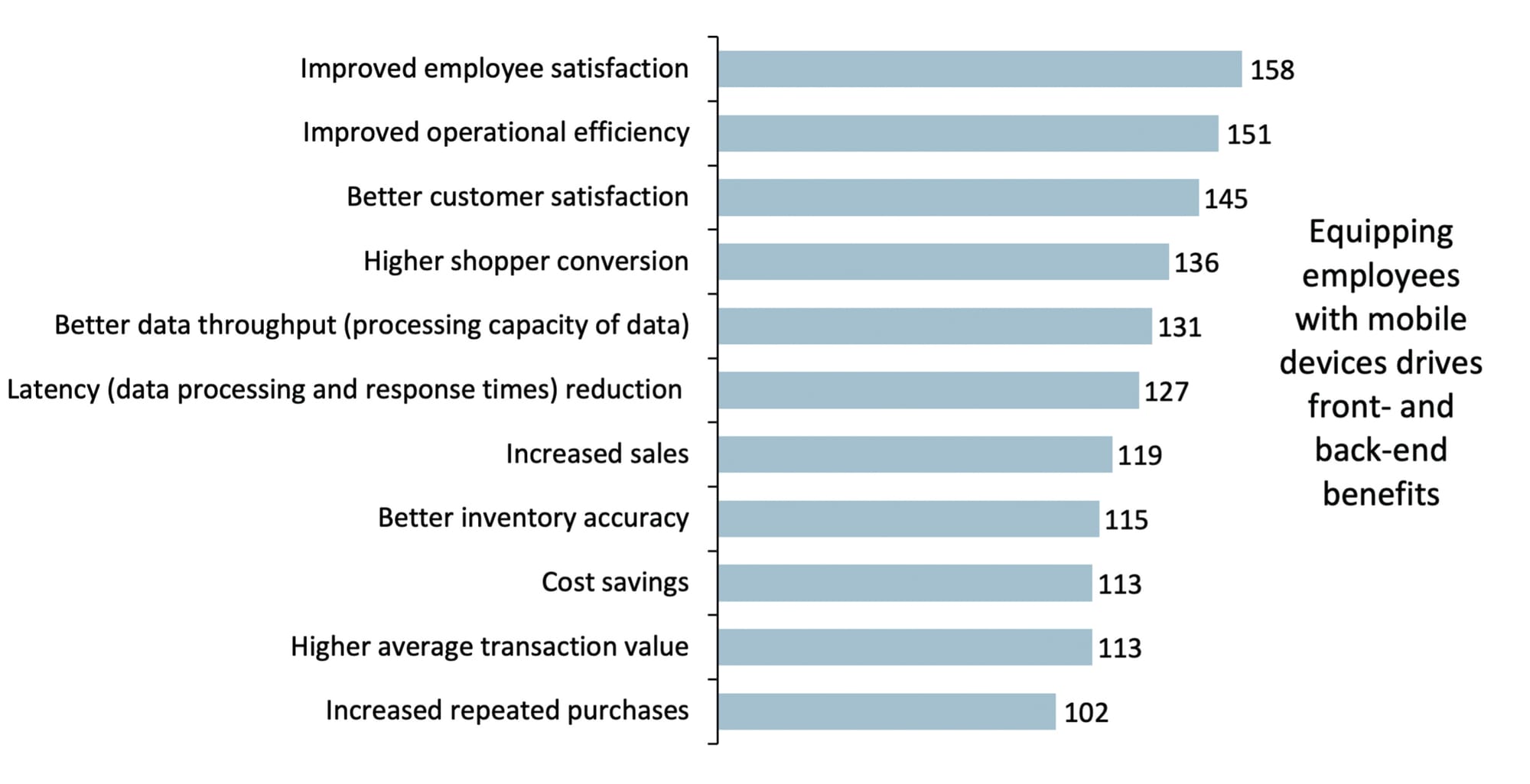
According to a Coresight Research survey of 400 U.S. retail business leaders in July 2024, the top perceived benefit of equipping employees with mobile devices is improved employee satisfaction, followed closely by improved operational efficiency and better customer satisfaction. Retailers also expect higher shopper conversion, increased sales and better inventory accuracy — all contributing to stronger store performance.
Clienteling platforms, now powered by AI and running on these edge devices, give associates immediate access to customer profiles, purchase history and product information — allowing even new hires to deliver service that feels personal and informed.
Beyond clienteling, CV and agentic AI are taking on time-consuming tasks like inventory checks, loss prevention and monitoring checkout lines. Because CV applications demand high-speed, low-latency data processing, edge computing — using technologies such as Intel Core Ultra processors and dedicated AI chips — enables retailers to respond instantly to what’s happening on the sales floor.
AI boosts efficiency
Automation, robotics and real-time data analytics are transforming retail operations.
AI is transforming pharmacy operations by automating routine tasks, easing administrative burdens and allowing pharmacists to focus more on patient care. While robotics and other automation technologies are available, many are costly and constrained by in-store safety regulations. As a result, drug store retailers are increasingly investing in central-fill facilities, where automation can be fully leveraged to improve efficiency and free up pharmacists for more personalized service.
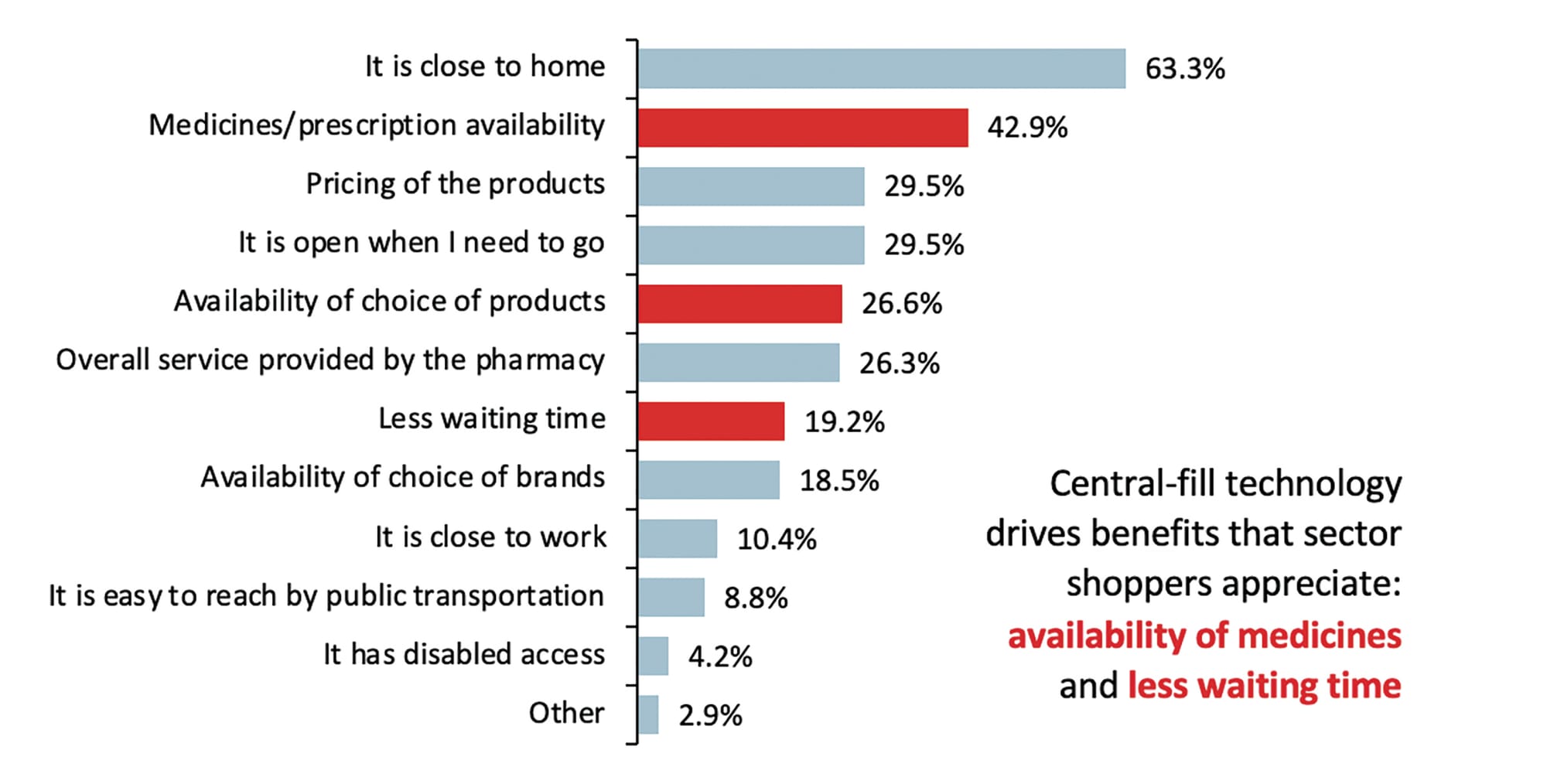
Central-fill options offer clear advantages. According to the American Pharmacists Association, these facilities can save pharmacists over 45 minutes per 100 prescriptions filled — time that can be redirected to direct patient care and clinical consultations. Central-fill also supports faster, more efficient direct-to-patient delivery, reduces prescription wait times and helps ensure greater drug availability across stores. These are critical factors for shoppers: Medicine or prescription availability is the second-most-common reason U.S. consumers choose a pharmacy (cited by 42.9% of respondents in a Coresight Research survey in January 2025), while nearly one in five shoppers (19.2%) highlight shorter wait times as a key consideration.
AI unlocks true omnichannel retail
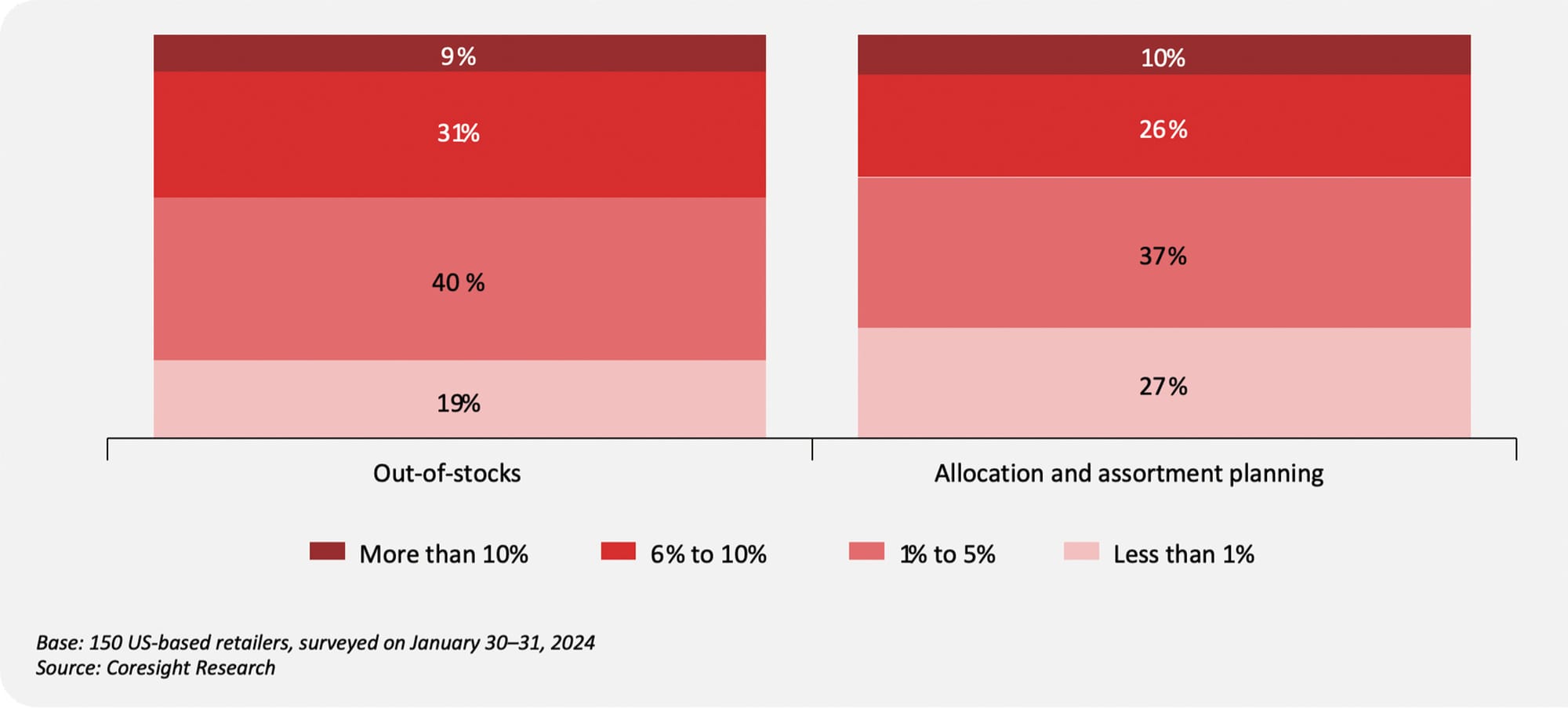
By connecting data across channels, AI enables seamless, personalized shopping journeys and supports key operational functions behind the scenes. Yet, operational fragmentation remains costly: According to a Coresight Research survey in January 2024, U.S. retailers lose an average of 4.5% of gross sales each year to store inefficiencies such as out-of-stocks and ineffective allocation and assortment planning.
AI-powered analytics and inventory optimization help bridge these gaps by synchronizing supply with demand, improving allocation decisions and reducing the likelihood of stockouts — whether customers shop online, in-store or move between channels. As shoppers increasingly expect unified experiences, retailers that deploy AI-driven, omnichannel strategies can maximize sales and minimize lost revenue due to operational disconnects.
What we think
The future of physical retail is being shaped by the rapid adoption of AI — from empowering frontline associates and personalizing in-store service to driving operational efficiency and supporting seamless omnichannel experiences. Our research consistently finds that retailers who invest in AI and supporting technologies see improvements in employee satisfaction, customer engagement and business performance.
Compute at the edge has become a key enabler of real-time analytics and AI applications inside the store, helping retailers move faster and deliver richer, more responsive experiences. At the same time, automation, advanced analytics and omnichannel data integration are transforming core retail operations and the customer journey from end to end.
Physical retail is not about replacing people. It’s about equipping teams with the tools and insights they need to deliver relevant, efficient and memorable experiences — whether at the shelf, behind the scenes or across digital touchpoints. As retailers move from pilot projects to full-scale adoption, those who build AI into every layer of the business are best positioned to set new standards for growth, loyalty and resilience in the years ahead.
Deborah Weinswig is founder and chief executive officer of Coresight Research.