VAUGHAN, Ontario – Bausch + Lomb Corp. announced Thursday that Ophthalmology and Therapy published a narrative review highlighting the role of certain B vitamins in reducing the risk of development and progression of AMD, a leading cause of vision loss in Americans 50 years of age or older.
Drawing on more than two decades of scientific research, the publication synthesizes findings from more than 20 human studies evaluating nearly 30,000 individuals, spanning randomized clinical trials and large observational cohorts, as well as mechanistic and biomarker studies. Across a range of diverse studies assessing different B vitamins, combinations and concentrations, this article discusses the complex relationships between B-vitamin deficiency, elevated homocysteine, oxidative stress, mitochondrial dysfunction and AMD pathogenesis. Collectively, the research shows that B vitamins play an important role in helping to lower the risk of AMD and supporting eye health. This body of evidence provides a solid scientific basis for including B vitamins in nutritional supplements designed for people with AMD, with a long‑term clinical trial for a unique B‑vitamin complex now in planning.
“Scientific evidence shows that AMD develops through a combination of oxidative stress, impaired mitochondrial function and chronic inflammation,” said Julie Poteet, OD, MS, CNS, FOWNS, and co-author of the paper. “The data reviewed in this paper suggest that some B vitamins may play a critical role in regulating homocysteine, a compound linked to retinal damage and increased AMD risk. Collectively, these findings support B-vitamin supplementation in offering additional protective benefits, especially for patients with early AMD.”
Key clinical insights from the paper:
- Women’s Antioxidant and Folic Acid Cardiovascular Study (WAFACS) demonstrated a 34% reduction in AMD risk and a 41% reduction in visually significant AMD with daily supplementation of specific concentrations of B6 (50 mg), B9 (2.5 mg) and B12 (1 mg)
- AREDS and AREDS2 post-hoc analyses showed decreased risk of progression to geographic atrophy and neovascular AMD with higher dietary intake of B6 and B9
- The Blue Mountains Eye Study and Alienor Study linked low serum B12 and B9 levels to increased AMD incidence and progression, highlighting the importance of maintaining adequate B vitamin levels
- Across epidemiologic, mechanistic and randomized clinical trial data, findings consistently show that B vitamin levels and function are closely tied to both AMD risk and disease progression
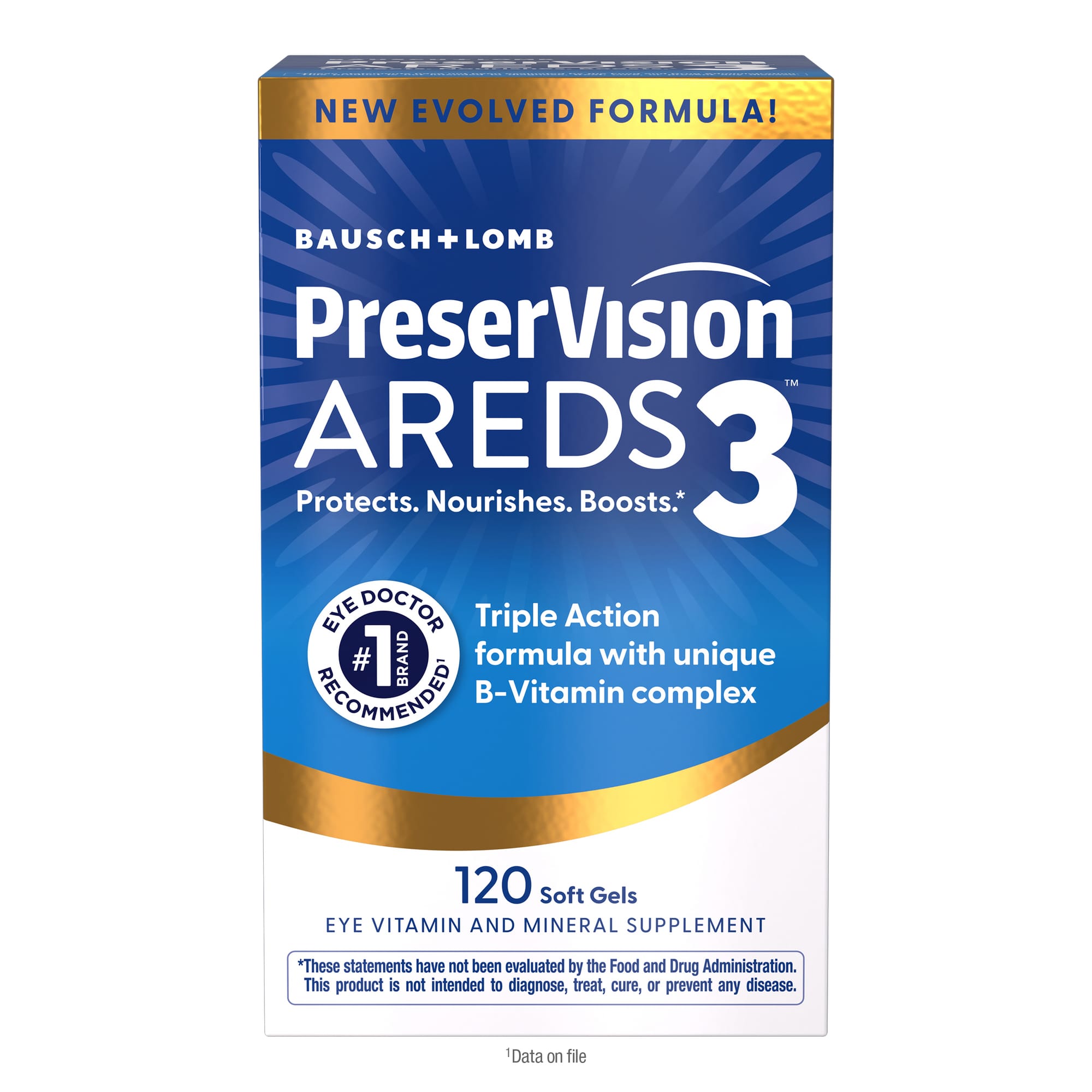
“This publication demonstrates that nutritional supplementation plays a key role in helping reduce the risk of AMD. It also underscores our commitment to science-driven innovation,” said John Ferris, president, Consumer, Bausch + Lomb. “Through clinical research and collaboration with leading eye care professionals, we’re focused on finding ways to help support eye health for a broader population of individuals, including those with early-stage AMD. We are turning this strong existing evidence into action with the availability of PreserVision AREDS3 eye vitamins, enhanced with B vitamins.”
Ferris continued, “While the existing human evidence strongly supports action today, we are finalizing plans for a long-term clinical trial to advance the science further by evaluating this new formulation with patients. This approach ensures patients and clinicians have access to timely innovation now and through a planned long-term clinical trial that continues to elevate the standard of care.”
PreserVision AREDS3 eye vitamins are formulated to help support cellular metabolism, healthy homocysteine levels and the body’s natural response to oxidative stress, as well as help reduce the risk of moderate-to-advanced AMD progression. Recent in vitro evidence indicates a synergistic effect on differential gene expression when combining AREDS2 nutrients with B vitamins.5 New genetic research also points to a link between B vitamins and AMD risk, reinforcing its inclusion in this next-generation PreserVision formula.
PreserVision AREDS3 eye vitamins are now available in the U.S. and are expected to be available at most major retailers by June 2026.