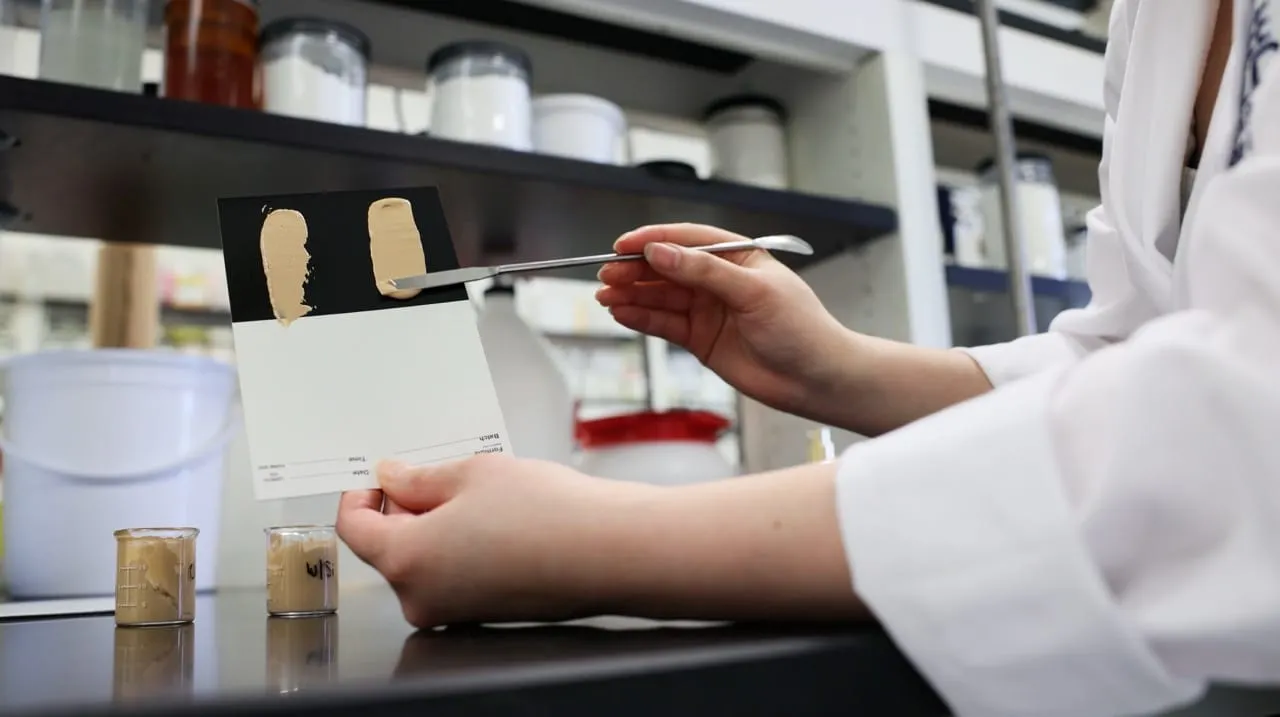
NEW YORK — The Estée Lauder Companies is partnering with the University of Leeds to research ways to improve shade matching for foundation, concealer and other complexion products across a broader range of skin tones.
The collaboration brings together Estée Lauder, the university’s School of Design, and Dr. Kaida Xiao, a professor of color and imaging science at the Leeds Institute of Textiles and Color. The research will examine the relationship between scientific measurements of skin color and how consumers perceive differences in skin tone under real-world conditions.
Finding an accurate foundation or concealer shade remains a persistent challenge for beauty consumers, even as brands have expanded shade ranges and introduced new tools to help shoppers identify appropriate products. Estée Lauder said the research could contribute to new scientific benchmarks for evaluating complexion products and for developing more precise shades and formulas.
The project will use psychophysical methods, which examine how people perceive and discriminate visual differences, to study color undertones and determine when subtle color variations become noticeable to consumers.
Researchers will compare measurements from scientific instruments with consumers’ visual perception of the same colors. The work aims to provide a better understanding of how factors beyond laboratory color measurements influence whether a complexion product appears to match a consumer’s skin tone.
“Delivering transformative innovation in complexion and color cosmetics begins with a deeper understanding of how consumers perceive their own skin tone,” said Claude Saliou, senior vice president, advanced technologies and global clinical and consumer sciences at The Estée Lauder Companies.
Saliou said the collaboration could help the company improve shade accuracy and develop formulas that look more natural and consistent, while supporting greater inclusivity across its luxury and prestige beauty portfolio.
For retailers, advances in shade-matching science could have implications both in stores and online. More accurate matching could help consumers navigate increasingly broad complexion assortments while potentially reducing the uncertainty involved in selecting foundation and concealer without extensive testing.
“Skin color perception is highly complex, shaped by subtle interactions between multiple factors,” said Xiao. “We are thrilled to collaborate with The Estée Lauder Companies, a global leader in prestige beauty recognized for its long-standing dedication to advancing skin science and its commitment to scientific excellence.”
Submit Your Press Release
Have news to share? Send us your press releases and announcements.
Send Press Release