Two surveys released this month issued similar warnings for retailers. Deloitte’s annual back-to-school study found that parents plan to spend $30.4 billion this year — about the same as last year, but 6% lower once inflation is factored in. And 57% of parents said they are bracing for the economy to worsen, the gloomiest reading since 2020. Meanwhile, a Coresight Research study focused on where those dollars will be spent and found that shoppers will concentrate on fewer, bigger-box destinations, and that low prices alone won’t be enough to win them over.

The two reports describe a shopper who is anxious but not paralyzed and has become selective. And it’s not just about price.
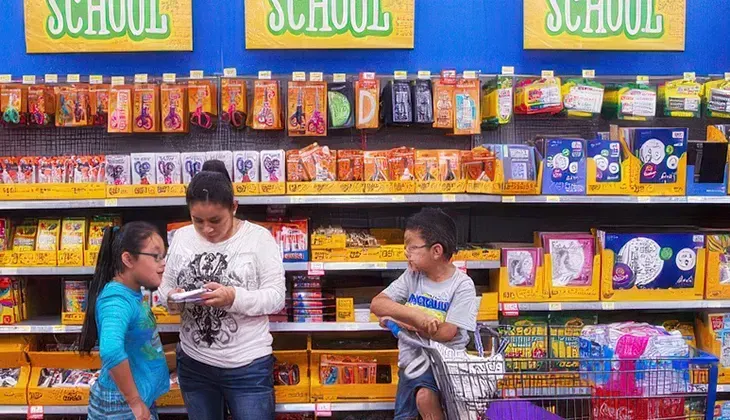
Start with channel. Coresight found that 82.5% of B-T-S shoppers plan to buy in-store this year, up from 79.4% last year, even as delivery and buy-online-pickup-in-store both ticked down. That is not nostalgia. It’s parents running school-list logistics — sizing, matching, last-minute swaps — that are easier to manage in a physical store than in a browser tab. Mass merchandisers are the chief beneficiaries: 67.8% of shoppers plan to shop that channel, a 22-point lead over online-only retailers, with Walmart at the top and Target and Amazon fighting for second. Notably, Amazon underperforms its own holiday-season showing here, even in categories like apparel where it typically dominates. B-T-S is a mission trip, not a browse.
That should reframe how retailers think about “value.” Deloitte’s hyper -value seekers — the 31% of parents using four or more cost-saving tactics — aren’t the cheapest shoppers; they spend 14% more than others. Coresight’s data explains why: Low price is the top factor in retailer choice, up sharply to 57.6%, while product quality and in-stock availability aren’t far behind. “Retailers must convert practical, mission-driven shoppers through reliable execution, omnichannel ease and targeted in-season advertisement,” the report states.
The category story reinforces the same point. Both surveys show apparel eating technology’s lunch — Deloitte pegs clothing spending up 22% and tech down 16%, while Coresight shows clothing as the fastest-growing shopping category and athleisure as this year’s breakout trend, with Nike and Adidas still commanding the apparel aisle. For retailers, that means merchandising and floor space should shift toward fashion-forward basics now, rather than waiting for August markdowns.
Timing matters too. Deloitte found that spending is compressing toward late July and early August, a return to pre-pandemic patterns after years of shifting earlier. Coresight’s finding that in-store advertising is the single most influential factor in shopping decisions — ahead of online ads, reviews and social media — suggests that the highest-leverage retail media dollar this year is the one spent inside the store during that compressed window.
Finally, don’t treat the shopper as monolithic. Coresight’s income breakdowns show Walmart’s strength is concentrated among lower-income households, while Target and Amazon skew toward higher earners seeking convenience and curated assortments — the same higher-income cohort Deloitte expects to drive a disproportionate share of spending growth this year, even as they claim to be cutting back.
There’s a quieter opportunity buried in Deloitte’s data, too: Half of parents worry their child relies too heavily on AI, only a third say their school has guidelines, and 13% already plan to pay for AI tutoring or camps — a gap that ed-tech players and retailers alike have barely begun to fill.
The takeaway for retailers isn’t to shout louder about price. It’s to prove, aisle by aisle, that being in-store still delivers what shoppers need, when they need it.