ARLINGTON, Va. — Beverage purchases are increasingly driven by function, digital discovery and specific consumption occasions rather than traditional product categories, according to FMI – The Food Industry Association’s inaugural Power of Beverage 2026 report.
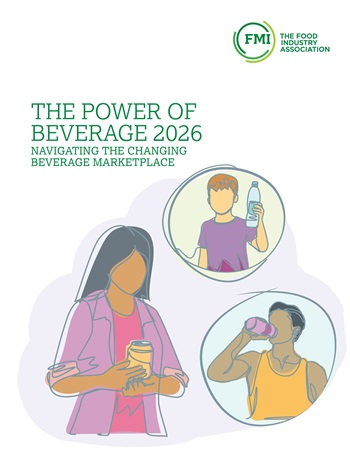
The inaugural Power of Beverage 2026 report is available for download at www.FMI.org/Beverage.
Developed with Circana sales data and cultural trend forecasting from Nichefire, the report found U.S. consumers spent nearly $295 billion on retail beverages in 2025, making the category one of food retail’s strongest growth drivers.
“The beverage category represents a significant opportunity for the food industry to invest in innovative products that cater to grocery shoppers' expanding preferences when purchasing beverages,” said Leslie G. Sarasin, president and CEO of FMI. “This research dives deep into the beverage habits of consumers to provide valuable insights for the food industry.”
The study found shoppers are increasingly choosing beverages based on functional benefits such as hydration, energy, protein, digestive health and mood support. Retailers also have an opportunity to merchandise beverages around consumer needs and occasions rather than conventional product classifications, according to the report.
“Consumers’ beverage purchasing behavior is evolving faster than traditional category definitions,” said Steve Markenson, FMI’s vice president of research and insights. “As shoppers increasingly buy beverages based on functional benefits and specific occasions, food retailers have an opportunity to organize the category around how consumers make decisions rather than how products have historically been classified.”
Among the report’s other findings, 61% of consumers said low price defines value in beverages, while taste (46%), trusted quality (40%) and brand trust (39%) also ranked as important purchase drivers. The report also found ecommerce and social commerce continue to reshape beverage discovery, with 45% of Gen Z consumers saying a beverage becomes more appealing when recommended by a creator or influencer.
The findings are based on an online survey of 2,003 U.S. grocery shoppers conducted May 19-26, 2026, and are intended to help retailers and suppliers refine merchandising, marketing and category strategies as beverage shopping habits continue to evolve.
The inaugural Power of Beverage 2026 report is available for download at www.FMI.org/Beverage.