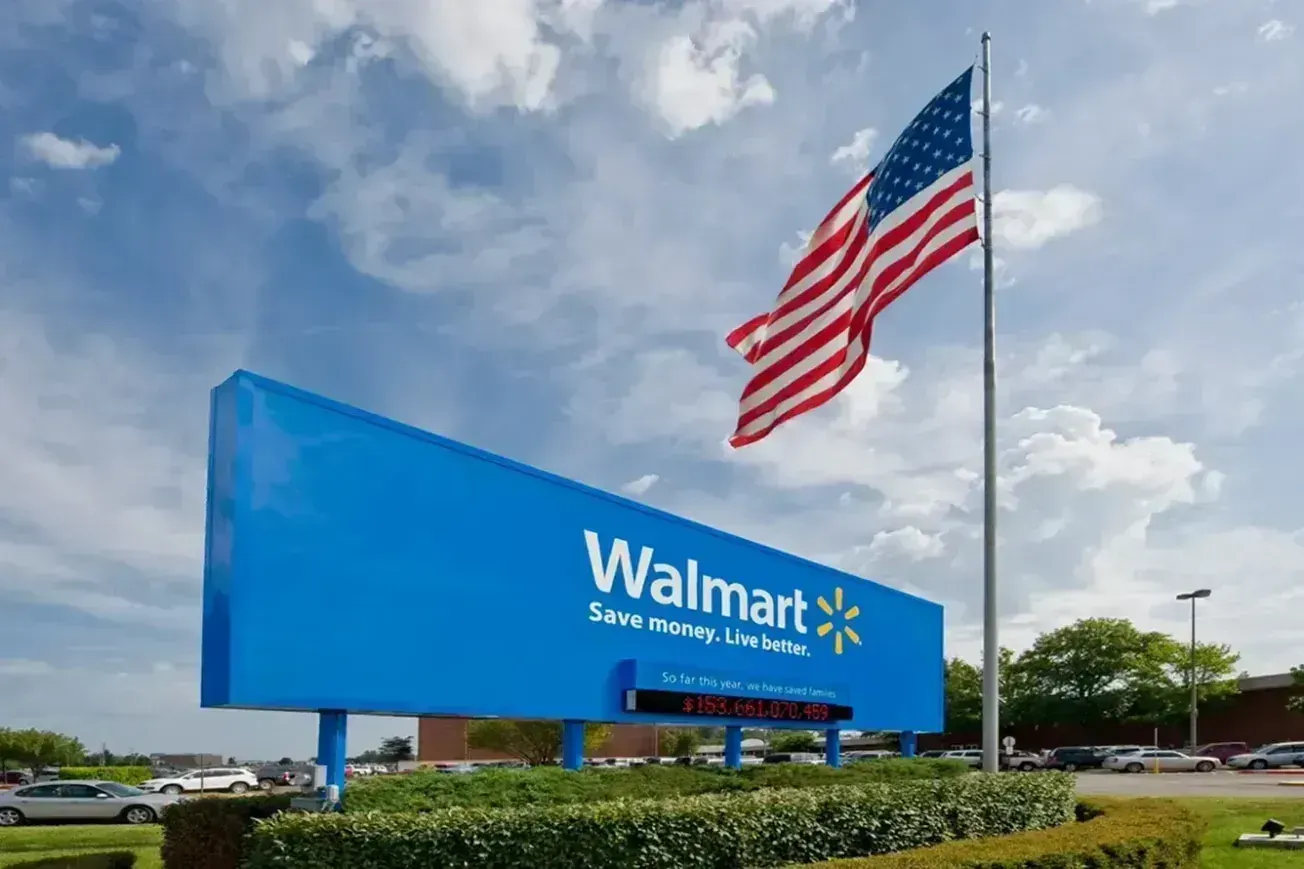
BENTONVILLE, Ark. — Walmart Inc. delivered a strong opening to its fiscal year 2027, reporting first-quarter results that beat analysts' expectations on nearly every major metric. Total revenues rose 7.3% to $177.8 billion, with the Bentonville, Arkansas-based retailer benefiting from accelerating digital commerce, a booming advertising business, and record membership additions — even as elevated fuel costs weighed on operating margins.
The quarter underscored Walmart's ongoing transformation from a brick-and-mortar giant into an integrated omnichannel platform. Global eCommerce sales climbed 26%, driven by store-fulfilled pickup and delivery as well as marketplace growth. Its global advertising business — an increasingly lucrative and high-margin revenue stream — expanded 37%, with the U.S. segment alone up 36%. Membership fee revenue grew 17.4% globally, reflecting continued momentum in Walmart+ subscriber additions that management described as a first-quarter record.
“Our results reflect our continued focus on delivering across the enterprise — better shopping experiences, a broader assortment, and faster delivery,” said Walmart president and CEO John Furner. “Our teams are adopting innovative technologies, driving productivity through automation, and growing higher-margin commerce solutions. It’s a disciplined approach that’s helping us grow the business and strengthen returns.”
SEGMENT BREAKDOWN
Walmart U.S., the company's largest business, posted net sales of $117.2 billion, up 4.5%, with comparable-store sales rising 4.1% excluding fuel. Transaction counts grew 3.0%, a sign that the retailer is attracting more shopping trips — particularly through digital channels, which contributed approximately 530 basis points to the comp. Adjusted operating income for the segment rose 5.7% to $6.0 billion, reflecting improved eCommerce economics and Walmart+ membership growth, though operating expenses deleveraged 56 basis points due to higher depreciation and healthcare costs.
Walmart International was the standout performer among segments in percentage terms, with net sales jumping 18.0% to $35.1 billion, or 10.1% on a constant-currency basis. Currency tailwinds added approximately $2.3 billion to reported sales. Advertising momentum at Flipkart, Walmart's Indian e-commerce arm, helped drive a 32% increase in international advertising revenue. Operating income for the segment surged 23.9% in reported terms.
Sam's Club U.S. grew net sales 6.1% to $23.4 billion, though the picture excluding fuel was more modest at 3.9%. The warehouse club's comparable-store sales rose 3.9% ex-fuel, with transaction volumes rising 6.2% even as average ticket declined 2.2%. Membership and other income grew 11%, driven by steady gains in member counts, renewal rates, and Plus-tier upgrades.
BALANCE SHEET AND CASH FLOW
Free cash flow came in at negative $1.9 billion for the quarter, a deterioration of $2.4 billion compared to the year-ago period. Management attributed the shortfall to a $1.7 billion increase in capital expenditures — spending intended to support its omnichannel buildout — as well as the timing of inventory receipts. Operating cash flow declined to $4.7 billion from $5.4 billion a year earlier. The company ended the period with $10.7 billion in cash. Total debt stood at $58.1 billion, reflecting $4.25 billion in new long-term notes issued at what management characterized as favorable rates.
Inventory rose 8.9% to $62.6 billion, driven by receipt timing, strong unit demand in grocery, and elevated fuel-related inventory at Sam's Club. The company repurchased 16.6 million shares for approximately $2.1 billion during the quarter, with $28.2 billion remaining under its $30 billion authorization announced in February 2026.
GUIDANCE
For the fiscal second quarter, Walmart expects net sales growth of 4% to 5% in constant currency and operating income growth of 7% to 10%, with adjusted EPS in the range of $0.72 to $0.74. Notably, the company's full-year fiscal 2027 guidance remains entirely unchanged from the targets it set in February — a signal management used to project confidence despite ongoing uncertainty around tariff policy. The guidance explicitly does not assume any benefit from potential IEEPA tariff refunds.
Full-year FY27 metric Guidance range
Net sales (constant currency) +3.5% to +4.5%
Adjusted operating income (cc) +6.0% to +8.0%
Adjusted EPS $2.75 to $2.85
Capital expenditures ~3.5% of net sales
Effective tax rate ~23.5% to 24.5%
One headwind that management acknowledged was higher fuel costs in its distribution and fulfillment network, which shaved approximately 250 basis points from operating income growth. Analysts will likely watch whether those pressures ease in the coming quarter as energy prices fluctuate.