

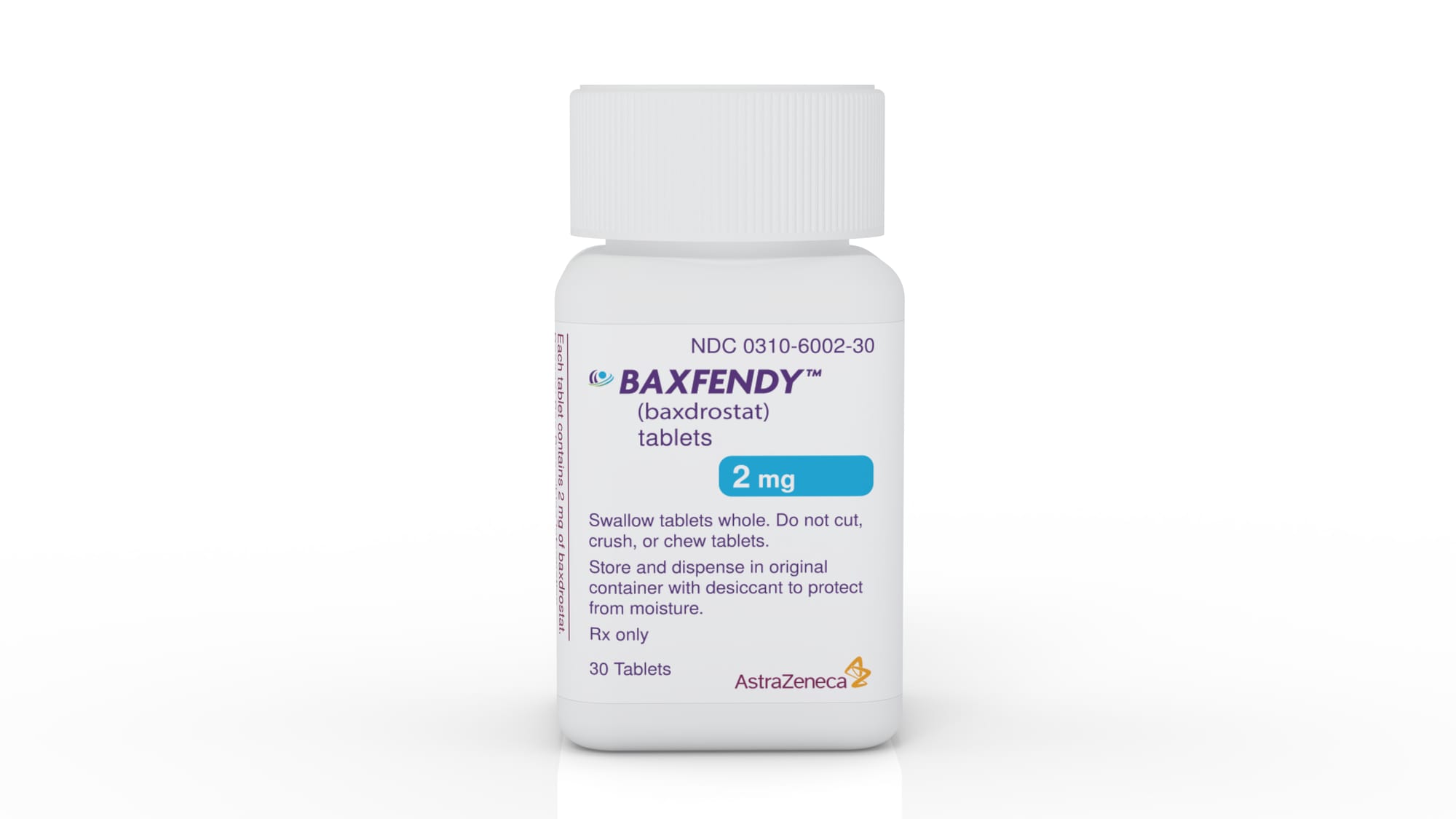
WILMINTON, Del. – AstraZeneca’s Baxfendy (baxdrostat) has been approved in the US as a first-in-class aldosterone synthase inhibitor (ASI) for the treatment of hypertension in combination with other antihypertensive medications, to lower blood pressure in adults who are not adequately controlled.
There are 1.4 billion people worldwide living with hypertension. In the US, approximately 50% of patients living with hypertension who are already taking multiple antihypertensive medications still struggle with persistently elevated blood pressure, which is a leading risk factor for cardiovascular disease and premature death. Hypertension is the most prevalent and significant modifiable cardiovascular risk factor worldwide, accounting for more deaths and disability than any other modifiable risk.
Baxfendy is a first-in-class, highly selective and potent ASI designed to lower blood pressure in a new way by specifically inhibiting the production of aldosterone, a hormone that raises blood pressure to unhealthy levels and increases the risk of heart and kidney problems.
The approval by the US Food and Drug Administration (FDA) was based on positive results from the BaxHTN Phase III trial, with Baxfendy demonstrating statistically significant and clinically meaningful seated systolic blood pressure reduction at both 2mg and 1mg doses in patients with uncontrolled and resistant hypertension on two or more medications. Baxfendy was generally well-tolerated with no unanticipated safety findings.
Dr. Bryan Williams, Chair of Medicine at University College London, and BaxHTN primary investigator, said: “We have been waiting for an innovative medication like Baxfendy for hypertension for many years. Its novel way of lowering blood pressure has the potential to transform clinical practice by targeting a root cause of persistently uncontrolled hypertension. In addition, the nearly double-digit placebo-adjusted systolic blood pressure reduction achieved with Baxfendy is exciting and clinically meaningful for clinicians and patients. Epidemiological data indicate that a 10 mmHg decrease in systolic blood pressure is associated with a roughly 20% lower risk of serious cardiovascular events.”
John M. Clymer, Executive Director, National Forum for Heart Disease & Stroke Prevention, said: “Hypertension remains a staggeringly widespread silent killer and a leading risk factor for stroke, heart attack, kidney damage and dementia. Tens of millions of people struggle to control their blood pressure despite lifestyle changes and currently available treatments. Innovative, new treatments could help millions protect their heart, kidney and brain health.”
Ruud Dobber, Executive Vice President, BioPharmaceuticals Business Unit, AstraZeneca, said: “The approval of Baxfendy offers a much‑needed, first-in-class innovation for people living with persistently uncontrolled hypertension who have not responded to or tolerated existing medicines. In the US, about 23 million patients are uncontrolled despite being on two or more medicines for hypertension, which is a disease that has seen little therapeutic progress for the past two decades.”
In the BaxHTN Phase III trial, published in the New England Journal of Medicine, Baxfendy (baxdrostat) demonstrated statistically significant and clinically meaningful efficacy for the treatment of patients with hypertension on top of standard of care. At week 12, the absolute reduction from baseline in mean seated SBP was 15.7 mmHg (95% confidence interval [CI], -17.6 to -13.7) and placebo-adjusted reduction was 9.8 mmHg (95% CI, -12.6 to -7.0; p<0.001) for the 2mg dose. For the 1mg dose, the absolute reduction from baseline was 14.5 mmHg (95% CI, -16.5 to -12.5) and placebo-adjusted reduction was 8.7 mmHg (95% CI, -11.5 to -5.8; p<0.001). The reduction in mean seated SBP with placebo was 5.8 mmHg (95% CI, -7.9 to -3.8). Results were consistent across both uncontrolled and treatment-resistant subgroups.
Submit Your Press Release
Have news to share? Send us your press releases and announcements.
Send Press Release






%2C%20first-in-class%20ASI%20for%20uncontrolled%20hypertension)