NEW YORK — Consumers are increasingly investing in products and technology promising to help them live longer, but health experts say the foundations of healthy aging are far less complicated.
A 2026 U.S. News & World Report survey of 63 health experts found that consistent physical activity and a nutrient-dense diet ranked well ahead of supplements, biohacking tools, and other emerging longevity trends.
Read the full U.S. News & World Report survey
The findings come as healthy aging evolves into a broader consumer health opportunity spanning vitamins and supplements, weight management, women’s health, sleep, fitness, wearables, and preventive care.
Nearly nine in 10 experts surveyed (89%) identified consistent physical activity and exercise as one of the most critical factors for healthy aging. The same percentage selected a nutrient-dense, well-balanced diet. Restorative sleep followed at 30%.
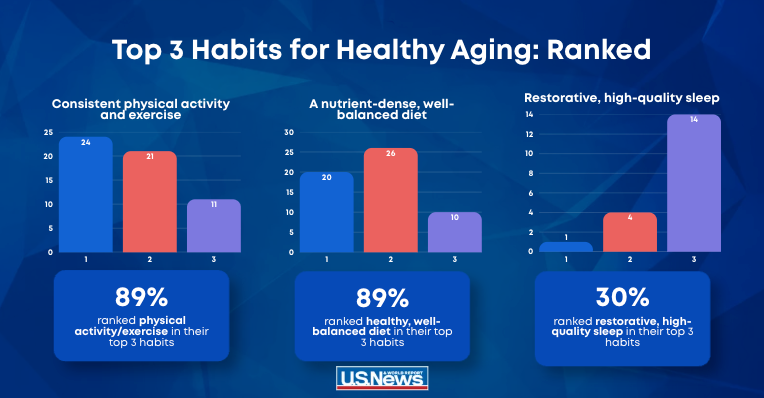
The results suggest that consumers’ growing fascination with longevity may increasingly intersect with familiar pharmacy categories rather than replace them.
Supplementation remains part of the picture, though experts did not rank supplements among the top three healthy-aging habits. When asked to recommend one vitamin or supplement for healthy aging, 35% chose a multivitamin, 22% selected vitamin D, and another 14% said no supplement was necessary.
That distinction could become increasingly important as retailers and health care providers navigate a crowded marketplace of products making anti-aging and longevity claims. Experts surveyed by U.S. News repeatedly emphasized the difference between supporting healthy aging and attempting to reverse the natural aging process.
Muscle health also emerged as a significant theme, particularly as the use of GLP-1 medications continues to expand.
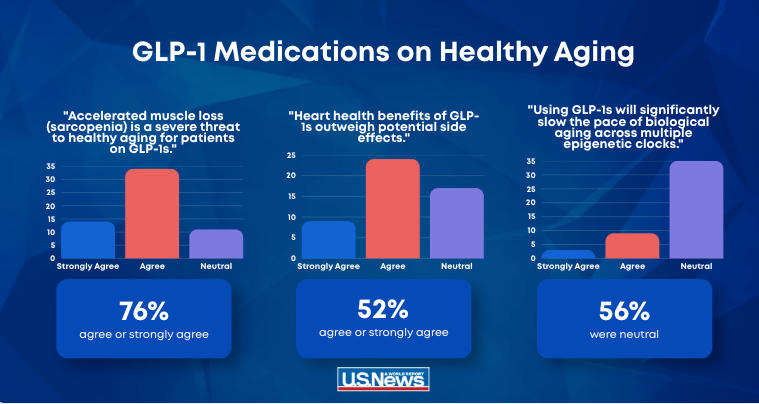
Seventy-six percent of respondents agreed or strongly agreed that accelerated muscle loss is a serious health concern for people taking GLP-1 medications. At the same time, 52% agreed or strongly agreed that the drugs' cardiovascular benefits would outweigh potential long-term negative effects associated with aging.
The findings reinforce growing attention to resistance training, adequate protein intake, and preservation of lean muscle mass among patients losing weight on GLP-1 therapies.
Functional health extends beyond weight. Asked which marker adults younger than 50 should track to help predict mobility and independence in their 80s, experts were evenly split between grip strength and VO2 max, with each selected by 30%. Skeletal muscle mass index followed at 22%.
Women’s health was another area in which experts identified significant gaps.
One-third of respondents cited accelerated bone density loss and skeletal muscle loss during perimenopause and menopause as the most overlooked or undertreated factor affecting women’s healthy aging. Delayed recognition and treatment of cardiovascular risk followed closely at 32%, while 24% cited shortcomings in menopausal hormone therapy management, including access and education.
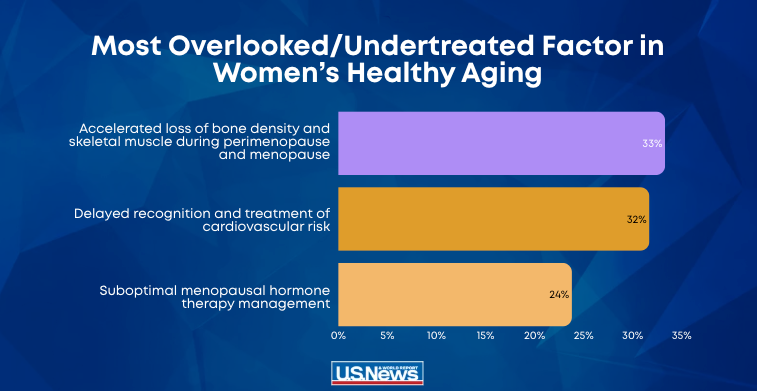
Those concerns place healthy aging squarely within several areas where pharmacists increasingly interact with patients, including cardiovascular risk, bone health, nutrition, menopause, medication management, and preventive care.
The survey also highlighted a factor that cannot be found on a pharmacy shelf.
Fifty-nine percent of experts identified social isolation as the most underappreciated potential accelerator of biological aging, well ahead of circadian disruption (19%) and chronic low-grade stress (18%).
The result reflects a broader shift in the longevity discussion toward healthspan, defined as maintaining physical function, cognitive health, independence, and quality of life, rather than simply extending lifespan.
Technology remains part of that discussion, though experts offered a more cautious assessment of emerging tools.
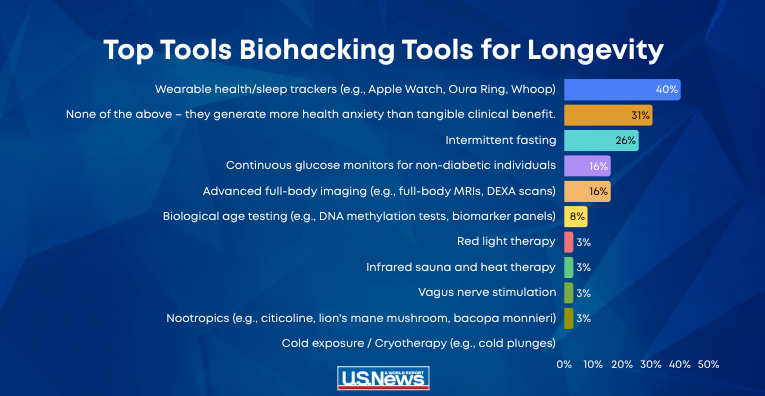
Forty percent said wearable health or sleep trackers provide a proven, tangible benefit for healthy aging, while 26% selected intermittent fasting. Nearly one-third (31%) selected none of the longevity technologies or trends included in the survey.
Views on artificial intelligence were similarly mixed. Behavioral support through tools such as AI coaches and chatbots was cited by 24% of respondents as the area where AI could have the most immediate positive effect on healthspan. Health-metric tracking ranked second at 22%, while 21% selected none of the listed applications.
The findings suggest that technology may be most useful when it helps consumers maintain established healthy behaviors rather than serving as a substitute for them.
For pharmacies, that could make the healthy aging opportunity broader than any single product category. Consumers interested in living longer and staying independent are also potential customers for nutrition support, vitamins, weight management, sleep products, fitness-related services, and preventive health care.
As longevity moves further into the mainstream, the challenge for retailers may be helping consumers distinguish evidence-based approaches from increasingly aggressive anti-aging marketing.
The U.S. News survey points to a relatively simple foundation: exercise regularly, eat well, protect sleep, maintain muscle, stay socially connected, and address health risks before they become larger problems.
Read the full U.S. News & World Report survey
Submit Your Press Release
Have news to share? Send us your press releases and announcements.
Send Press Release