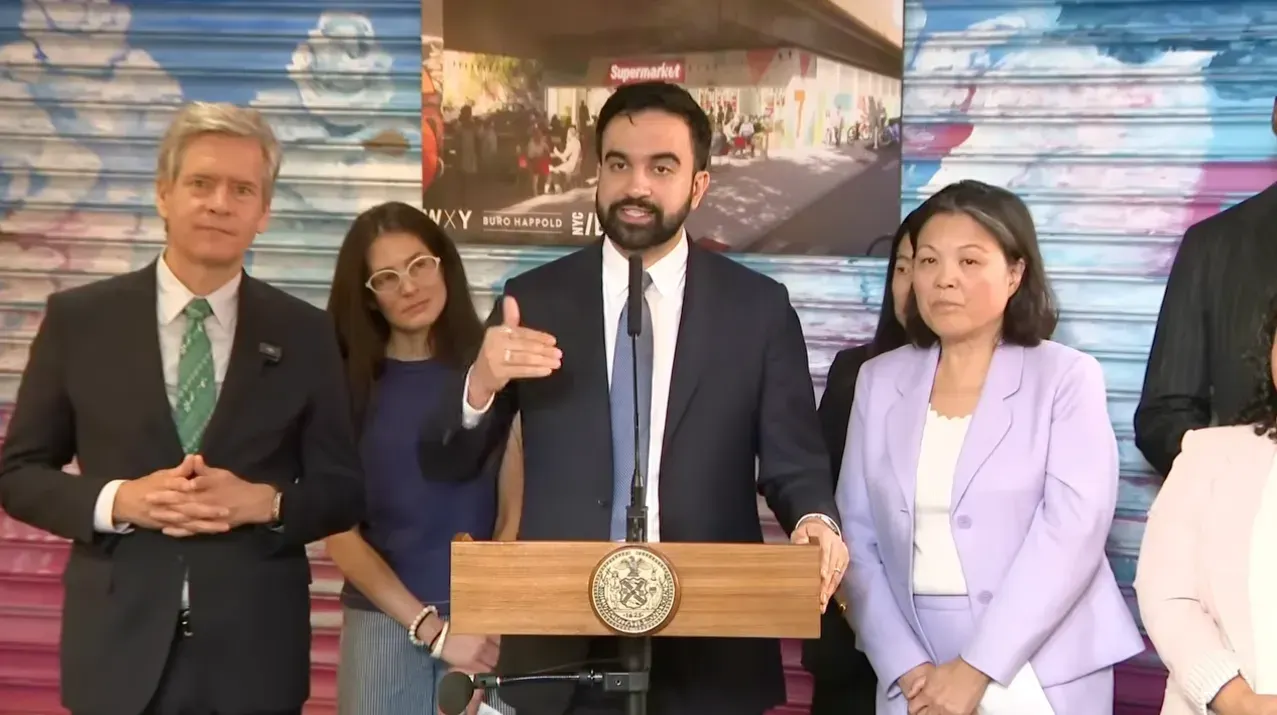
New York City Mayor Zohran Mamdani’s plan for several municipally owned grocery stores must have supermarket operators scratching their heads. In keeping with his admirable goal of finding ways to reduce the cost of living for city residents, Mamdani announced late last month that a basket of grocery essentials — including fresh produce, meat and seafood, dairy, and refrigerated products — will be sold at a 30% discount. Consumers who take advantage of the program, beginning when the first of five stores opens at Hunts Point in The Bronx in 2027, will realize estimated savings of $90 a month, or more than $1,000 a year.

“Every week, New Yorkers walk into a grocery store hoping the prices haven’t gone up again,” the mayor said. “A trip to the grocery store shouldn’t spell dread for New Yorkers. That’s why we are guaranteeing a 30% discount on the most common and most critical groceries for families across the five boroughs — including eggs, milk, chicken and fresh fruits and vegetables. In a city that’s defined by unpredictability, you deserve stability — no matter what aisle you’re in.”
Just how those savings will be achieved remains an open question. The city is now seeking proposals from established grocers or other qualified companies to run the stores. If selected, they will be responsible for day-to-day operations — everything from staffing and security to sourcing, merchandising and private label offerings. The companies will be contractually obliged to adhere to standards set by the city.
The Mamdani administration has earmarked $70 million in the capital budget to support the initiative, known as N.Y.C. Groceries. The city will foot the bill for real estate costs and property taxes, with the rest of the balance sheet left to the operators, who will be expected to deliver on the savings promised by the mayor and hold price levels steady for a minimum of a month at a time.
That’s a tall order under any circumstances, but it is especially so at a moment when grocers across the country face myriad challenges. In “The Food Retailing Industry Speaks,” an annual survey conducted by FMI – The Food Industry Association, members cited concerns about inflation, tariffs, supply chain disruptions, asset protection, and more. There’s certainly much to contend with as the industry works to protect a profit margin of just 2.1%. (According to the FMI report, 18% of the companies reported a margin of 1% or less, with 11% posting a loss in 2025.)
Given all the requirements and constraints, it’s hard to see how even the most skilled supermarket operator could make a go of it with N.Y.C. Groceries. And, if the municipal stores should somehow succeed, it would create a new competitive threat for existing food retailers in the city. Under the circumstances, it will be interesting to see how many companies answer Mamdani’s RFP.