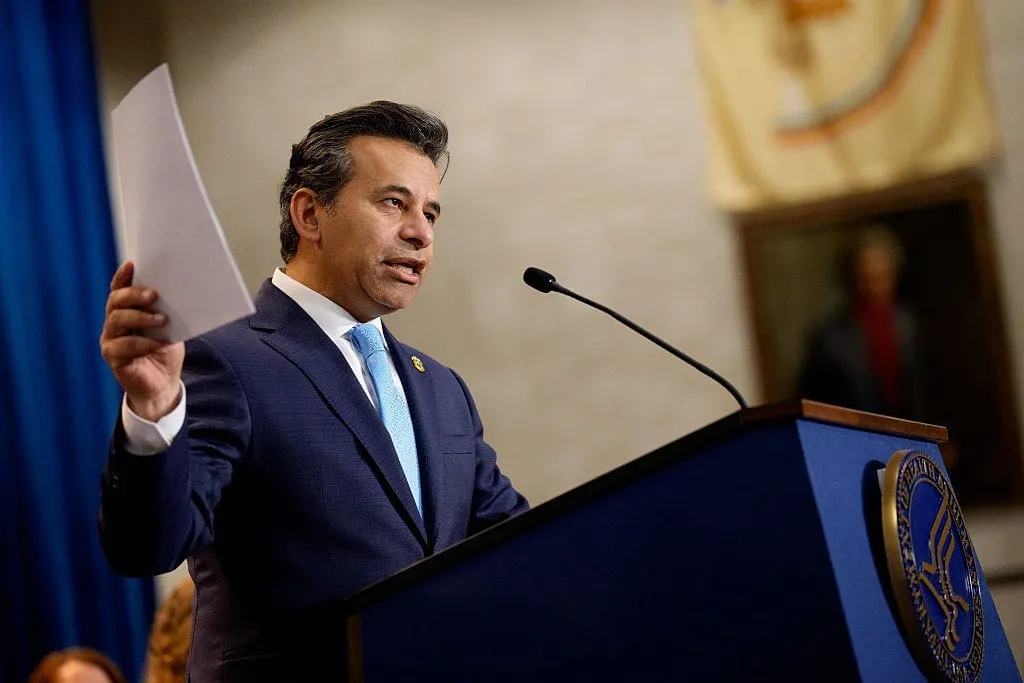
WASHINGTON — The future of Marty Makary at the U.S. Food and Drug Administration remained uncertain Monday after a wave of reports indicated that President Donald Trump had approved plans to remove him following months of internal clashes over vaping, abortion policy and drug approvals.
According to reports from The Wall Street Journal, The New York Times, and Axios, Makary’s standing within the administration has weakened amid growing tensions with White House officials, the Department of Health and Human Services, and outside political groups. However, the decision has not been publicly finalized, and Trump appeared to downplay the reports Friday, telling reporters, “I’ve been reading about it, but I know nothing about it.”
 Thorvardur de Shong
The uncertainty has transformed what was expected to be one of the steadier corners of Trump’s health bureaucracy into a closely watched source of turmoil for industries regulated by the FDA, which oversees products that account for roughly one-fifth of the U.S. economy.
Makary, a former pancreatic surgeon and health policy researcher at Johns Hopkins University, has maintained an unusually high public profile for an FDA commissioner, appearing frequently on television and podcasts to promote agency efforts to improve the food supply, accelerate drug approvals and rebuild morale after significant staff departures.
He also emerged as a prominent ally of Health Secretary Robert F. Kennedy Jr.’s Make America Healthy Again movement, supporting initiatives such as eliminating synthetic food dyes and expressing skepticism toward parts of the pharmaceutical industry.
At the same time, Makary sought to balance those positions by adopting a more business-friendly regulatory approach focused on reducing burdens on industry, expanding clinical trials in the United States, and expediting the review process for promising therapies.
But those efforts increasingly placed him at the center of politically charged disputes.
According to multiple reports, the White House had pressured Makary for months to authorize flavored e-cigarettes, an issue strongly backed by major tobacco companies and political allies. In March, the FDA issued guidance indicating that fruit- and candy-flavored vaping products would likely not receive authorization due to concerns about youth appeal. However, the agency later approved blueberry- and mango-flavored vaping products from Los Angeles-based Glas earlier this week.
Makary has also faced mounting criticism from anti-abortion organizations, including Susan B. Anthony Pro-Life America, which argued that he had moved too slowly on a safety review of mifepristone, the abortion pill. Former Vice President Mike Pence amplified criticism of the commissioner on social media.
At the same time, biotech executives and investors reportedly raised concerns with the administration after the FDA rejected several applications for rare-disease treatments. Makary defended those decisions, saying career FDA scientists concluded that the therapies lacked sufficient evidence of effectiveness.
The commissioner has also been navigating broader tensions tied to Kennedy’s health agenda. Kennedy previously posted on social media that the FDA would end its “war on” products such as stem cell therapies, peptides and raw milk, while reportedly pushing the agency to revisit restrictions on certain peptides promoted for anti-aging and recovery purposes.
Despite the controversy, Makary has received support from some administration officials and industry observers. Appearing on CNN over the weekend, acting CDC Director Jay Bhattacharya praised Makary when asked about the reports surrounding his possible removal.
“You’d have to ask the president,” Bhattacharya said regarding whether Makary still had Trump’s confidence. “Marty Makary is an absolutely amazing scholar, an absolutely amazing surgeon, an absolutely amazing FDA commissioner, and a good friend of mine.”
Makary’s tenure has coincided with a turbulent period at the FDA, marked by controversies over abortion pills, vaccines, flavored vapes and rare-disease treatments. The agency has also faced significant staffing losses and leadership turnover in key review divisions. Although Makary recently announced plans to hire 3,000 additional scientists, analysts have noted ongoing attrition within the agency’s biologics and drug evaluation centers.
Several high-profile regulatory decisions are also looming, including reviews involving cancer therapies, ADHD treatments, rare disease drugs and Moderna’s mRNA flu vaccine program.
If Makary ultimately departs, reports indicate that potential successors could include Kyle Diamantas, former FDA commissioner Stephen Hahn, and former acting commissioner Brett Giroir.
Makary is scheduled to testify Wednesday before the Senate Appropriations Committee on the FDA’s proposed 2027 budget, an appearance expected to draw heightened attention amid ongoing questions about both his future and the agency’s broader direction.
Submit Your Press Release
Have news to share? Send us your press releases and announcements.
Send Press Release